


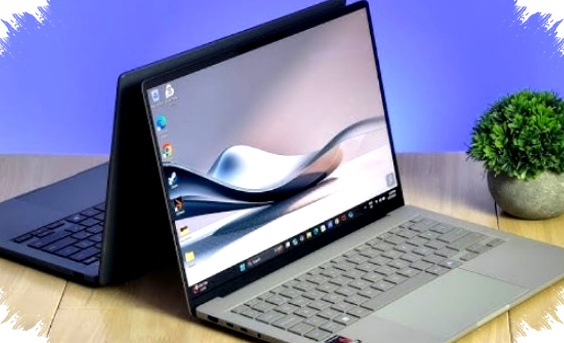
ASUS ZenBook A14 is shaping up to be one of the most talked-about AI laptops of 2026, and the reasons are more practical than hype. It combines a very light chassis, long battery life, and a new AI-focused platform that directly targets the needs of mobile professionals, creators, and users who want smarter on-device computing.
The laptop stands out because it does not treat AI as a marketing label. ASUS and its platform partners have built the ZenBook A14 around real workload gains, from local AI processing to productivity tools that work faster and more securely without relying heavily on the cloud.
Why ASUS ZenBook A14 stands out in the 2026 AI laptop race
The first major advantage is the Snapdragon X Series processor architecture. In the reference article, the chip is paired with an NPU that can reach around 45 TOPS, which is enough to handle many AI tasks directly on the device.
That matters because local AI processing can reduce latency and improve responsiveness. It also helps protect privacy since tasks like transcription, summarization, and smart camera processing do not always need to send data to remote servers.
The second strength is its Copilot+ integration. Microsoft has positioned Copilot+ PCs as the next standard for AI-first Windows laptops, and ZenBook A14 is built to take advantage of that environment.
In practical terms, users can use AI-powered tools for writing, summarizing documents, and organizing workflows more efficiently. For many buyers, that is more valuable than benchmark numbers because it changes everyday work habits.
5 reasons ASUS ZenBook A14 is considered superior
-
High-performance AI hardware
The Snapdragon X platform and its 45 TOPS NPU give the laptop a strong base for modern AI workloads. That places it well ahead of many conventional thin-and-light laptops that still depend mostly on CPU and GPU tasks. -
Copilot+ ecosystem support
The laptop is designed for Microsoft’s latest AI features, which helps it stay relevant as Windows productivity tools become more intelligent. This gives users access to features that are increasingly becoming central to the next generation of personal computing. -
Exceptional battery endurance
ASUS claims up to 29 hours of battery life on a single charge. For users who travel often or work long days away from a power outlet, that figure can be the difference between a reliable work device and a frustrating one. -
Ultra-light portability
With a weight of under 1 kilogram, ZenBook A14 is positioned among the lightest laptops on the market. That makes it easier to carry in a backpack, commute with, or use on the move without adding noticeable bulk. - Smart AI features for daily use
Features like AI camera auto-framing and AI noise cancellation make video meetings smoother and more professional. These are not flashy extras; they improve call quality, presentation, and comfort in real-world remote work settings.
Battery life is one of the strongest selling points
Many AI laptops promise speed, but few combine performance with endurance as convincingly as ZenBook A14. The claimed 29-hour battery life shows that ASUS has prioritized efficiency, not just raw computing power.
This is important in 2026, when users increasingly expect their laptop to handle video calls, document work, browser-heavy productivity, and AI assistance across an entire day. A long-lasting battery also reduces dependence on chargers, which is especially useful for journalists, field workers, and business travelers.
The Snapdragon X architecture likely plays a key role here, because ARM-based designs are known for better power efficiency than many traditional x86 systems under similar workloads. In a market where mobility matters, that efficiency becomes a decisive advantage.
Why the design matters as much as the chipset
ZenBook A14 is not just about internal hardware. Its physical design supports the same idea of mobility and convenience, with a premium build that does not sacrifice durability.
A laptop under 1 kilogram is rare enough to attract attention, but ASUS also aims to make the device feel refined and modern. That balance is important because AI laptops are often marketed as futuristic, yet users still want something that looks professional in meetings and feels comfortable to carry every day.
The thin-and-light category has become more crowded, but ZenBook A14 separates itself by pairing portability with real AI capability. That combination makes the laptop suitable for people who do not want to choose between elegance and function.
AI features that improve productivity, not just specs
One of the most useful aspects of the ZenBook A14 is that its AI features support common tasks instead of only targeting power users. The article highlights its ability to assist with content creation, document summaries, and smarter automation inside the Copilot+ ecosystem.
That makes the laptop appealing for office workers, students, and creators who want faster workflows. It also shows how AI PCs are evolving from experimental devices into mainstream tools that can change daily productivity in noticeable ways.
The AI camera and noise cancellation tools add another layer of value. As hybrid work continues in 2026, better background filtering and framing can improve how users appear and sound during calls, especially in less-than-ideal environments.
A quick look at what makes it competitive
| Key area | ZenBook A14 advantage |
|---|---|
| AI performance | Snapdragon X Series with up to 45 TOPS NPU |
| Battery life | Claimed up to 29 hours |
| Portability | Weight under 1 kilogram |
| Productivity tools | Copilot+ integration |
| Video calls | AI camera and noise cancellation |
Some limits still exist, but they do not erase the appeal
The article also notes that ARM compatibility can still present certain limitations for some applications. That remains an important consideration for buyers who depend on specialized software that may not yet run perfectly on ARM-based Windows systems.
Even so, the broader direction is clear. More developers are optimizing for ARM and AI-ready platforms, and Microsoft’s Copilot+ push gives compatible laptops a strong roadmap for software support. For many mainstream users, the trade-off may be worth it if battery life, portability, and AI performance are the priorities.
The result is a laptop that feels built for the way people actually work in 2026. It is light enough to carry anywhere, efficient enough to last through long sessions, and smart enough to handle a growing range of AI-assisted tasks without needing constant cloud access.