


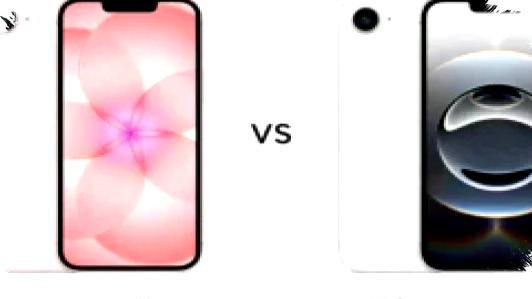
Apple’s iPhone 17e arrives as a focused upgrade over the iPhone 16e, and that makes the comparison more practical than dramatic. For buyers who want to know which one is more worth it, the answer depends on whether the newer chip, tougher display protection, and faster MagSafe charging justify paying extra.
On paper, the two phones look closely related, but the iPhone 17e brings several meaningful improvements that matter in daily use. Apple is clearly aiming at refinement rather than a full redesign, so the best choice will come down to value, longevity, and how much you care about performance and convenience.
What changed first: performance
The biggest difference sits inside the phone, where the iPhone 17e uses Apple’s newer A19 chip built on a 3nm process. Apple says the new silicon is more efficient and more powerful, while the source data notes a CPU peak of up to 4.26 GHz, ahead of the A18 in the iPhone 16e.
That matters because a faster and more efficient chip usually helps with app launches, multitasking, gaming stability, and heat management over long sessions. The GPU stays at 4 cores, so visual horsepower may not feel dramatically different in every task, but the overall responsiveness should improve.
Display durability gets a real upgrade
Apple also appears to have targeted everyday damage resistance with the iPhone 17e. It now uses Ceramic Shield 2, which the reference material says offers better scratch resistance than the first-generation Ceramic Shield on the iPhone 16e.
The screen also gets an improved anti-reflective coating, which should make outdoor use easier in bright sunlight. Even if the resolution remains the same, the viewing experience can feel cleaner because reflections become less distracting.
Camera: same hardware, better processing
Both models still use a 48 MP main camera, so the lens setup is not the main reason to switch. The iPhone 17e instead leans on improved image processing from the A19 chip, which should help deliver more balanced HDR, steadier colors, and better consistency across different lighting conditions.
That means the iPhone 17e may not produce a radically new look, but it should handle tricky scenes with more confidence. For users who often shoot outdoors, people, or mixed light scenes, the gains in processing can be more useful than a simple spec-sheet comparison suggests.
Charging is one of the most practical differences
Wireless charging gets a notable boost on the iPhone 17e, which supports MagSafe up to 15W. According to the source article, that is twice as fast as the iPhone 16e, making it a more convenient option for people who charge wirelessly every day.
This is the kind of upgrade that may sound small at first but feels significant in routine use. Faster magnetic charging can reduce downtime, especially for users who frequently top up their battery at a desk, in a car, or beside the bed.
Quick comparison at a glance
| Feature | iPhone 16e | iPhone 17e |
|---|---|---|
| Chipset | A18 | A19 |
| Chip process | 3nm | 3nm |
| CPU peak | Lower than 4.26 GHz | Up to 4.26 GHz |
| GPU cores | 4-core | 4-core |
| Camera main sensor | 48 MP | 48 MP |
| Screen protection | Ceramic Shield | Ceramic Shield 2 |
| Anti-reflective layer | Standard | Improved |
| MagSafe wireless charging | 7.5W | 15W |
This table shows the real pattern clearly: Apple did not rebuild the phone from scratch. Instead, it strengthened the parts that affect speed, durability, and convenience the most.
Who should pick the iPhone 17e?
The iPhone 17e is the better choice for buyers who plan to keep their phone for several years. The A19 chip should offer more headroom for future iOS updates, heavier apps, and long-term performance stability.
It also makes more sense for people who often charge wirelessly or use their phone outdoors. Better MagSafe speed and stronger screen protection are the kinds of upgrades that can save time and reduce wear over the life of the device.
Who can still choose the iPhone 16e?
The iPhone 16e remains a reasonable buy if the price gap is large and your usage is light. For basic streaming, messaging, browsing, and casual photography, the older model still covers the essentials well.
If the source figure of roughly ₹5,000 is translated into context, the newer model asks for a modest premium rather than a major leap in cost. That means the iPhone 16e becomes the value pick only when discounts push its price meaningfully below the 17e.
Value depends on priorities, not just specs
The iPhone 17e does not win by offering a flashy redesign. It wins by improving the things people actually notice over time, like smoother performance, tougher screen protection, and faster magnetic charging.
That makes it the more future-proof option in the iPhone 17e vs iPhone 16e comparison, especially for buyers who dislike upgrading often. The iPhone 16e still has a place for budget-conscious users, but the newer model offers a stronger overall package for anyone who wants a phone that feels safer to keep for longer.