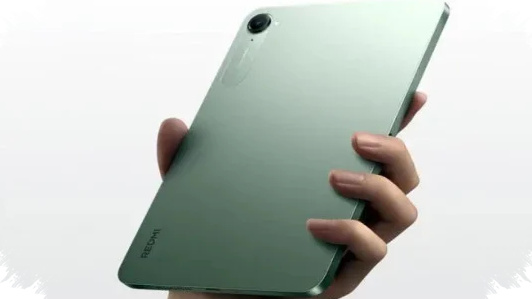
Xiaomi’s Redmi brand is preparing a major launch event in China, and one of the devices drawing the most attention is the Redmi K Pad 2. The new compact tablet has already surfaced in official images, giving an early look at a device that aims to combine portability, gaming performance, and a premium build in one small form factor.
The leaked and confirmed details point to a product designed for users who want a tablet that is easy to carry but still powerful enough for demanding games and multimedia use. With an 8.8-inch display, a metal unibody design, a 165Hz panel, and a large battery, the Redmi K Pad 2 is shaping up to be one of the most interesting compact gaming tablets expected this year.
A compact tablet built for gaming and mobility
The Redmi K Pad 2 follows the same basic concept that made its predecessor stand out: a small tablet that does not feel oversized in everyday use. Its 8.8-inch screen size keeps the device portable, while still giving enough room for gaming, reading, video streaming, and split-screen use.
This balance matters in a market where many tablets are either too large for one-hand comfort or too small to feel immersive. Redmi appears to be targeting users who want a device that can travel easily but still deliver a full entertainment experience.
Metal body and cleaner rear design
Redmi has moved to a metal unibody construction for the K Pad 2, which should improve both durability and the overall premium feel. The rear side also looks cleaner than before, with a simpler camera module and fewer decorative elements.
That change gives the tablet a more minimalist appearance and may also help it appeal to users who prefer a less aggressive gaming look. The power button has been moved to the right side, which should improve ergonomics, especially when the tablet is used in landscape mode for gaming or watching content.
The power button is also expected to double as a fingerprint sensor, although Redmi has not fully detailed that part yet. For color options, the device is shown in three finishes: Deep Black, Spotlight Purple, and Space Silver.
Display: 165Hz panel for smoother motion
One of the biggest highlights of the Redmi K Pad 2 is its 8.8-inch LCD display with a 165Hz refresh rate. That spec is especially important for gaming because higher refresh rates can make scrolling, animations, and gameplay feel much smoother.
A 165Hz screen is not common in compact tablets, so this places the K Pad 2 in a more performance-focused category. Redmi also claims improvements in brightness and eye comfort, which could make the tablet easier to use for long viewing sessions.
A high refresh rate display does not only help gamers. It can also improve general responsiveness in everyday use, from app switching to web browsing and social media navigation.
Performance led by Dimensity 9500
At the core of the Redmi K Pad 2 is the MediaTek Dimensity 9500 chipset. According to the available information, the chip brings a noticeable upgrade over the previous generation, with better single-core and multi-core performance.
That matters because compact tablets often struggle to balance thermals and speed under pressure. If Redmi can keep the new chip cool and stable, the K Pad 2 could handle gaming, productivity, and multitasking with more confidence than many rivals in the same size class.
The tablet’s positioning suggests that Redmi wants this model to serve as more than just a media device. It is clearly being presented as a gaming-friendly tablet with enough processing power to support heavier tasks.
Battery and audio tuned for long sessions
The Redmi K Pad 2 includes a 9,100mAh battery, which is a strong figure for a tablet of this size. In practical use, that should help extend battery life during gaming, video playback, and general browsing.
A larger battery also makes sense for a 165Hz display and a powerful chipset, both of which can increase power demand. Redmi has not yet shared official charging details in the reference material, but the battery capacity alone suggests the device is meant for extended use without frequent top-ups.
Audio is another area where the tablet is being positioned as an entertainment-focused device. Redmi has added a dual-speaker setup that has been tuned for a fuller multimedia experience.
Gaming features that matter
Redmi is also adding dual X-axis motors, which should improve vibration feedback in supported games. This kind of haptic feedback can make actions feel more realistic, whether the user is racing, shooting, or playing rhythm-based titles.
The combination of haptics, high refresh rate display, and solid processor performance creates a more complete gaming package. For users who want a compact tablet for both casual and serious gaming, these details could be more important than raw specs alone.
Here is a quick breakdown of the key hardware points:
- 8.8-inch LCD display
- 165Hz refresh rate
- MediaTek Dimensity 9500 chipset
- 9,100mAh battery
- Dual X-axis vibration motors
- Dual speakers
- Metal unibody design
Possible global name change
There is also an interesting possibility for the international market. The previous Redmi K Pad was reportedly released globally under the name Xiaomi Pad Mini.
If Xiaomi follows the same strategy, the Redmi K Pad 2 could arrive outside China with a different name, possibly Xiaomi Pad Mini 2. That said, no official global launch has been confirmed yet, so this remains speculation for now.
This naming approach is not unusual for Xiaomi, which often uses different branding depending on the market. It helps the company position the same hardware in a way that fits regional product lines.
What makes the Redmi K Pad 2 stand out
The compact tablet segment is still relatively narrow, but it has room for products that offer both portability and premium performance. That is where the Redmi K Pad 2 may find its strongest appeal.
It combines a small footprint with high-end features that are usually reserved for larger or more expensive devices. The 165Hz display, Dimensity 9500 chip, 9,100mAh battery, and gaming-focused hardware all point toward a tablet designed to punch above its size.
For mobile gamers, the appeal is obvious. A device this compact can be easier to hold than larger tablets during long sessions, while still offering enough screen real estate and power to feel serious.
The official launch is expected in the coming weeks in China, and more details should appear when Xiaomi and Redmi reveal the full product lineup. For now, the Redmi K Pad 2 already looks like one of the most closely watched compact tablets of the season, especially for users who want a high-performance gaming slate without moving to a larger tablet category.