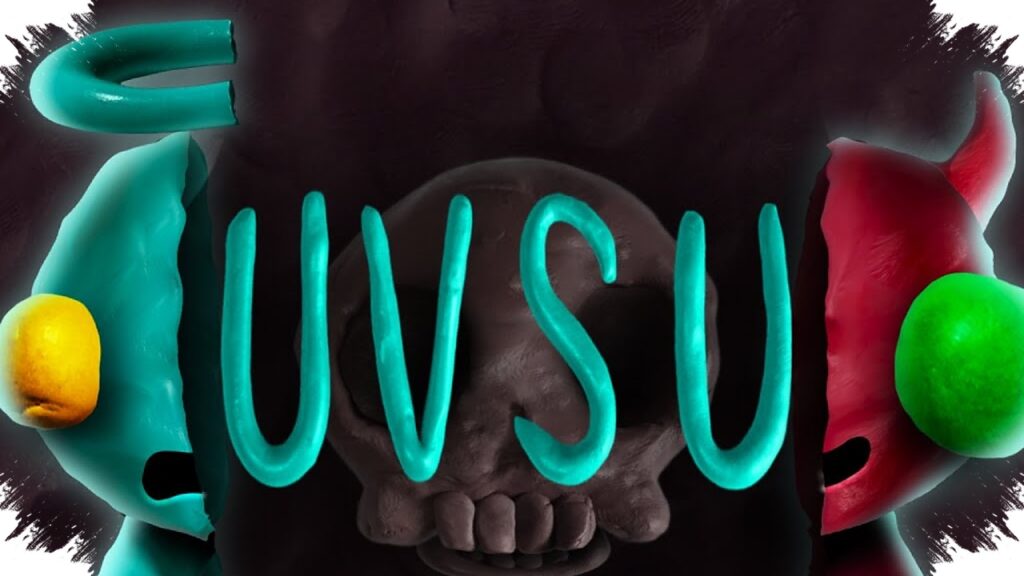
UvsU: You vs You stands out because it turns a familiar platforming rule upside down. Instead of simply racing through a level, players must face a recorded version of their own actions from the previous run, which returns as an obstacle in the next one.
That idea gives the puzzle-platformer a rare mix of pressure and strategy. Every jump, pause, and route choice can shape the next attempt, making UvsU feel less like a standard reflex game and more like a thoughtful test of planning.
A puzzle game built around consequences
UvsU comes from indie developer dietzribi, who is also known for Toodee and Topdee. The project began as a game jam experiment at GMTK Jam 2023 before growing into a full PC release, showing how a small prototype can evolve into a more ambitious design.
The core mechanic is simple to explain but difficult to master. Players move through a stage, and then the recorded version of those actions appears as an enemy or barrier in the next run, forcing an immediate rethink of the earlier route.
That structure creates a constant feedback loop. A path that looks safe in one round may become impossible in the next, while a small mistake can generate a much harder pattern to solve later.
Why the game feels so demanding
UvsU does not rely only on movement skill. It asks players to think several steps ahead, track their own behavior, and predict how one attempt will affect the next.
The result is closer to a tactical puzzle than a traditional side-scrolling platformer. Players must decide whether a jump is useful now, while also asking whether that same move will trap or block the earlier self later.
The design rewards memory and pattern reading more than speed alone. It also raises the difficulty in a way that feels earned, because every challenge comes from the player’s own recorded actions rather than from random threats.
- A past run becomes the next run’s obstacle.
- Each iteration adds a new strategic layer.
- Small mistakes can reshape the entire level flow.
- Success depends on planning, not just reaction time.
- The challenge grows as more timelines stack up.
Claymation gives UvsU a strong visual identity
The game also uses claymation-style visuals, which help it stand apart in a crowded indie market. Characters, environments, and hazards look handmade, creating a physical, tactile look that is still uncommon in many puzzle-platformers.
That choice does more than improve presentation. The handcrafted style fits the game’s theme of repetition, distortion, and controlled chaos, making the world feel both charming and unsettling at the same time.
Most indie puzzle games lean on pixel art or simple 3D models. UvsU instead uses a style that feels more expressive and memorable, which may help it catch attention from players and industry watchers alike.
A world designed for exploration, not just forward motion
UvsU is not built as a straight line from start to finish. Its world is described as non-linear and interconnected, encouraging players to explore, search for secrets, and learn the structure of the map rather than just memorize a route.
That approach adds another layer to the puzzle design. Players are not only solving individual stages, but also understanding how the world functions and where alternative paths may lead.
Non-linear structure can make a puzzle-platformer feel deeper because it gives players more agency. It also increases replay value, since hidden areas and alternative solutions can reveal new ways to approach the game’s central mechanic.
From game jam concept to full release
The move from GMTK Jam prototype to full PC game matters because it reflects a broader pattern in indie development. Many notable independent titles start as compact ideas, then grow when the core concept proves strong enough to support a larger experience.
UvsU fits that pattern well. Its central hook is unusual, its challenge is layered, and its visual style gives it a clear identity, all of which help it compete in a genre where standing out is often difficult.
For players seeking a puzzle-platformer that demands forethought as much as dexterity, UvsU offers a fresh twist. The game turns self-collision into the main source of tension, while its claymation presentation and interconnected world make each run feel like part of a larger, carefully built system.