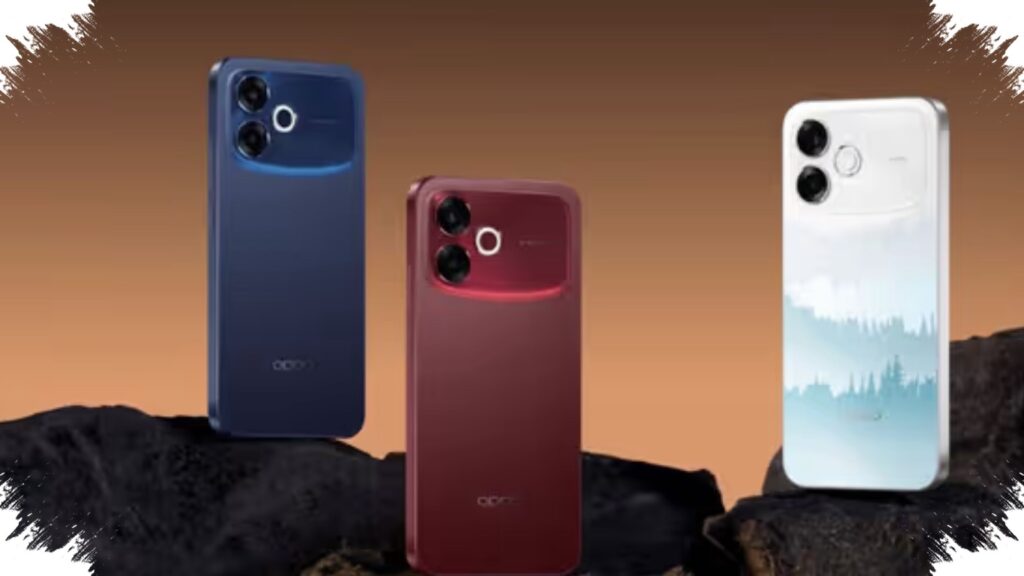
Oppo is preparing to launch the F33 series in India on April 15, and the company is making one message very clear: this phone line is built for durability first. The Oppo F33 and Oppo F33 Pro are being positioned as rugged everyday devices, with extreme testing that goes far beyond the usual splash resistance claims.
The standout detail is the temperature range Oppo says the phones can handle. According to the company’s official information, the F33 series is designed to keep operating at up to 63°C and survive storage in conditions as low as -50°C, a figure that puts the lineup in “tank-like” territory for endurance-focused buyers.
Built for harsh conditions
Oppo says both models carry an IP69K rating, a certification associated with strong protection against dust and high-pressure, high-temperature water jets. That level of sealing is typically used as a sign that a device can cope with demanding outdoor and industrial-like environments better than standard consumer phones.
The company also says the F33 and F33 Pro have passed military-grade certification. In practical terms, Oppo is signaling that the devices have been tested for tougher real-world abuse, including heat, cold, moisture, and repeated physical stress that can expose weak points in a phone’s structure.
Oppo’s testing list is unusually broad for a mainstream smartphone series. The company says it subjected the devices to salt spray for 96 continuous hours, a test meant to reduce the risk of corrosion in coastal areas and humid climates.
Extreme testing in numbers
The durability claims are not limited to water and dust resistance. Oppo says the F33 series was also simulated under storm conditions to reflect heavy monsoon weather, while high-speed particle exposure was used to verify full sealing against dust intrusion.
- IP69K protection against dust and pressurized hot water
- Military-grade certification
- Operating performance up to 63°C
- Cold storage testing down to -50°C
- 96-hour salt spray exposure
- Storm simulation for severe weather
- High-speed particle resistance testing
These claims suggest Oppo is targeting users who need more than a stylish midrange phone. The line appears designed for travelers, outdoor workers, and buyers who want a handset that can withstand temperature swings, wet conditions, and rough handling without frequent worry.
Armor-focused design choices
Oppo says the F33 series uses a 360° Armour Body and an AM04 aerospace-grade aluminum alloy frame. The company claims the construction helps improve overall rigidity, while also supporting the phone’s resistance to drops and impacts from multiple angles.
The rear panel is also described as using a 1.5 mm polymer sheet, which adds another layer to the structure. Oppo says the devices have been drop-tested across several angles and on different surfaces to better reflect accidental falls in daily use.
On the front, protection comes from AGC DT-STAR D+ glass. Oppo says the display system uses a layered cushioning structure, similar to an airbag, to absorb the first point of impact and help protect key internal parts such as the camera, speaker, and battery.
That combination matters because rugged phones often sacrifice comfort or style. Oppo appears to be trying to avoid that trade-off by combining stronger materials with a slimmer, more modern design language.
Battery capacity is another major draw
Battery life is another area where the F33 series stands out. Oppo has confirmed a 7,000mAh battery for both models, which is a large capacity for a phone that still aims to stay relatively slim and practical for daily carry.
The company also claims the battery is built for up to five years of use, supported by what it calls a bio-inspired self-repairing electrolyte. If that holds up in real-world use, it could appeal to buyers who keep phones for longer cycles and care about long-term battery health as much as raw runtime.
Confirmed specs so far
Oppo has also revealed several core hardware details ahead of launch. The two phones will use a 6.57-inch flat display, while the rear camera setup centers on a 50MP OV50D40 main sensor paired with a 2MP depth sensor.
The F33 Pro will add a 50MP selfie camera with a 100-degree field of view and a smart 0.6x auto-switch feature for group shots. Oppo is also adding AI tools such as AI Portrait Glow, Dual-View Video, and AI Groupfie Expert, showing that the company still wants the F33 line to compete on imaging features, not just toughness.
What buyers should expect at launch
Oppo has said the F33 series will come in Misty Forest, Starry Blue, and Passion Red, with a reported weight of around 194 grams. Early guidance for India places the pricing somewhere between Rs 30,000 and Rs 40,000, although final figures will be confirmed at launch.
For now, the F33 series looks less like a typical midrange refresh and more like a durability statement. With IP69K sealing, military-grade certification, a 7,000mAh battery, and claimed resistance from -50°C to 63°C, Oppo is clearly betting that extreme resilience can be a major selling point in a crowded smartphone market.