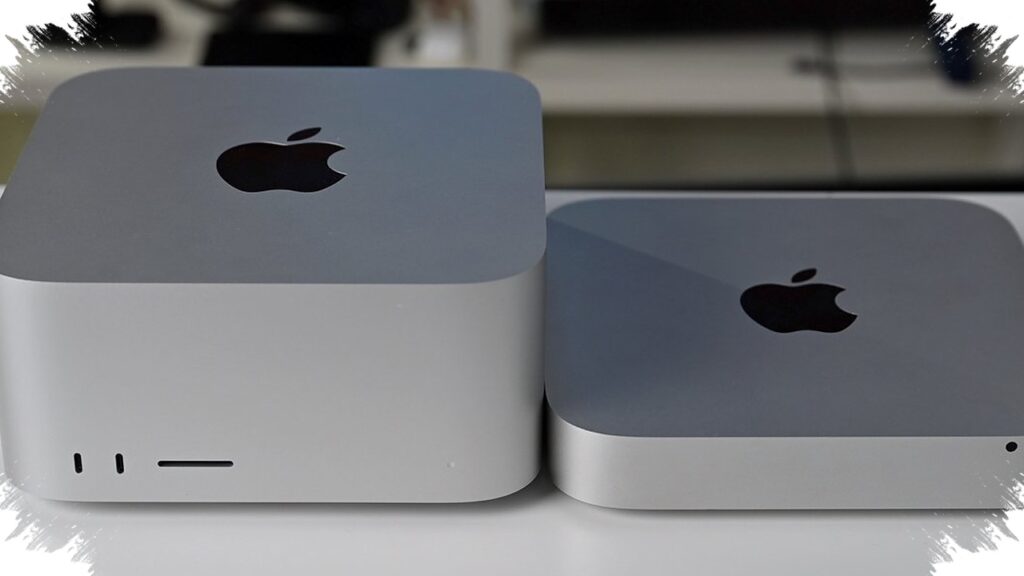
Apple’s Mac mini and Mac Studio are now facing unusually long delivery times, with some high-memory configurations showing estimated shipping windows of four to five months in the US online store. The delay is not affecting every model equally, and the standard versions are still available much faster than the variants with larger RAM upgrades.
The pattern points to a broader supply constraint in high-end memory components, a part of the hardware stack that has become increasingly important as demand rises across consumer electronics, cloud infrastructure, and AI-related systems. For buyers who need a compact desktop or a professional workstation, the wait is becoming a real factor in purchase decisions.
Why the delay is hitting only certain configurations
Apple’s product pages show that the longest waits are concentrated on Mac mini and Mac Studio models with higher memory options. That suggests the bottleneck is not the entire device lineup, but specific component combinations that depend on premium RAM supply.
This is important because memory is no longer just a standard part of a PC build. It has become a scarce and strategic component, and when supply tightens, shipping schedules can slip quickly even for a company with Apple’s scale.
A closer look at the affected models
Mac Studio and Mac mini serve different users, but both target people who want reliable performance. Mac Studio is aimed at professionals who need serious workstation power, while Mac mini offers a smaller and more affordable desktop option.
Apple introduced the latest Mac Studio on Wednesday, March 5, 2025, with M4 Max and M3 Ultra chips. That launch reinforced Apple’s push toward high-performance desktop computing, especially for video editors, designers, software developers, and other users who depend on sustained speed.
What may be driving the memory shortage
Apple has not publicly detailed the exact reason for the longer shipping estimates. Still, industry watchers point to a likely combination of rising demand and limited memory production capacity, especially from sectors tied to AI and data centers.
- Higher-RAM configurations are harder to source than standard models.
- AI infrastructure is consuming more high-end memory capacity.
- Global semiconductor supply chains remain vulnerable to disruption.
- Professional desktops like Mac Studio rely heavily on premium memory components.
That mix creates pressure across the industry. When the same memory parts are needed by servers, AI systems, and premium consumer devices, manufacturers often have to adjust allocations and production schedules.
What buyers are likely to face
For consumers, a four- to five-month wait can change the buying decision in practical ways. Some buyers may choose a base configuration just to get the device sooner, while others may delay the purchase until the exact setup they want becomes available.
The impact is especially noticeable for users who need a machine for work. Content creators, developers, and production teams often build around memory-heavy configurations, which makes a long shipping delay more than a minor inconvenience.
Why this matters beyond Apple
The shipping slowdown also says something larger about the current PC and hardware market. Demand for powerful desktop machines remains strong, but supply chains are still sensitive to shifts in memory availability and to competition from fast-growing AI workloads.
That tension is likely to continue shaping product availability in premium technology segments. If memory production remains tight, longer lead times for high-spec Mac mini and Mac Studio models could persist, while standard configurations may continue to ship faster because they rely on less constrained component mixes.
The current situation shows how quickly a component shortage can reshape the buying experience for mainstream and professional users alike. For now, Apple’s lower-memory Mac mini and Mac Studio models remain the easier options to get, while the most demanding configurations are still tied to a supply chain under pressure.