Hisense is pushing beyond the usual image of a home appliance brand in 2026, building a connected portfolio that links refrigerators, washing machines, TVs, projectors, and mobile devices through AI-driven features. The shift matters because many households now want a smart home that feels practical, not complicated.
That is where Hisense is finding room to grow, especially in markets where buyers want one brand that can cover daily essentials and entertainment at the same time. Instead of selling isolated products, the company is positioning its lineup as a working ecosystem that can reduce effort, improve efficiency, and make connected living easier to adopt.
Hisense is turning hardware into a connected home platform
The clearest change in Hisense’s strategy is that product lines no longer look like unrelated categories. Home appliances, entertainment devices, and mobile-computing products are being developed to support a more integrated digital lifestyle.
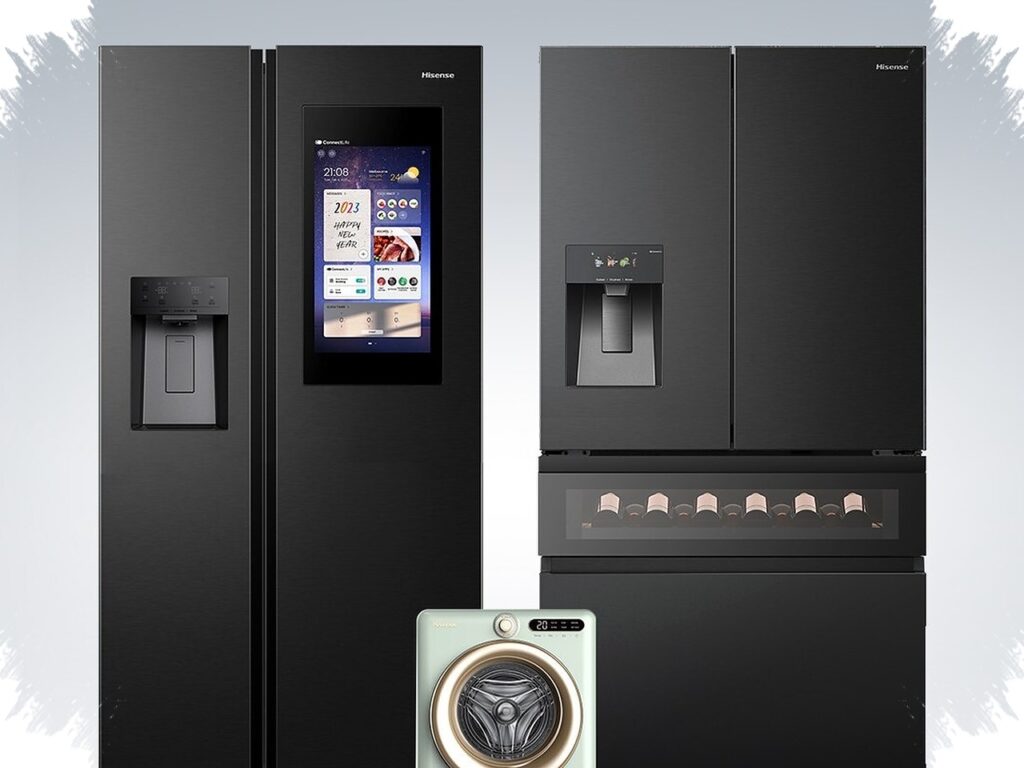
The Home Appliances range focuses on large-capacity refrigerators and washing machines designed for durability and energy efficiency. At the same time, the Home Entertainment segment centers on 4K AI projectors and Smart TVs, while the Mobile & Computing category adds devices such as the Pureshot smartphone series and the Vidaa Mirror tablet.
This broader structure gives Hisense an advantage in smart-home adoption. Consumers can start with one essential device and expand later without needing to rebuild their setup from zero.
AI is becoming the core user experience
Artificial intelligence is now one of the major selling points across Hisense’s latest products. The goal is not only advanced features, but also easier operation for users who do not want technical setup to slow them down.
Hisense’s 4K projectors stand out with Auto Magic 2.0, a system that automatically adjusts focus, keystone correction, and brightness based on the room. That matters for buyers who want a large screen experience without the manual tuning that usually comes with projector installation.
The same logic appears in its smart-home direction. Hisense says newer products can be controlled through a unified app, allowing users to connect appliances such as washing machines, refrigerators, and air conditioners in one ecosystem.
What that means for everyday use
- New users can operate devices with less learning time.
- Daily settings can move faster because many tasks run automatically.
- Energy use can be monitored and managed more efficiently.
- Multiple devices can be tracked from one application.
Refrigerators remain one of the strongest categories
Refrigerators are a critical purchase for families because they run all day and affect both convenience and electricity bills. In the reference material, Hisense emphasizes large storage, strong durability, and energy efficiency as key reasons for choosing its fridge lineup.
Inverter technology is an important part of that story because it helps reduce power use without losing cooling performance. That can be especially useful for households that store large amounts of food and want stable preservation without pushing monthly electricity costs too high.
Build quality also matters. Hisense highlights the use of high-quality metal materials to strengthen the body of the refrigerator, which is relevant for a long-term appliance that may stay in service for many years.
Washing machines are designed for stable daily performance
Hisense washing machines are positioned around durability, efficiency, and steady operation. Inverter technology again plays a central role because it helps lower noise and keeps the motor working more consistently.
That can be useful for families that wash clothes often and need a machine that does not disrupt the home. A quieter appliance also fits modern living spaces, especially when laundry areas sit close to kitchens or family rooms.
Capacity remains another key factor. Larger families generally need bigger models, while smaller households may benefit from more compact units to avoid unnecessary energy use.
Projectors are giving homes a flexible premium screen option
Hisense’s 4K AI projector lineup offers an alternative to oversized TVs for people who want big-screen entertainment without a permanent installation. The biggest appeal lies in flexibility, since the projected image can reportedly reach around 100 to 150 inches, depending on the setup.
That makes the product attractive for home cinema use, streaming, or sports viewing in spaces that do not support a large wall-mounted television. The portable form factor also makes it easier to move or reposition compared with conventional TVs.
The AI-assisted setup helps newer users avoid technical friction. With automatic focus and image correction, the projector can be placed in a room, adjusted by the system, and used with minimal manual tuning.
Display quality remains a major differentiator
Hisense is also leaning on visual performance across projectors and tablets. The reference points to high pixel density on tablets and true 4K resolution on projectors as part of the company’s push for sharper image quality.
That matters for entertainment, where detail can enhance movies, sports, and streaming content. It also matters for creative work, where clear visuals support tasks such as design and editing.
Why the smart-home ecosystem matters for Hisense
Smart devices are increasingly judged not by one standout feature, but by how well they work together. Hisense appears to understand that shift and is building an ecosystem that combines appliances, entertainment, and AI control into a more coherent experience.
The approach is practical for households that want to expand gradually. A family can begin with a refrigerator or washing machine, then add a projector, TV, air conditioner, or other devices over time as needs and budgets change.
A simple product guide for buyers
| Main need | Relevant Hisense category | What to prioritize |
|---|---|---|
| Food storage and kitchen use | Refrigerator | Capacity, power efficiency, body durability |
| Frequent laundry for family needs | Washing machine | Capacity, inverter technology, stable performance |
| Premium home entertainment | 4K AI projector | Screen size, portability, automatic image adjustment |
| Connected smart home setup | AI ecosystem | Single-app control, energy optimization |
After-sales support also affects buying decisions
For long-term appliances, service access is part of the value proposition. The reference notes that Hisense has official service coverage in major Indonesian cities for repairs and warranty claims.
That can matter as much as the product itself, especially for refrigerators, washing machines, and home entertainment devices that are expected to last for years. In a crowded smart-home market, dependable support often separates a promising device from a truly practical purchase.
Hisense’s 2026 direction suggests a brand trying to define itself less as an electronics maker and more as a home technology platform, with AI, efficiency, and daily usability at the center of that transition.