Artificial intelligence is driving a new surge in electricity demand, and the pressure is now shaping national energy strategy. In China, nuclear power is being positioned as a practical answer to keep data centers running around the clock while limiting carbon emissions.
This shift reflects a basic reality of modern AI: advanced chips matter, but they are useless without a stable and massive electricity supply. As models grow larger and more data centers come online, power access is becoming a core part of technological competitiveness.
Why AI is changing the energy equation
AI systems do not operate like ordinary digital services. They train large models, run constant inference, and process huge data sets, all of which require uninterrupted power day and night.
Jensen Huang, the founder of Nvidia, has described AI tokens as a “new commodity,” a remark that captures how AI growth ultimately depends on one thing first: electricity. That reality is now pushing governments and industry leaders to think beyond temporary fixes and toward long-term energy infrastructure.
China sees low-carbon baseload power as especially important because it can support digital expansion without the volatility that comes with weather-dependent sources. Nuclear energy has re-entered the discussion because it can deliver steady output at the scale AI infrastructure needs.
Small modular reactors fit the data center model
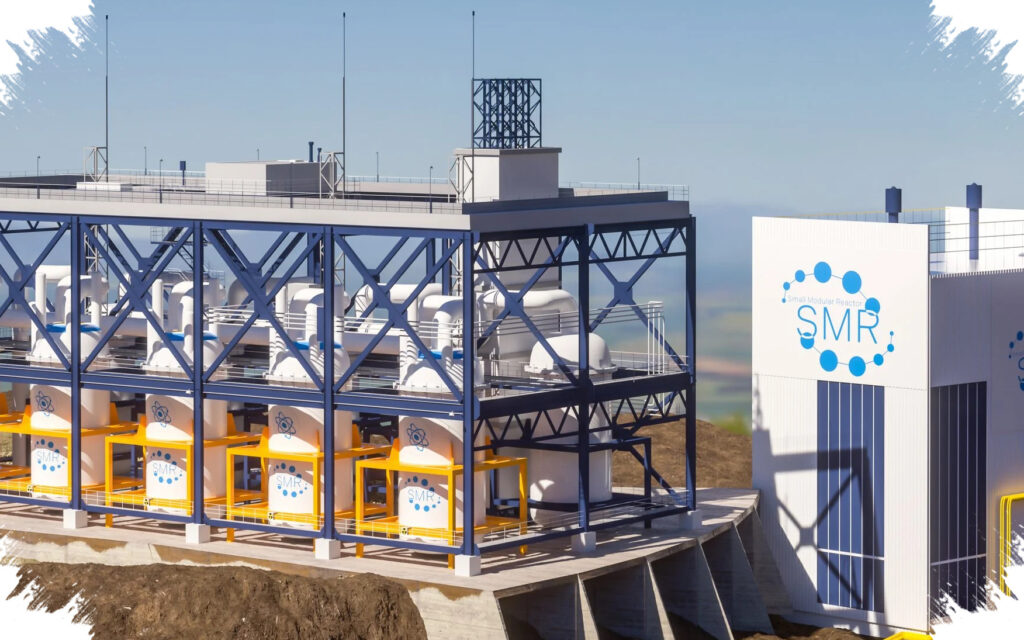
Small Modular Reactors, or SMRs, are attracting attention because they offer a more flexible nuclear option than traditional large plants. Their smaller design makes them easier to deploy in phases and potentially closer to industrial zones or major computing hubs.
For data center operators, that proximity could matter a great deal. Electricity losses fall, supply becomes more predictable, and the need for costly backup systems can be reduced when the power source is built for constant output.
Unlike solar and wind, nuclear power does not depend on sunlight or wind conditions. That makes it attractive for AI workloads that cannot tolerate interruptions, delays, or sudden changes in supply.
A simple comparison helps explain why SMRs are being discussed so often for AI infrastructure:
| Energy source | Main advantage for AI | Main limitation |
|---|---|---|
| Nuclear / SMR | Stable 24/7 power | High build cost and long approval process |
| Solar | Low emissions | Intermittent output |
| Wind | Clean electricity | Weather dependent |
| Gas | Flexible generation | Higher carbon emissions |
Linglong One has become a key reference point
One of the most closely watched projects is Linglong One, an SMR developed by China National Nuclear Corporation. It is being presented as the world’s first land-based commercial SMR and is reported to be about 90% complete.
If it enters service as planned, Linglong One is expected to generate around 1 billion kWh of electricity per year. That figure matters because it shows modular nuclear power moving from theory into commercial deployment.
The project also fits China’s broader emissions agenda. Nuclear energy offers a way to support industrial growth while keeping the carbon footprint lower than many fossil-fuel alternatives.
A “nuclear + computing” industrial zone is being prepared
China is also planning an industrial park in Hainan built around the idea of “nuclear + computing power.” The concept is straightforward: place energy supply and AI infrastructure within the same ecosystem to support clean, reliable computing.
The project has reportedly been included in government priorities for the coming year. That suggests the idea is no longer treated as an experiment, but as a strategic industrial direction tied to digital growth.
Such a model could ease pressure on the public grid and give AI operators more certainty over long-term energy access. It also shows how energy planning is becoming part of the race to build stronger AI infrastructure.
Why nuclear is back in the technology conversation
Interest in nuclear power is not limited to China. Around the world, technology companies and policymakers are reconsidering nuclear energy because it is low carbon, reliable, and capable of supporting large baseload demand.
AI is creating a different kind of electricity pressure than earlier waves of computing. Generative tools, cloud services, and multimodal model training all require infrastructure that must stay online continuously.
The main reasons nuclear is being reconsidered for AI include:
- Constant power supply across all hours.
- Lower emissions than fossil-fuel generation.
- Better fit for high-load data center operations.
- Support for wider digital decarbonization goals.
Even so, nuclear development still faces major hurdles. Construction costs remain high, safety standards are strict, licensing can take years, and public acceptance continues to shape how quickly projects move forward.
AI competition is increasingly about power, not just software
The global AI race is no longer defined only by chips, research talent, and model performance. Electricity has become a strategic factor because without enough power, computing capacity cannot scale.
China appears to be moving early by linking AI expansion with energy planning. If projects such as Linglong One and the Hainan industrial park progress as expected, the country could strengthen its position in the competition to build AI infrastructure that is large, steady, and low carbon.