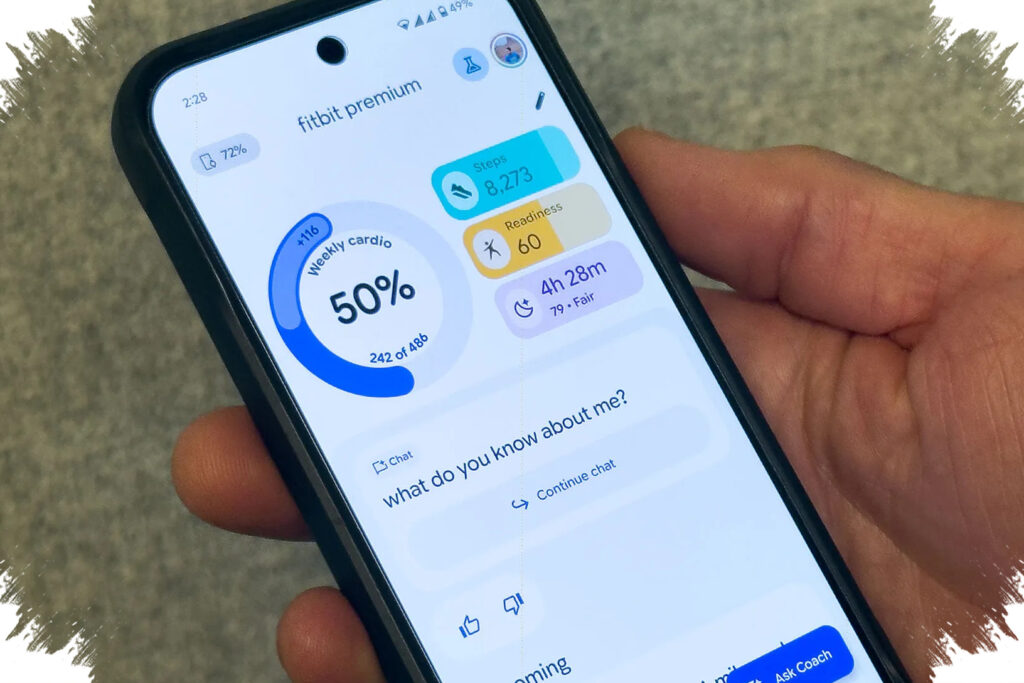
Fitbit has expanded access to its Personal Health Coach feature to users in 37 countries, marking a wider rollout of its AI-driven health assistant across Android and iOS. The update now reaches both free and Premium users, giving more people access to personalized guidance based on their own health and activity data.
The move strengthens Fitbit’s position in the competitive wearable market, where software features matter as much as hardware. It also shows how Google, Fitbit’s parent company, is pushing deeper into AI-powered health tools that can help users interpret their metrics in a more practical way.
What the expansion includes
The new rollout brings several important changes for users in the supported markets. Fitbit says the Personal Health Coach can now use historical health data to offer more relevant recommendations, with support for a wider range of languages and additional health metrics.
- Access for free and Premium users in 37 countries
- Support for 27 new languages in the preview phase
- VO2Max integration for more accurate cardio fitness tracking
- Health Connect support to combine data from other health apps
Fitbit’s approach is designed to make health coaching feel more natural and more useful. By reducing language barriers and connecting more data sources, the company is trying to turn raw health numbers into clearer guidance.
Why language support matters
One of the biggest changes in this expansion is multilingual access. Fitbit says the preview supports 27 languages now, with plans to grow to 32 languages in future updates, including Hindi, French, German, and Japanese.
This matters because health advice only works well when users can understand it easily. A coach that speaks the user’s language can improve engagement and make it simpler to ask questions about sleep, exercise, and recovery.
How the Personal Health Coach works
The AI assistant uses stored health data to build a more personalized picture of the user’s habits. It can analyze metrics such as step counts, sleep patterns, and calories burned, then turn those signals into more context-aware suggestions.
Fitbit also emphasizes transparency in data use. Users can check the source of information through filters shown above the app’s charts, which helps them see where the data comes from and how it is being combined.
Why VO2Max is a notable addition
A key upgrade in this rollout is the inclusion of VO2Max, which Fitbit previously referred to as Cardio Fitness Score. VO2Max is a widely used indicator of cardiovascular fitness and can help users better understand their endurance level over time.
For people focused on training, the metric can be especially valuable because it offers a more structured view of heart and lung performance. It also gives the coaching experience a more athletic edge, moving beyond simple step tracking and into more advanced fitness monitoring.
What public preview still does not include
Despite the wider rollout, the Personal Health Coach remains in Public Preview. That means the feature is still being developed, and not every planned function is available yet.
- Blood glucose tracking is not yet included
- Body temperature data is not yet available
- Manual sleep data editing is still missing
- Social features such as leaderboards, groups, and badges are not active
- Advanced running metrics for Pixel Watch 3 and Pixel Watch 4 users are still pending
Fitbit has also said that resting heart rate and SpO2 support should arrive in a future update. These additions would give the coach more health data to work with and could improve the quality of its recommendations.
How Fitbit fits into the broader AI health trend
The rollout reflects a larger shift in consumer health technology. Wearable companies are no longer only selling sensors and screens, because users now expect software that can interpret information and provide meaningful feedback.
Fitbit’s expansion to more countries and more languages suggests that Google wants the Personal Health Coach to become a global product rather than a market-specific experiment. That strategy could help Fitbit stay relevant as rivals add their own AI health features and more users look for simpler ways to manage wellness data.
What users can expect next
Google says the feature will continue reaching additional regions over the coming weeks, which means the current list of 37 countries may grow soon. As more data types and more languages are added, the coaching experience is likely to become more detailed and more useful for everyday health tracking.
For now, the most important shift is accessibility. Fitbit is opening an AI health tool to a broader audience, and that could make personalized wellness guidance feel less like a premium luxury and more like a standard part of the wearable experience.