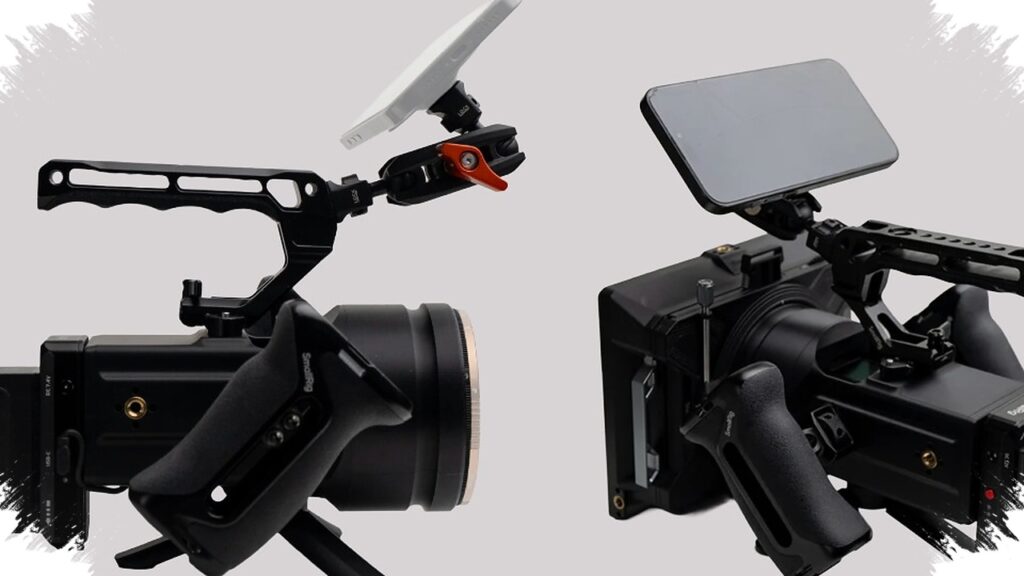
Vivo is signaling that its camera strategy is moving beyond smartphones and toward a broader imaging ecosystem built for creators. After unveiling the Vivo X300 Ultra at a spring launch event, the company’s senior executives outlined a direction that could put a dedicated vlogging device and expanded camera accessories at the center of its next product push.
The shift matters because mobile imaging is no longer only about better sensors or sharper photo quality. Vivo appears to see a clear gap between what flagship phones can do and what vloggers, livestreamers, and short-video creators actually need during daily shooting.
A compact vlogging device is now on the table
According to CNMO, which cited Vivo executives Huang Tao and Han Boxiao, the company is exploring a dedicated camera for self-recording. The product is aimed at vloggers and content creators who want a more practical tool for filming themselves without relying on a full camera setup.
Vivo has already acknowledged that the rear camera on a premium phone such as the X300 Ultra is highly capable. Even so, many users still turn to action cameras or external devices when they need better ergonomics, easier handling, and steadier self-shooting for longer sessions.
The device under consideration is said to be compact and equipped with built-in stabilization. If the plan stays on schedule, it could arrive alongside the next X series generation in the third quarter.
Why Vivo may be looking beyond the phone
The move reflects a broader market trend driven by short-form video, livestreaming, and everyday social content. Creators increasingly want gear that is light, stable, quick to use, and optimized for filming themselves in real-world conditions.
Smartphones remain central to content creation, but they still have limits when it comes to comfort and sustained self-recording. That gap has helped devices such as pocket gimbals and action cameras hold relevance even as phone cameras continue to improve.
Vivo seems to be reading that gap as an opportunity rather than a weakness. Instead of adding more camera features only inside the handset, the company is reportedly building around use cases that go beyond traditional smartphone photography.
Camera accessories are becoming part of the plan
Vivo is also said to be expanding its camera accessory ecosystem. In China, the company already offers external telephoto modules such as the G2 and G2 Ultra for the X300 Ultra.
Those accessories are designed to improve long-range imaging and show that Vivo is thinking in terms of a system, not just a standalone phone. The strategy could help the brand deepen its appeal among users who want more flexibility without switching to an entirely different camera ecosystem.
In the longer term, Vivo is reportedly working toward a more standardized accessory mounting system. If that happens, one accessory could potentially work across more devices in the brand’s lineup.
What the roadmap could look like
The company’s next steps appear to be tied to both product readiness and image quality consistency. Vivo has indicated that broader accessory support will depend on whether the experience stays reliable across devices and delivers the same level of results users expect.
- A dedicated compact vlogging camera with stabilization.
- Expanded support for external telephoto accessories.
- A more universal accessory-mounting system.
- Possible rollout to more than one product line.
- A focus on real user needs rather than marketing trends.
Quality control remains the biggest challenge
Vivo’s push into accessories and new camera categories will only matter if the output stays consistent. A compatible accessory does not automatically guarantee the same photo and video quality across all models, especially when hardware tuning and software processing vary from one phone to another.
That is why the company is treating image quality as a core requirement before opening accessory support to more devices. For a brand trying to build a creator-focused ecosystem, consistency may matter as much as raw performance.
Vivo’s executives have framed the direction as one driven by actual user needs, not just product hype. That positioning is important in a premium market where competition now extends beyond megapixels and zoom claims, and into practical tools that fit the way people shoot video every day.
As Vivo develops its next imaging products, the bigger story is clear: the company is no longer treating the smartphone camera as the final destination, but as one part of a wider set of tools shaped for vlogging, mobile storytelling, and creator workflows.