The Prabumulih Police Department has set an ambitious corn cultivation target for 2026: 75 hectares. To reach that goal, the force is focusing on idle land, or underused plots that can be turned into productive farmland, while also expanding support for local farmers across the city.
The plan reflects a wider push to strengthen food security and lift corn output in Prabumulih. Police Chief AKBP Bobby Kusumawardhan said the department will keep encouraging residents to grow corn on vacant land and will oversee the program from planting to harvest distribution.
Police push idle land into productive use
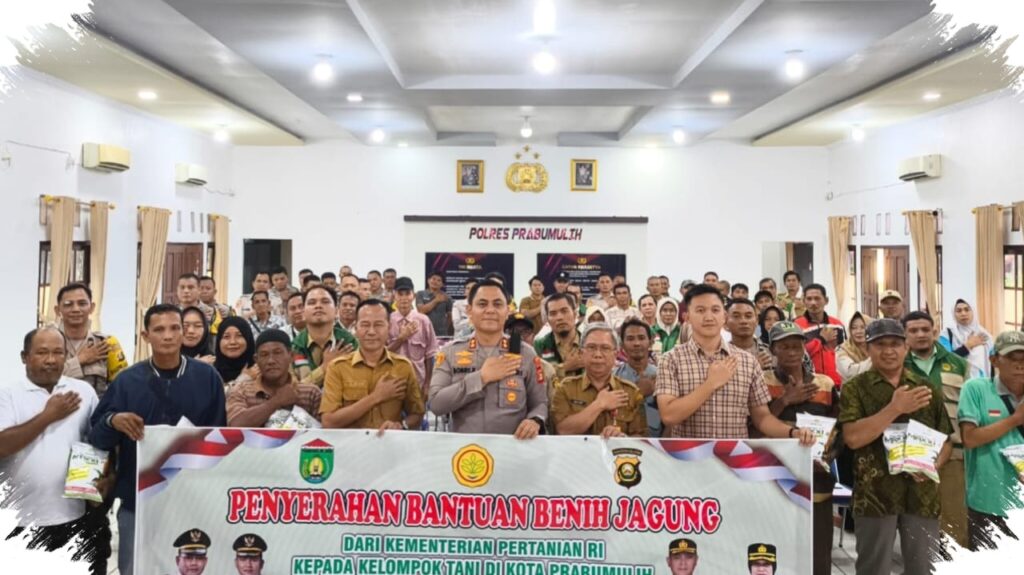
The target was announced after the handover of corn seed assistance to farmer groups at the Command Center of the Prabumulih Police on Tuesday, April 14, 2026. Bobby said the police want to make use of unused land so it can contribute to local food production instead of sitting idle.
He described corn as a strategic crop that can help support regional food resilience. The message was clear: if land is available, it should be planted.
“We will continue to push the use of idle land so it becomes productive land. We also invite the public to be more active in planting corn as one of the strategic commodities,” Bobby said.
Current farming hotspots show strong yields
Prabumulih does not start from zero. Some areas already serve as corn production centers, especially Pangkul Village and Sindur in Cambai District.
According to Bobby, those locations have more fertile soil than several other parts of the city, including Rambang Kapak Tengah and Prabumulih Barat. That soil advantage translates into stronger harvests.
He said corn yields in Pangkul and Sindur can reach 5 to 8 tons per hectare, while some other areas still have room to improve because of differences in land quality. The data gives local authorities a practical map of where expansion may work best.
Support from the agriculture office and local government
The seed distribution was not only a police initiative. It also involved the city government and the Agriculture Office, which aim to give farmers a more complete support system.
Prabumulih Regional Secretary H. Elman said 2026 corn seeds from the Ministry of Agriculture were symbolically handed over to 17 farmer groups across six districts in the city. The total assistance reached 600 kilograms of corn seed.
That aid is expected to help boost productivity and strengthen regional food security. Elman said the government will not stop at seed distribution and will continue helping farmers through training, capacity building, and marketing support.
“Our Agriculture Office will continue assisting farmers, from extension services to helping market the harvest. Our target is for corn production to reach 5 to 7 tons per hectare,” he said.
Why the target matters for Prabumulih
Corn is one of the key crops in Indonesia’s broader food security agenda. In cities like Prabumulih, the challenge is often not only in planting more land, but also in ensuring that farmers receive enough technical support, seed quality, and post-harvest access.
The 75-hectare target reflects a local strategy built on three practical steps.
- Identify idle land that can be cultivated.
- Support experienced farmer groups with seeds and extension services.
- Secure the harvest chain so production can reach buyers, including Bulog if needed.
This approach matters because land use alone does not guarantee output. Yields depend on soil conditions, farmer skills, rainfall patterns, and access to markets.
Bhabinkamtibmas role becomes part of the farming drive
The police also want neighborhood officers to play a direct role in the field. Bobby said Bhabinkamtibmas personnel should be present in the community to motivate farmers and help keep the program on track.
He also stressed that the police will monitor the entire process, including the flow of harvested corn to Bulog. That oversight is designed to reduce bottlenecks and give farmers more confidence that their crops will be absorbed by the market.
The involvement of police in agriculture may seem unusual, but in Indonesia it has become more common in food security programs. Local law enforcement often helps coordinate communities, track land use, and encourage participation in government-backed initiatives.
Experienced farmer groups are seen as an advantage
The Agriculture Office said the receiving farmer groups are not beginners. Head of the Prabumulih Agriculture Office Alpian, together with his secretary Taufiq Rahman, explained that the groups have been working on corn cultivation since 2021.
They are already connected with agricultural extension workers from the Ministry of Agriculture, which should make the assistance more effective and targeted. That experience gives the city an advantage because the support can be directed to farmers who already know the planting cycle and field requirements.
Alpian said the groups have a clear cultivation record and established communication with extension officers. That structure is important for monitoring progress and improving final yields.
What the 2026 program will likely depend on
The success of the 75-hectare target will likely hinge on several factors that local officials are already trying to address.
- Availability of suitable idle land.
- Soil conditions in each district.
- Continued field assistance from extension workers and Bhabinkamtibmas.
- Access to seed, fertilizer, and harvest buyers.
- Farmer commitment to expand planting area.
Prabumulih’s existing production centers suggest the city can scale up if the right land is identified and the support system stays consistent. The focus now is on turning unused plots into productive fields while keeping farmers connected to a clear and practical support chain.
With 600 kilograms of seed already distributed to 17 farmer groups and police promising full monitoring from planting to market delivery, the city has laid down the framework for a broader corn expansion program in 2026.