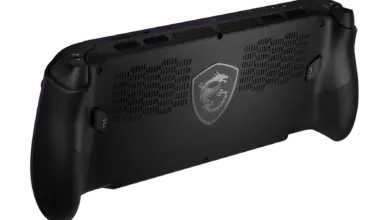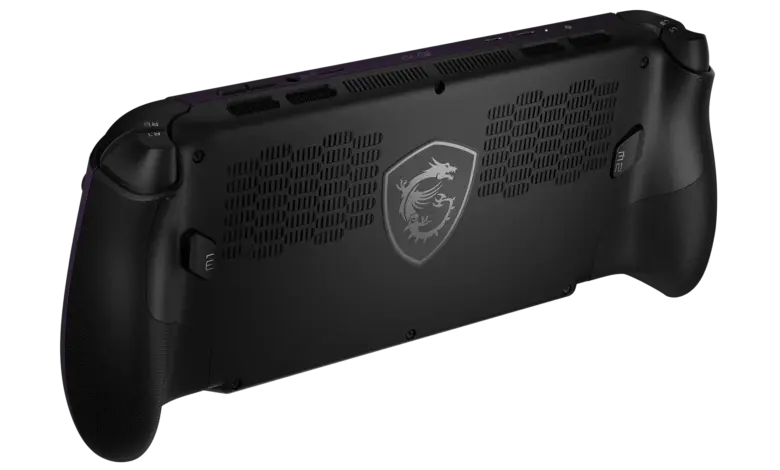
The handheld gaming market is getting a new challenger, and MSI Claw 8 EX AI+ is the device leading Intel’s push. With Arc G3 Extreme inside, the machine puts Intel’s handheld strategy on display at a time when portable PC gaming is already crowded with established rivals.
What makes this move notable is not only the new chip name, but also the direction behind it. Intel is targeting a class of devices where power efficiency, thermal limits, and battery life matter just as much as raw performance, and MSI’s new handheld is the first clear example of that approach.
A new Intel chip built for portable gaming
Arc G series marks Intel’s formal entry into handheld gaming silicon, with two versions planned: Arc G3 and Arc G3 Extreme. The focus is on balancing power use and core allocation so the chip can fit the demands of a compact gaming device instead of a traditional laptop.
Arc G3 Extreme is built on Intel’s 18A process, which is meant to improve transistor density and energy efficiency. For handheld gaming, that combination is important because it helps deliver stronger performance without putting mobility at risk.
The chip includes 14 CPU cores in total, split into 2 performance cores, 8 efficiency cores, and 4 low-power efficiency cores. On the graphics side, it uses integrated Arc B390 graphics with 12 XE cores, 12 ray tracing units, and 96 XMX engines.
Memory support is also substantial, with up to 96 GB of LPDDR5X running at 8,533 MT/s. That specification set shows Intel is not aiming for a modest upgrade, but for a platform that tries to bring aggressive compute and graphics capability into a small handheld form factor.
MSI Claw 8 EX AI+ gets the premium treatment
MSI Claw 8 EX AI+ is the first device to use Arc G3 Extreme, and its hardware configuration reflects a premium position. It carries an 8-inch IPS display with a 120 Hz refresh rate and Variable Refresh Rate support, both of which help keep gameplay smooth when frame rates fluctuate.
The device also comes with 32 GB of RAM and a 1 TB PCIe Gen 4 SSD. That combination gives it room for modern game installs and fast loading performance, which are important expectations in this category.
MSI has also equipped the handheld with Hall Effect joysticks and triggers. Those components are often valued for precision and long-term durability, especially on a device that will see frequent, high-intensity use.
Comfort and immersion are part of the package as well. The handheld uses an ergonomic design with textured grips, plus HD haptics, DTS audio, and front-facing stereo speakers.
Connectivity and control options round out the package
MSI Claw 8 EX AI+ also stands out for its connectivity. It supports Wi-Fi 7, Bluetooth 6, and two Thunderbolt 4 ports for accessories and device integration.
Those choices make the handheld more flexible for users who want to connect peripherals or expand the system’s use beyond basic portable play. At the same time, they reinforce the idea that MSI is positioning the device as a high-end portable PC rather than a stripped-down gaming gadget.
Intel is betting on performance gains
Intel says Arc G3 Extreme can deliver notable gains in internal benchmark testing. At a 35W TDP, the chip is said to perform up to 44 percent better than Intel Ultra 7258V and 42 percent better than AMD Z2 Extreme in certain game titles.
The company also points to improvements at lower power levels. At 17W TDP, Intel says performance is 24 percent higher than its previous model.
That matters because handheld devices rarely stay in one power mode all the time. A chip that can scale between efficiency and higher output may have an advantage in real-world use, especially in demanding titles such as Hogwarts Legacy and Battlefield 6, which are said to run smoothly even at high settings.
Premium ambitions come with trade-offs
Despite the strong specifications, MSI Claw 8 EX AI+ is not without compromises. Its premium price is likely to limit appeal among buyers who are more sensitive to cost.
It also leaves out some features that are often expected in higher-end devices. The handheld does not include Thunderbolt 5 and does not use an OLED panel.
The high cost of LPDDR5X memory is another factor that can push the overall price upward. That makes the device more likely to attract early adopters than a broad mass-market audience.
Still, the launch matters because it gives Intel a real entry point in handheld gaming. MSI Claw 8 EX AI+ is the first test case for Arc G series, and its reception will help show how far Intel can push its new portable gaming strategy.
Source: www.geeky-gadgets.com