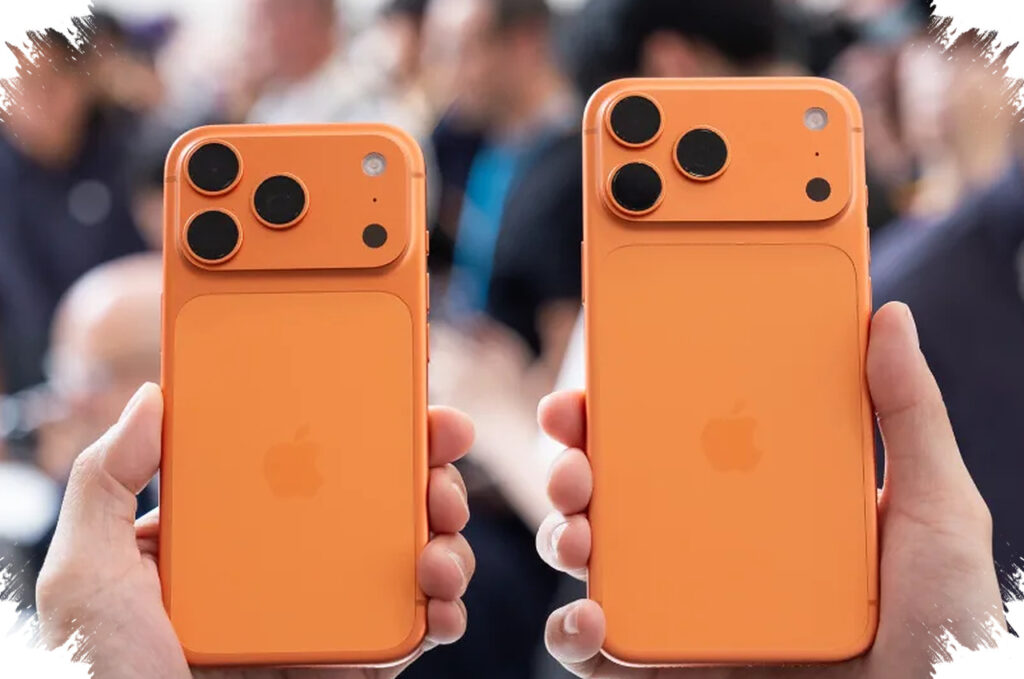
Counterpoint’s latest quarter-end market readout shows a familiar pattern in global smartphone demand: Apple still owns the highest-value end of the market. In Q4 2025, iPhone models occupied five of the 10 best-selling smartphone slots worldwide, led by the iPhone 17 Pro Max.
The data points to a market that is increasingly concentrated at the top, even as Android brands compete aggressively in the mid-range and entry-level segments. Counterpoint said the top 10 devices together accounted for about 23% of global smartphone sales in the quarter, underlining how a relatively small group of models captured a large share of demand.
Apple takes five of the top 10 spots
The standout result was the iPhone 17 Pro Max, which ranked first and accounted for around 5% of total smartphone sales in Q4 2025. That is a strong signal that premium buyers continued to favor Apple’s highest-end model, especially in markets where ecosystem loyalty remains powerful.
The regular iPhone 17 followed in second place, while the iPhone 17 Pro took third. Apple also kept older devices in the mix, with the iPhone 16 landing in fourth and the iPhone 16e appearing in eighth place.
Here is the simplified ranking from the Counterpoint data:
- iPhone 17 Pro Max
- iPhone 17
- iPhone 17 Pro
- iPhone 16
- Samsung Galaxy A56
- Samsung Galaxy A36
- Another top-selling model outside the reference’s detailed breakdown
- iPhone 16e
- Xiaomi Redmi A5
- Samsung Galaxy A07
The reference data confirms that Apple held five positions in the top 10, while Samsung secured four and Xiaomi took one.
Why the iPhone 17 series performed so well
The iPhone 17 family appears to have launched with strong momentum, especially the standard model, which secured the second spot globally. Counterpoint’s message suggests that early demand was helped by practical upgrades that mattered to buyers, including a higher refresh rate and more RAM.
Those improvements can shape purchasing behavior more than flashy marketing. In premium phone markets, buyers often compare a short list of features, and small upgrades that improve everyday use can be enough to push a model ahead of rivals.
Apple also benefited from the strength of its ecosystem, particularly in the U.S. and parts of Europe. In those regions, services, accessories, software continuity, and device-to-device integration make the iPhone proposition harder to beat.
Older iPhones still mattered
One of the more notable findings in the Q4 2025 rankings was the staying power of older models. The iPhone 16 remained among the global top sellers, and the iPhone 16e also held a place in the top 10.
That matters because it shows Apple is not relying only on new releases to support volume. Older iPhones often stay competitive because price cuts, carrier deals, and long software support extend their commercial life well beyond the launch window.
The absence of the iPhone Air from the list is also telling. It suggests that not every model in Apple’s lineup delivered the same level of demand, even as the brand as a whole continued to dominate the premium tier.
Samsung and Xiaomi kept pressure on the mid-range
Samsung occupied four places in the top 10, driven mostly by its Galaxy A series. The Galaxy A56 ranked fifth, the Galaxy A36 came in sixth, and the Galaxy A07 placed tenth.
That distribution reflects Samsung’s strength in affordable and upper-mid-range phones, where feature-rich models can reach very large audiences. Xiaomi’s Redmi A5 also broke into the list at ninth place, showing that value-focused devices still have room to compete in a crowded global market.
What the Q4 2025 rankings say about the market
The quarter’s top-selling phones show a clear divide between premium dominance and volume competition. Apple controlled the high end, while Samsung and Xiaomi fought harder in segments where lower prices and broader distribution matter more.
A few key takeaways stand out:
- Apple dominated the premium tier with the new iPhone 17 lineup.
- Older iPhones still generated major global demand.
- Samsung relied on mid-range Galaxy A models to stay competitive.
- Xiaomi remained relevant through a value-priced bestseller.
- A small number of models captured a large share of total global smartphone sales.
Counterpoint’s results also show how product strategy can shape market share quarter by quarter. Apple’s mix of flagship upgrades, long software support, and ecosystem pull kept iPhone at the center of demand, while Android vendors continued to depend on price-sensitive buyers to build scale.
As Q4 2025 closed, the message from the sales chart was clear: Apple did not just lead the premium segment, it also placed five iPhones in the world’s top 10 best-selling smartphones, strengthening its position at the very top of the global handset market.