


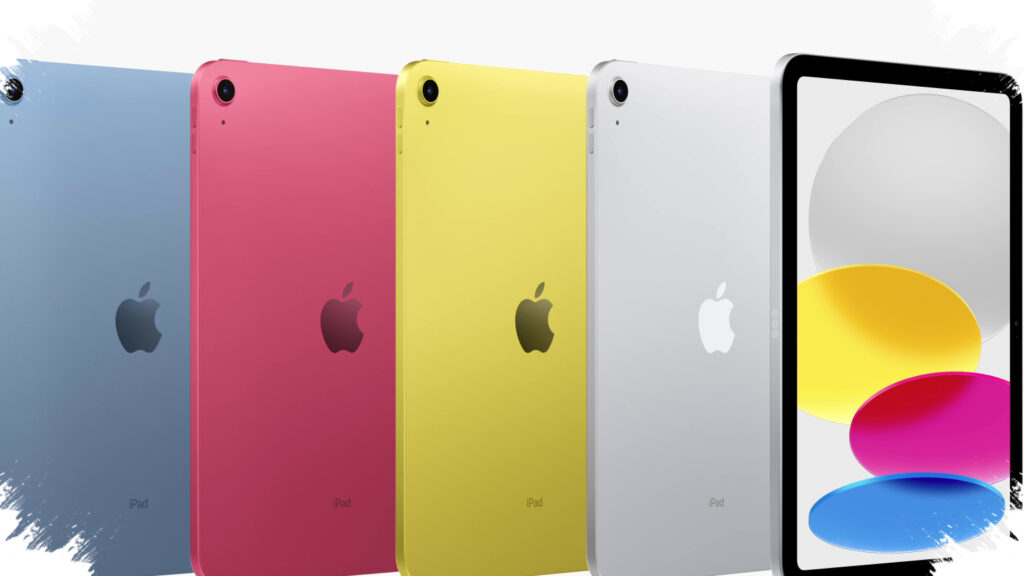
Why the iPad 10th Gen Fits Clinical Documentation Needs
As medical services become increasingly digital, doctors need devices that keep documentation fast, steady, and orderly during patient consultations. In that setting, the iPad 10th Gen stands out as a practical option for entering diagnoses without disruption in the examination room.
The demand is no longer limited to note-taking. Tablets are now used for electronic medical records, prescription writing, patient follow-up, and digital signatures, which makes stable performance more important in daily practice.
A Tablet That Supports Real Clinical Workflow
In many healthcare settings, digital tools are now part of the core workflow rather than an optional aid. Doctors use tablets to record findings directly in front of patients, which helps reduce the risk of errors that can happen with manual documentation.
They also gain faster access to patient history through connected EMR or RME systems in one dashboard. In Indonesia, EMR implementation has been described as helping cut service time by around 15–25 minutes per patient, leaving more room for careful examination and clearer communication.
What Makes the iPad 10th Gen Stand Out
The iPad 10th Gen comes with a 10.9-inch Liquid Retina display, giving enough space to review patient data and write clinical notes comfortably. Its A14 Bionic chip also supports responsive performance when several healthcare apps are running at the same time.
Apple’s ecosystem adds another layer of value because many medical apps and global EHR systems work well within it. For doctors who prioritize stability, that matters because diagnosis input must stay smooth even when the workload is heavy.
Several features are often considered relevant for clinical use:
- Stable operating system for intensive daily use.
- Responsive display for fast reading of medical data.
- Apple Pencil support for notes, sketches, and digital signatures.
- Broad and mature ecosystem of medical applications.
- Sufficient performance for multitasking across EMR, references, and internal communication.
How It Compares in the Medical Tablet Segment
Within the tablet range aimed at doctors, the iPad 10th Gen sits around Rp6–8 million. Samsung Galaxy Tab Active5 is known for physical durability and is positioned around Rp9–12 million, while Huawei MatePad 11.5 and Xiaomi Pad 6 are priced around Rp4–6 million and Rp4–5 million respectively.
There is also the more affordable Advan Tab VX Lite in the Rp2–3 million range for smaller practices. Even so, the iPad 10th Gen remains attractive for users who need a balance of system stability and wide support for medical applications.
Relevant for Connected Medical Environments
The device is suitable for general practitioners, specialists, home care staff, and digital-first clinics that cannot afford delays in daily tasks. It works well in settings where diagnosis input depends on EMR applications and digital recordkeeping.
It also supports access to data across units when systems are connected with laboratories, pharmacies, BPJS, and the SATUSEHAT platform. With a single device, doctors can review patient information without moving between multiple systems.
What to Check Before Choosing One
Tablet selection still needs to match the working pattern of each healthcare facility. A stable device will be more useful if internet access is reliable, accounts are managed properly, and the EMR app is fully compatible.
Important points include EMR compatibility, screen comfort, stylus compatibility, storage capacity, and the intensity of daily use. In the context of the push toward RME under Permenkes No. 24 Tahun 2022, the iPad 10th Gen remains notable for combining system stability, broad medical app support, and comfortable diagnosis input in an increasingly digital healthcare environment.