


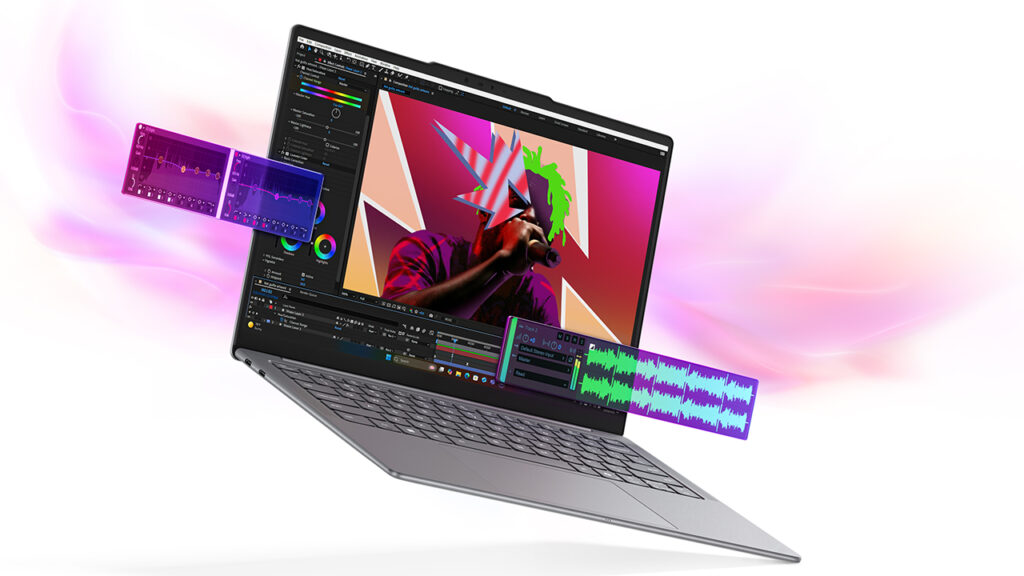
Intel is changing how it approaches low-cost Windows laptops. With Project Firefly, the company is no longer focusing only on a cheap processor, but on a complete laptop package that looks cleaner, is easier to mass-produce, and feels closer to a premium device.
The shift matters because the entry-level market has long been defined by compromise. Intel wants to replace that pattern with a shared design standard that laptop makers can adopt or adapt without starting from scratch.
A budget laptop platform with a premium look
One of the most striking parts of Project Firefly is the industrial design. Intel has set up a reference platform that looks much closer to higher-end machines than to typical budget laptops.
The Firefly reference system uses a metal chassis that is 12.9 mm thick. It also avoids visible ventilation openings on the exterior, giving the device a cleaner and more modern appearance.
Despite its lower-cost positioning, the design still includes modern connectivity. USB Type-A, Type-C, and Thunderbolt support are all part of the package.
Wildcat Lake is built for everyday computing
At the center of the platform is Wildcat Lake, a processor family designed for daily workloads rather than as a stripped-down version of a flagship chip. Intel pairs two performance cores with four efficiency cores to balance responsiveness and power use.
The chip also includes a small NPU and integrated graphics tuned for basic tasks such as video playback and light gaming. That combination is meant to cover the needs most buyers in this segment actually have.
Lower manufacturing costs through simplified hardware
Intel is also simplifying the platform behind the scenes. The use of a single-tile layout and a six-layer motherboard is meant to help keep production costs under control.
Another notable move is Intel’s decision to borrow more heavily from the smartphone and tablet supply chain. Memory and audio components are being sourced from the mobile ecosystem, where global production volumes are far larger.
That approach can reduce component costs and also make device availability easier to scale. For a price-sensitive market, supply-chain efficiency can matter as much as raw hardware specifications.
Core Logic Module reduces work for manufacturers
Intel has also introduced a Core Logic Module that combines the processor and mobile-based memory into a single unit ready to be dropped into a laptop design. For manufacturers, that can simplify assembly and shorten development time.
The result is a platform that gives laptop brands more room to focus on product differentiation instead of rebuilding basic hardware foundations. Intel appears to be trying to make inexpensive laptops easier to produce without lowering the baseline user experience.
Already moving beyond the concept stage
Project Firefly is not being treated as a paper concept. Intel has reportedly been working with major PC makers including Dell, Asus, Acer, and Colorful to use the Firefly framework.
Some devices are already on the market, while others are expected to arrive soon. That suggests Intel’s new strategy is moving into real commercial deployment rather than remaining a reference idea.
In a segment that has often felt stagnant, the company is betting that thin metal designs, modern ports, and shared manufacturing logic can make affordable Windows laptops feel more current. The larger goal is simple: a lower price should no longer automatically mean a lesser-looking machine.