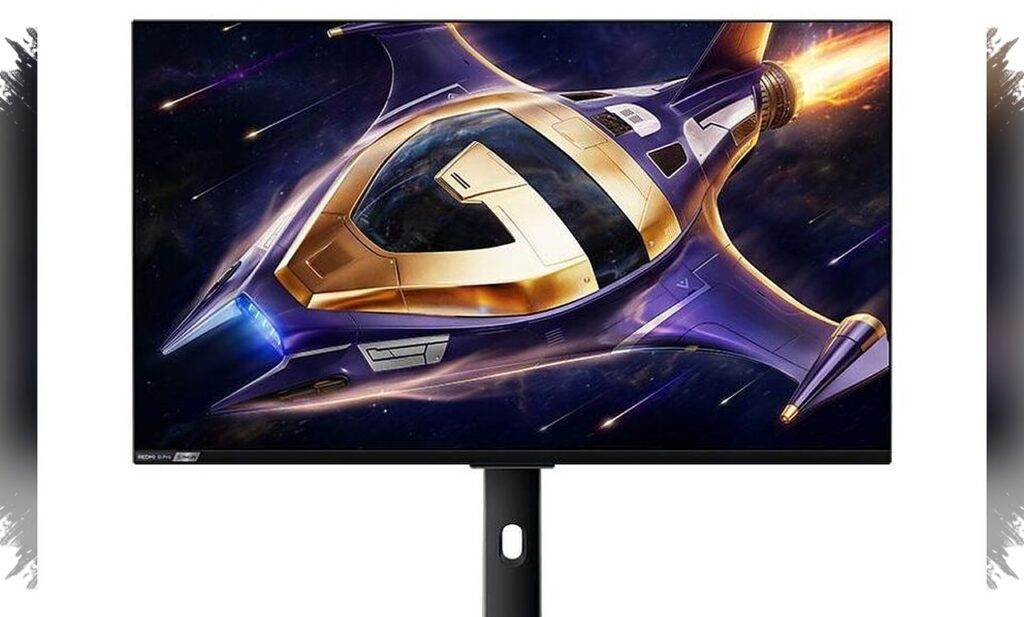
Xiaomi has expanded the role of a gaming monitor with the Redmi G Pro 32U 2026, a model that is designed to function as more than just a display for PCs and consoles. With HyperOS 3 on board, the monitor can also take on the feel of a smart screen for entertainment and everyday use, while still keeping gaming performance at the center.
The 31.5-inch monitor is already available for preorder in China at 3,199 yuan, or around Rp10 million. Xiaomi positions it as a versatile display for gaming, content consumption, and creative work that demands accurate color reproduction.
A panel built for contrast and precision
At the core of the Redmi G Pro 32U 2026 is a QD-Mini LED panel with 1,152 local dimming zones. This setup gives the display finer control over light output, especially when dark and bright elements appear in the same scene.
Xiaomi claims the monitor can reach a peak brightness of 1,600 nits while preserving shadow detail down to 0.001 nits. That combination makes the panel suitable for HDR content and visually demanding games that rely on strong contrast and layered detail.
Two display modes for different types of users
Instead of locking users into a single performance profile, Xiaomi gives the monitor two operating modes. It can run at 4K resolution with a 160Hz refresh rate, or switch to Full HD at 320Hz.
The 4K setting focuses on sharpness and image detail, while the 1080p option is meant for competitive play where speed matters more than resolution. This dual-mode approach lets one device cover priorities that are usually split across different monitors.
Color support aimed at creators and viewers
The Redmi G Pro 32U 2026 also carries wide color coverage for both entertainment and professional tasks. Xiaomi says it covers 98 percent of DCI-P3, along with 100 percent of Adobe RGB and sRGB.
Color accuracy is rated at Delta E below one, which indicates output that stays close to the original source. The monitor further supports DisplayHDR 1000 and Dolby Vision, adding more value for high-quality video playback and visual editing work.
HyperOS 3 gives the monitor its smart identity
One of the most notable features is HyperOS 3, which allows the monitor to go beyond the usual role of a display. With this system, the device can access streaming services and Xiaomi’s smart home ecosystem without always depending on external hardware.
According to Media Indonesia, HyperOS 3 on this monitor is supported by a quad-core Cortex-A73 processor, 3 GB of RAM, and 32 GB of internal storage. Those components show that Xiaomi has built in independent computing capability rather than treating the software as a minor add-on.
Gaming features and connectivity remain a priority
For gameplay, Xiaomi equips the monitor with AMD FreeSync Premium Pro and a 1ms GtG response time. The company also includes TÜV Rheinland-certified low blue light support to make longer sessions more comfortable on the eyes.
The port selection is also practical for a modern setup. Users get two HDMI 2.1 ports, DisplayPort 1.4, and USB-C with up to 90W charging support.
Design and adjustment options
The design follows a premium direction with an aluminum frame and thin bezels. Xiaomi also adds adjustable ambient RGB lighting, which helps the monitor stand out whether it is placed in a gaming room or on a work desk.
The stand supports height, tilt, and pivot adjustments, including vertical use. It is also compatible with standard VESA wall mounting, giving users more flexibility in how the monitor fits into their space and viewing habits.
The Redmi G Pro 32U 2026 combines fast gaming performance, capable color handling, and smart features in a single product. For users who want a monitor that can shift between play, streaming, and daily use without losing display quality, Xiaomi has built a model that aims to cover all three needs at once.