

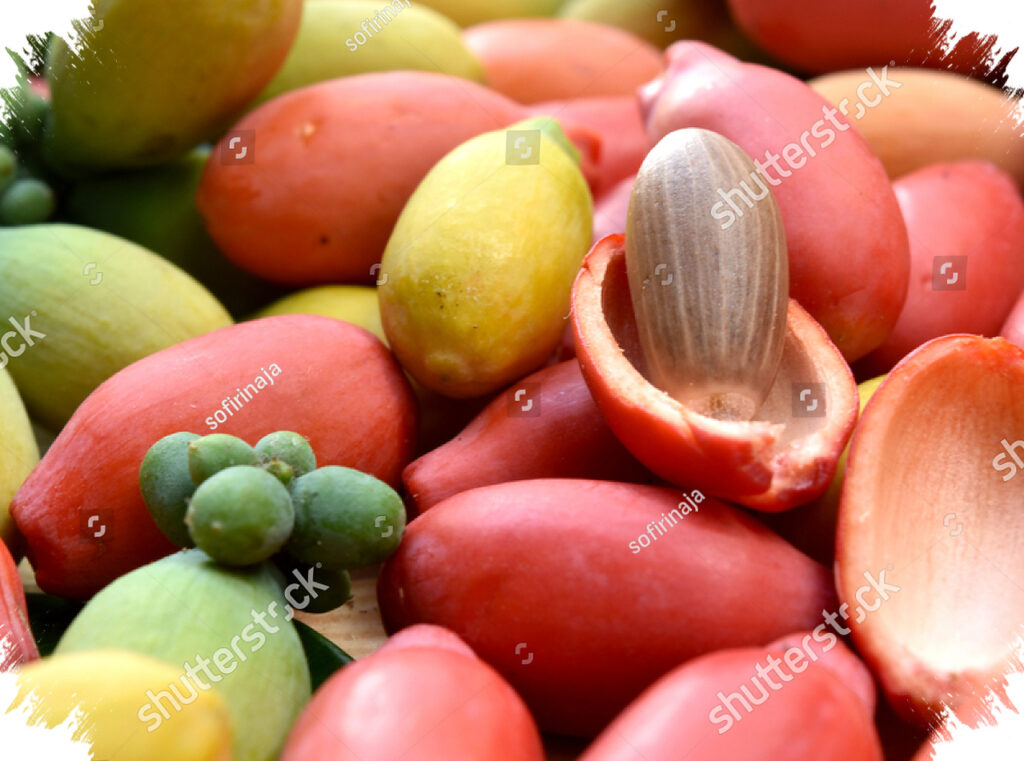
A stretch of home yard in Musi Rawas is doing more than staying green. In Desa Mataram, Tugumulyo, residents are turning modest residential space into something productive by planting melinjo, a crop that can support household needs and bring in extra income.
The practice reflects a practical way of using land that might otherwise remain idle. Melinjo is seen as a useful choice because it is relatively easy to maintain and has a clear market, making it suitable for families that want both daily consumption and economic returns from the same space.
Household yards with earning power
One resident, Iwan of Desa Mataram, has taken a more serious approach to managing his yard. He planted melinjo across a fairly large home area and regards the trees as a source of two benefits at once.
The decision was guided by the availability of space around the house. Iwan said the yard could be used more effectively, and melinjo fit that purpose because it does not require complicated care while still carrying economic value.
“Because the home yard is quite large, we tried planting melinjo,” Iwan said when speaking with KORANLINGGAUPOS.ID on Saturday, April 18, 2026. He also pointed out that the selling price of melinjo tends to stay relatively stable, which adds to its appeal as a productive crop.
Nearly every part can be sold
Melinjo is attractive not only because it can be consumed at home, but also because several parts of the plant have market value. Young leaves, young fruit, and mature fruit all can be sold, depending on demand and how they are processed.
Young leaves and young fruit are commonly used as ingredients for sayur lodeh. Mature fruit, meanwhile, is often turned into emping melinjo, a well-known processed food made from melinjo.
The sale channel is also fairly simple. Buyers usually come through vegetable collectors who pass by about once a week, allowing farmers to sell their produce without needing to search far for the market.
Prices and harvest in the yard
The price information shared from the yard shows why the crop draws attention. Young melinjo leaves are priced at Rp 10.000 per kilogram, while mature melinjo fruit is sold for Rp 90.000 per kilogram.
Iwan’s yard currently has around 10 melinjo trees. The number is still limited, but it has already provided a steady additional benefit for the household over time.
That scale also shows how a small plot can still produce value when managed with care. A large farm is not always necessary for a home to begin generating something useful and marketable.
A model for tighter household resilience
Planting melinjo in the yard also supports household food resilience. Families can use part of the harvest for their own kitchen needs and sell the surplus when production exceeds consumption.
This approach reduces dependence on a single income source and gives residents a way to make better use of the land around their homes. For Musi Rawas residents with different yard sizes, the model can be adapted to other productive plants that fit local conditions.
What begins as an empty yard can gradually become a source of food and extra income. In Desa Mataram, melinjo shows how a simple choice in land use can create benefits that reach both the household table and the family budget.