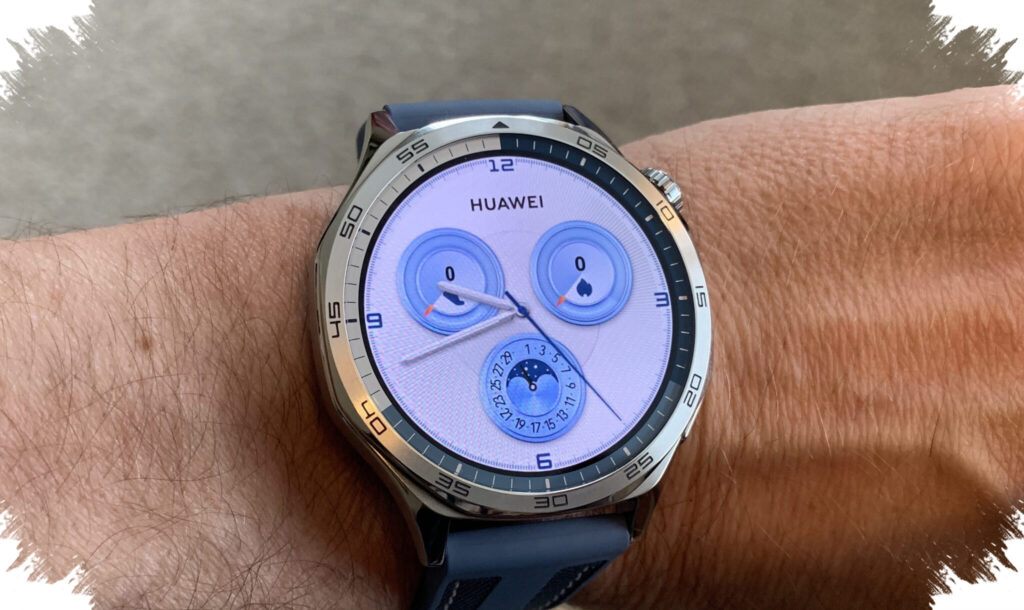
For active users choosing between Huawei Fit 5 and Garmin, the decision is less about which device looks more complete on paper and more about what kind of daily use matters most. Huawei Fit 5 leans toward visual comfort, practical lifestyle features, and a friendlier price, while Garmin remains the stronger name for athletes who prioritize measurement precision and deeper training analysis.
That difference becomes clearer when the focus shifts from casual use to structured exercise. Huawei Fit 5 is easier to recommend for people who want a smartwatch that feels appealing throughout the day, while Garmin continues to appeal to users who treat training data as a serious tool rather than a simple tracker.
Display quality is one of Huawei Fit 5’s biggest advantages
Huawei Fit 5 stands out first through its screen, which uses a 1.87-inch AMOLED panel. The display is described as sharper and more responsive than many entry-level Garmin models, and the 90Hz refresh rate helps menu navigation feel smoother.
That matters because a smartwatch is no longer used only for occasional checks. Notifications, workout data, and health readings are now viewed repeatedly across the day, so display quality can shape the overall experience more than many buyers expect.
Daily features push it closer to a true all-round smartwatch
Beyond the screen, Huawei Fit 5 offers features that make it more practical for everyday routines. Bluetooth calling, music storage, and voice assistant support give the watch a broader lifestyle profile.
Those additions make it easier to use as a companion device without moving into a higher price tier. In contrast, some entry-level Garmin models do not always provide the same lifestyle-oriented feature set, which is why Huawei Fit 5 can feel more complete for general users.
The price makes the package more attractive
Huawei Fit 5 is priced at around Rp1.8 million, and that positioning strengthens its appeal. At that level, it already includes EKG sensors and TruSeen 6.0 health monitoring, features that on Garmin are often found in much more expensive models.
This combination of price and features gives Huawei Fit 5 strong value in its class. For buyers who want a premium feel without paying at the level of a high-end sports watch, the device becomes an easy candidate to consider.
Garmin still sets the standard for athletic accuracy
Garmin keeps its reputation because of what it does best: reliable sports data. Certain models, especially those with Multi-Band GNSS, are known for more consistent GPS tracking in difficult environments such as under trees or between tall buildings.
That consistency matters for runners, cyclists, and triathletes who need route and workout data they can trust. Garmin is built not only for counting steps or tracking heart rate, but also for supporting performance-focused training.
Training tools and ecosystem remain a strong reason to choose Garmin
The Garmin side is also reinforced by features such as Training Readiness, Body Battery, and Garmin Coach. These tools help users judge recovery, understand readiness for exercise, and decide when rest is needed.
Garmin Connect adds another layer of depth by supporting third-party sensors through ANT+, including external chest straps and bike power meters. That wider compatibility makes the platform more useful for users who want more detailed training analysis.
Battery life depends on the model, but both bring long usage potential
Huawei Fit 5 is said to offer battery life of up to 14 days. Garmin’s battery range varies more widely, sitting at roughly 5 to 20 days depending on the model.
That means both can serve users who want longer endurance from a smartwatch, although the exact advantage depends on the specific device chosen. In practice, the more important difference is still the product direction: Huawei Fit 5 is more attractive for comfort, screen quality, and everyday convenience, while Garmin remains the clearer option for athletes who want stronger accuracy and a more mature training ecosystem.