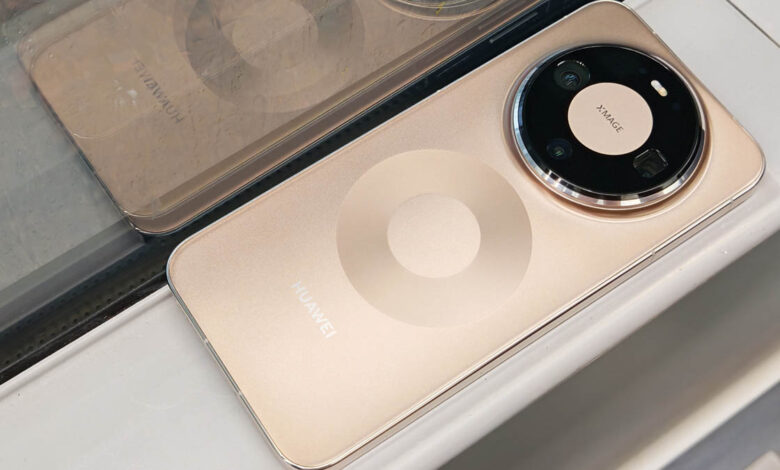
Huawei’s next flagship is shaping up to be more than a routine upgrade. Early chatter around the Mate 90 points to an external teleconverter, a dual periscope zoom setup on the top models, and a new-generation Kirin chip, all of which suggest a stronger push into advanced mobile photography and hardware differentiation.
The most distinctive rumor centers on the external teleconverter. Fixed Focus Digital on Weibo says Huawei is preparing support for a dedicated external teleconverter for the Mate 90 series, following a similar approach already introduced on the Pura 90 line.
A teleconverter attaches to the camera lens to extend focal length. Unlike digital zoom, which relies heavily on software and AI processing, this kind of accessory is intended to deliver longer optical zoom with better preserved image quality.
There is also a report that Huawei has changed suppliers for the next teleconverter generation. That detail has raised expectations that the accessory could arrive with a new design and improved function compared with the one used on the previous series.
The camera focus does not stop there. The Mate 90 Pro Max and Mate 90 RS are reportedly being tested with a dual periscope telephoto configuration, giving Huawei more room to expand zoom capability in its premium tier.
One prototype said to be under evaluation even includes a lens capable of up to 10x optical zoom. If that setup reaches the final product, Huawei would have a strong answer for users who want serious long-range photography from a smartphone.
These camera rumors also tie into a broader design reset for the series. The Mate 90 is said to be heading toward a fresher look than the Mate 80, which would reinforce the idea that Huawei wants the device to stand out not only through specs but also through its overall hardware identity.
Chip development is another part of the story. The Mate 90 series is said to use a 2026-generation Kirin processor based on a new architecture called LogicFolding.
That approach is described as different from conventional methods that mainly shrink transistor size. LogicFolding is said to stack logic circuits vertically to increase transistor density, with claims that density could rise by as much as 53.5 percent compared with the previous design.
The same claims also suggest the technology could come close to the process capabilities of Intel 18A and early TSMC 3nm nodes. On the efficiency side, the performance core is said to gain up to 41 percent in power, while maximum clock speed could rise by around 12.7 percent.
Those figures remain unverified, but they show the scale of ambition surrounding the chip. Taken together with the camera rumors, the Mate 90 series appears to be aiming for a more aggressive flagship position than a simple annual refresh.
Huawei has also hinted through earlier timing patterns that the Mate 90 may arrive in the fall of 2026. That expectation is strengthened by the fact that the Mate 80 launched in November last year, keeping the successor on a similar track.
For now, the Mate 90 remains in rumor territory. Even so, the combination of an external teleconverter, dual periscope zoom on the premium models, and a new Kirin platform makes the series one of the most closely watched upcoming Huawei flagships.