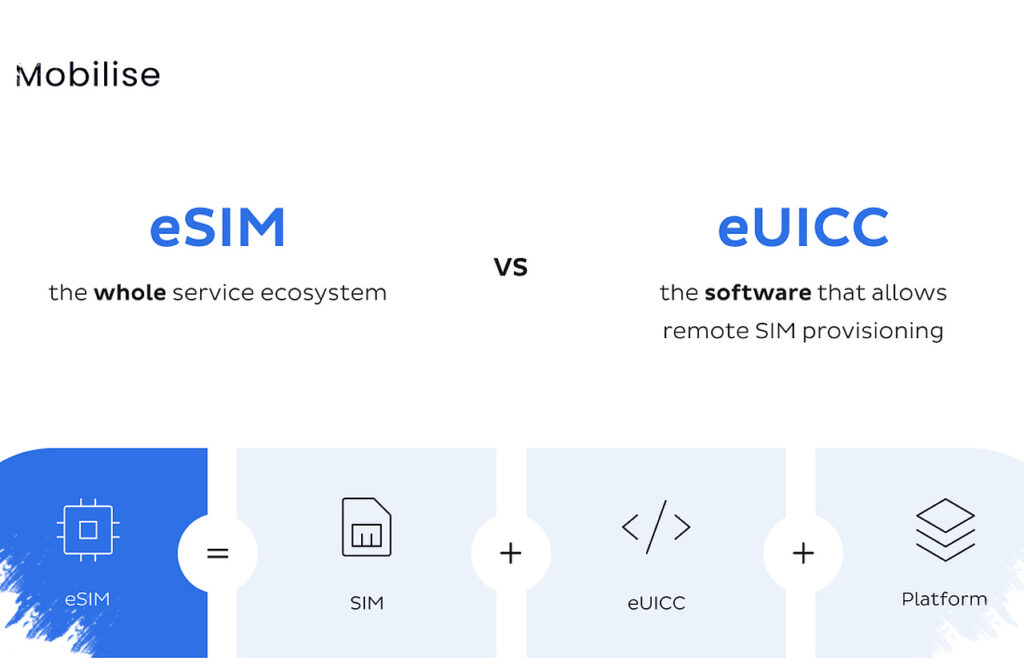
The promise of eSIM has always sounded simple: fewer plastic cards, faster setup, and easier switching between devices. In practice, the experience is often more dependent on carrier rules than on the technology itself.
For many users, that gap between promise and reality is what makes eSIM feel less like a convenience upgrade and more like a new layer of digital control.
eSIM was designed to remove the familiar hassle of physical SIM cards. Instead of waiting for a card to arrive or swapping a tiny chip by hand, a number or data plan can be activated digitally. That logic makes especially strong sense for travelers who want to avoid expensive roaming charges and do not want to buy a local SIM immediately after landing.
Services such as Saily are built around that use case. They aim to let users move more smoothly across certain countries without the kind of roaming fees that often make travel connectivity expensive.
Why the process still feels uneven
The problem is that the idea of digital simplicity does not always translate into a seamless user journey. Activation still depends heavily on the operator, and phones locked to a specific network usually cannot use an eSIM from another provider.
That means the technology is not fully universal in the way many users expect. Even when the hardware supports eSIM, carrier policies can still determine whether the service is easy to set up or difficult to access.
This is where eSIM starts to feel less like an open digital layer and more like a tightly managed system. The user may no longer handle a physical card, but the operator still controls much of the activation path.
Switching numbers is not automatically easier
The shift becomes more noticeable when a phone is lost, stolen, or damaged. With a physical SIM, moving a number to a new device can be as simple as removing the card from the old phone and placing it into the new one, as long as the card remains active.
With eSIM, the transfer can require extra steps. In some cases, users need to contact customer service before the number can be moved, which adds friction to a process that used to be more straightforward.
That extra layer shows a core trade-off in eSIM adoption. The digital format removes the plastic card, but it does not remove operator oversight. In some situations, it actually increases the amount of administration a user must go through.
Security explains the extra checks
Operators have a reason to be cautious. Because eSIM does not rely on a physical card, the identity tied to a number depends more on digital verification, and that creates pressure to prevent misuse.
The issue is that stronger protection can also feel like a barrier for people who only want to move a number quickly. For users who rarely change phones, the added controls may seem manageable. For those who switch devices often, the process can become a reason to delay using eSIM at all.
This tension reflects an unresolved balance. Operators want to reduce the risk of digital SIM-swap abuse, while users still expect a process that is quick and uncomplicated.
The ecosystem is still catching up
The deeper challenge is not the technology alone, but the ecosystem around it. Without a universal standard for registration and transfer, the r experience still changes from one operator to another.
That is why the ideal of moving an eSIM directly from one phone to another remains far from effortless. Transferring it from iPhone to Android, or the other way around, still requires simplification if the system is meant to match the original promise of convenience.
For now, eSIM sits between two competing priorities. It offers digital flexibility, but operators retain broad control over activation, management, and transfer, which keeps the promise of a truly frictionless experience unfinished.