


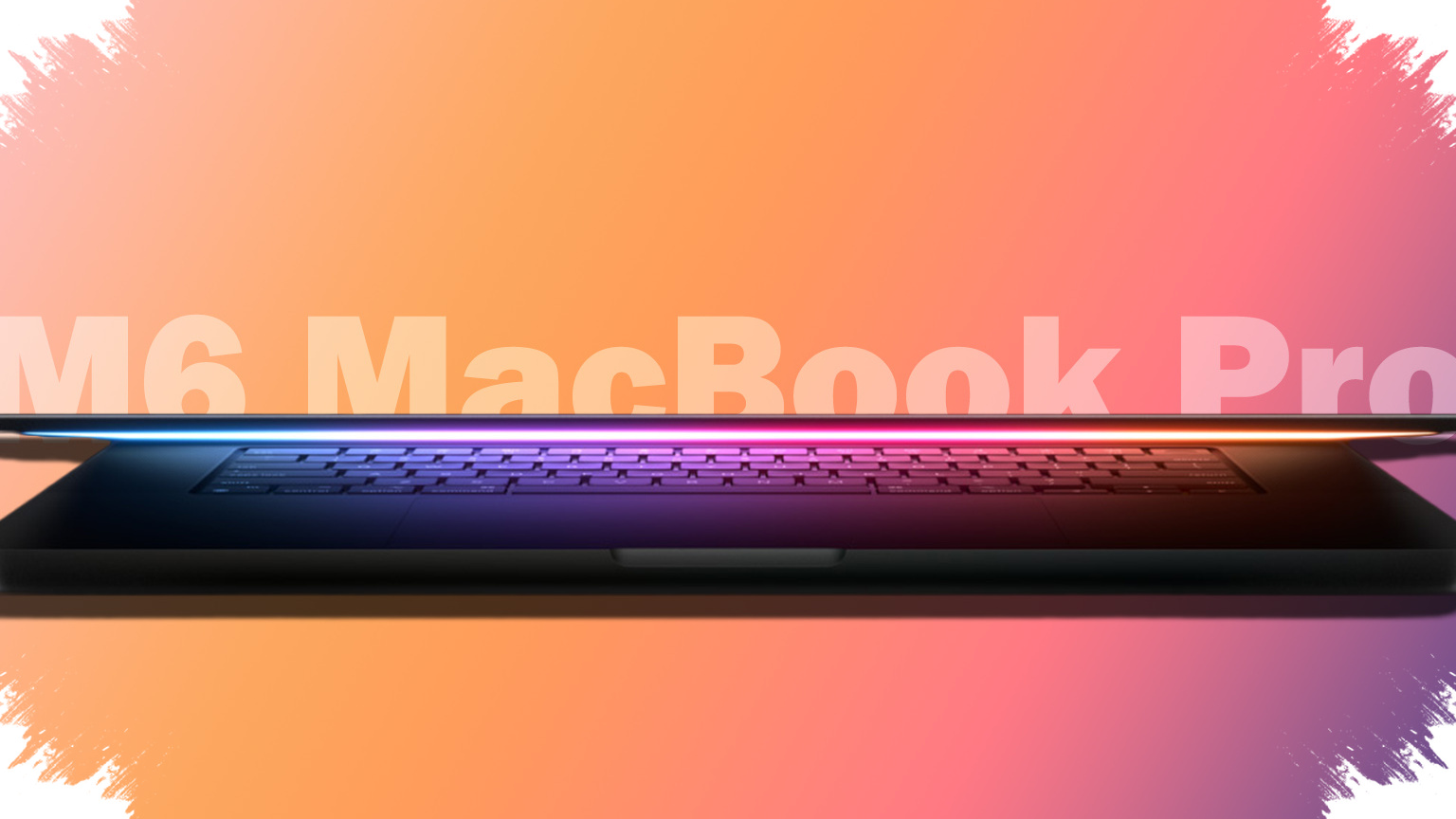
Apple’s MacBook Pro line may be approaching one of its most significant design shifts yet. Reports linked to the M6 generation point to a thinner and lighter chassis, an OLED display, and touchscreen support that would change how users interact with the premium laptop.
The rumored update would go beyond a simple performance refresh. If the information proves accurate, the MacBook Pro M6 could mark a broader reset for Apple’s notebook strategy by combining new display technology, a revised front design, and a different input model in one package.
A new display approach takes center stage
The most attention-grabbing change is the move from mini-LED to OLED. That transition is expected to bring stronger contrast and deeper blacks, which would improve both creative work and everyday media viewing.
A touchscreen is also said to be part of the plan. Rather than replacing the keyboard and trackpad, it would serve as an additional input option and would represent a major shift for Apple, which has long kept touchscreen support off its laptops.
Form factor changes could be just as visible
Along with the display overhaul, the MacBook Pro M6 is rumored to arrive in a slimmer body. A lighter build is also being discussed, which would make the device easier to carry for professional users who move between offices, meetings, and workspaces.
The front design may also change in a noticeable way. Instead of the familiar notch, Apple is said to be considering a hole-punch arrangement linked to Dynamic Island. If that happens, the MacBook Pro would receive one of its most visible visual updates in years.
M6 family and 2nm manufacturing
Performance remains a key part of the reported upgrade path. Apple is said to be working on the M6, M6 Pro, and M6 Max chips for the next MacBook Pro lineup.
All three processors are reported to use a 2-nanometer manufacturing process. That should allow better efficiency as well as stronger performance, which could matter most for demanding professional workloads. Improved battery life is also expected to benefit from the same efficiency gains.
Possible cellular connectivity adds another layer
Apple is also reportedly exploring an internal modem for future MacBook generations. That would open the door to built-in cellular connectivity, reducing the device’s reliance on Wi-Fi in mobile use cases.
The modem is said to be similar to components being prepared for upcoming iPhone models. If it reaches the MacBook Pro line, the laptop could become more self-sufficient for work outside the office and on the move.
The main rumored changes can be summarized as follows: M6, M6 Pro, and M6 Max chips built on 2-nanometer technology; a thinner and lighter design; an OLED panel replacing mini-LED; touchscreen input support; and an internal modem option for cellular connectivity.
For now, these details remain part of circulating reports rather than an official Apple announcement. Even so, the combination of a new display, a revised body, and a shift in input methods suggests that the MacBook Pro M6 could become far more than a routine chip update.