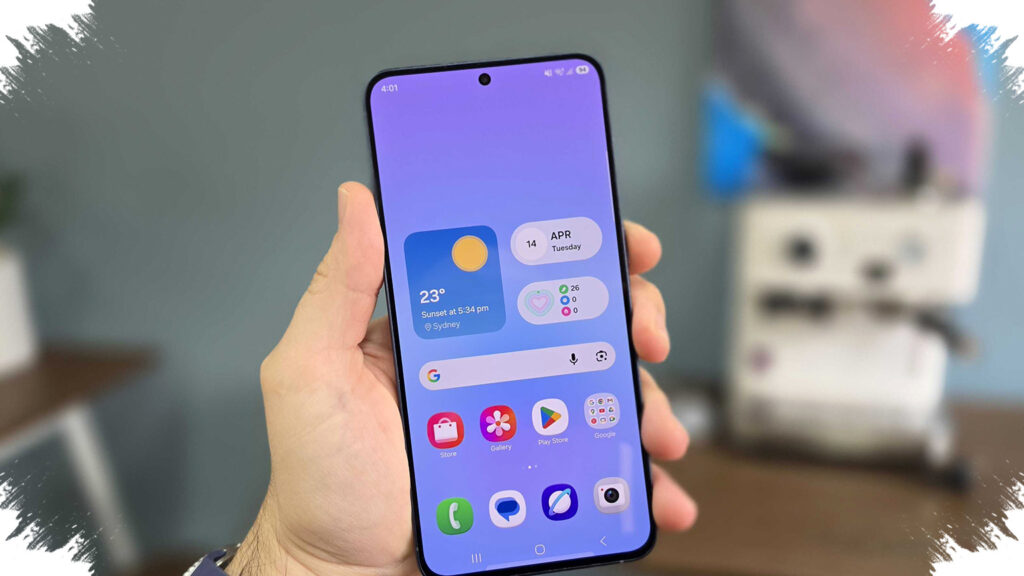
A closer look at the Galaxy A57’s macro setup has revived an old question: is a separate 5MP macro lens still worth keeping on a midrange phone when software-assisted close-up shooting can do better? In direct comparisons, the Galaxy A57 falls well behind the Galaxy S26 Ultra, and the gap is visible in color, texture, and overall consistency.
The difference becomes clear quickly when both phones are pointed at small subjects. The Galaxy A57 does include a 50MP main camera, a 12MP ultrawide camera, and a dedicated 5MP macro lens, but the extra lens does not deliver the level of detail or color accuracy that the Galaxy S26 Ultra manages through its 50MP ultrawide camera and close-up processing.
Color performance is where the gap stands out most
Tests on a mini cactus placed near an office window showed the Galaxy A57 producing flatter colors and a noticeably gray cast. The image looked less lively overall, while the Galaxy S26 Ultra rendered the same subject with stronger color and a cleaner look.
That pattern continued in shots of a purple flower. The Galaxy A57 lost color clarity again and added a faint hazy effect, while the Galaxy S26 Ultra captured deeper tones and richer background detail. The contrast between the two phones made the A57’s macro lens appear limited before the discussion even moved to finer texture.
White flowers also exposed the weakness of the 5MP macro lens. The petals appeared overly smooth in the Galaxy A57 images, and the result looked less natural than the Galaxy S26 Ultra’s more restrained rendering.
Some subjects help the A57, but not enough
Not every sample was a complete failure for the Galaxy A57. A yellow flower gave it a better chance to compete, since the color held up more convincingly than in the blue and purple samples. Even so, the final image still looked less vivid than the Galaxy S26 Ultra’s version.
A dandelion offered another relatively positive result for the Galaxy A57. The seed filaments appeared slightly sharper in that frame, but the small gain in detail did not offset the broader issues in color and image stability. The overall impression remained the same: the A57 could produce usable macro photos, but not consistently strong ones.
Focus and texture separate the two phones further
The comparison was not only about color. When lichen on a tree trunk was tested, the Galaxy A57 managed to capture the bark surface fairly well. In that particular shot, the Galaxy S26 Ultra reportedly had more difficulty locking focus on the same frame.
That brief advantage for the A57 did not last long. When the subject changed to a worn mailbox, the Galaxy S26 Ultra again came out ahead because its colors looked more natural and the traces of old paint on the rusted areas were clearer. In other words, the stronger phone did not rely on one good sample; it kept delivering more balanced results across different surfaces.
The weakest point for the Galaxy A57 appeared with finer textures. Brick walls proved especially difficult, as the surface detail blended into a softer, muddy look. The Galaxy S26 Ultra handled the same subject better, preserving brick texture and even small pores in the mortar.
A separate macro lens looks harder to justify
Taken together, the sample set suggests that the Galaxy A57’s dedicated macro camera can still produce acceptable images in some situations. But the broader trend is hard to ignore, because the phone repeatedly shows faded color, a grayish tone, and unstable sharpness.
That is why the comparison raises a larger question about the 5MP macro lens itself. The Galaxy S26 Ultra’s software-driven close-up approach, supported by a more capable camera system, consistently creates stronger results without needing a separate low-resolution macro module.
For a lower-cost phone, the Galaxy A57’s output may still be tolerable. Yet the testing makes it clear that a standalone 5MP macro lens is difficult to defend when a more flexible solution can deliver better close-up photos through processing and stronger optics.