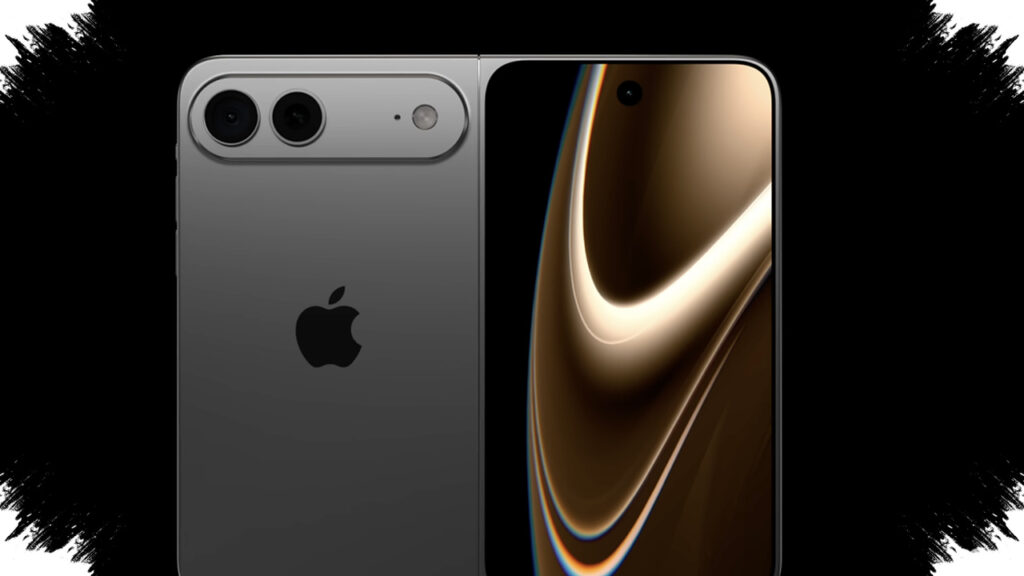
A wider foldable display is emerging as the next major design direction in the smartphone market, and Apple’s expected iPhone Fold could help turn that preference into a mainstream standard. Rather than following the tall, narrow book-style layout that has dominated most foldables, Apple is expected to lean toward a shorter and wider form factor, with an unfolded aspect ratio of around 4:3.
That shift matters because it changes how the device feels in daily use. Reading, working, and viewing content can feel more natural on a wider panel, while video playback may show less black space at the edges and multitasking may gain more usable room.
Apple’s influence could reshape expectations
Apple is not the first company to explore foldable phones. Google, Microsoft, and Oppo have already experimented with different folding concepts, including designs that resemble a small passport when opened.
Even so, Apple often changes how the market judges a product category. If the iPhone Fold arrives with a wider display, that design choice could receive a level of consumer validation that other brands have not yet been able to secure on their own.
Android rivals are already moving
The competitive response is beginning to take shape before Apple officially enters the segment. Huawei has already released the Pura X Max, while Samsung is said to be preparing the Galaxy Z Fold 8 Wide with an 8.1-inch internal display and a 6.5-inch outer screen.
Other Android brands are also reportedly following the same direction. Google’s Pixel 11 Pro is expected to adopt a wider design, and Motorola Razr Fold as well as Honor Magic V6 are also said to be heading toward similar layouts.
Why a wider foldable looks more practical
Foldable phones in book-style form have become more attractive as their functions expand. One of the biggest draws is multitasking, since two apps can sit side by side without feeling overly cramped.
A tent mode also remains useful for watching videos or making video calls without extra accessories. In that sense, a broader screen does more than change appearance; it improves how the device can be used.
Battery capacity remains a key hurdle
Design changes also bring a familiar challenge: battery life. A wider foldable often needs more power, while a thin body leaves less room for a large battery.
That is why silicon-carbon batteries are drawing attention in this category. The technology replaces traditional graphite anodes with a silicon-carbon composite and is claimed to deliver up to 20% higher energy density without significantly increasing size.
Some devices are already showing the benefit. The Oppo Find X9 Pro is said to deliver more than 10 hours of screen-on time under heavy use, a result that is especially relevant for foldables, where larger displays usually raise power demand.
Huawei Pura X Max, Motorola Razr Fold, and Honor Magic V6 are among the models expected to use silicon-carbon batteries. Samsung is reportedly still testing the safety of the technology, while Apple is said to be taking a more cautious approach as it prepares to enter a new device category.
The market is ready for a new foldable phase
The timing is important because foldables are already gaining momentum. Global foldable phone shipments rose 14% year on year in the third quarter of 2025 and reached a record quarterly high.
That signals a market that is becoming more comfortable with non-traditional smartphone shapes. If Apple joins with a wider iPhone Fold, the company could accelerate broader acceptance of the format and push more brands to refine their own wide-screen foldable strategies.