The latest discussion around PlayStation’s DRM changes is less about piracy in the abstract and more about what happens after a game has already been purchased. Early reports suggest that some PS5 digital titles may stop launching if the console stays offline for too long without a license verification check.
That concern has quickly spread through gaming communities because it touches a basic expectation of digital ownership: buy a game, then be able to play it whenever needed. Yet the available information still comes from early testing, community discussion, and indirect reports, not from a full official explanation.
How the license check is believed to work
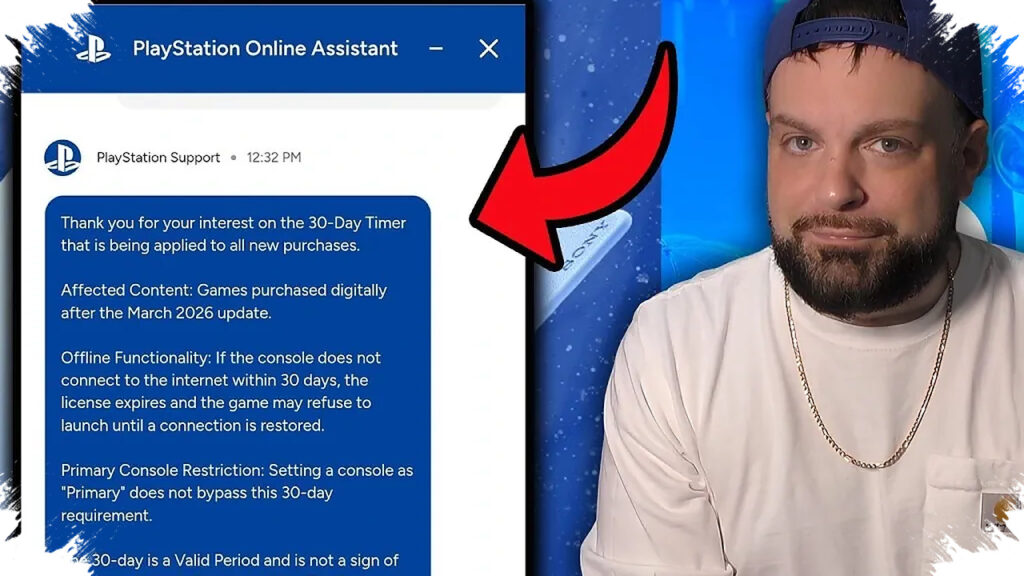
According to the reports being discussed, a newly purchased digital game may carry an offline license for around 30 days. If the console does not reconnect to the internet within that window, the game may no longer run until the system checks ownership again.
That description, however, appears to miss an important detail. NIB said in a post on X that the early license may be temporary and tied to the 14-day refund window, which changes the way the system should be read.
In that interpretation, the first license is not meant to be permanent from the start. Once the refund period ends, a single online verification may turn the license into a long-term one, possibly without an expiration date.
If that is correct, the system would not automatically strip access from every offline owner. It would instead require at least one online check after purchase, which helps stabilize the license before the temporary phase ends.
Why publishers may see this as a practical safeguard
From the perspective of a platform holder and publishers, this kind of DRM has a clear purpose. It may reduce the chance that a permanent license is pulled from a modified console and then used alongside a refund request.
By keeping the first license limited, the system narrows the room for abuse. That is why the approach is being compared with anti-piracy tools on PC, such as Denuvo, even if the implementation on consoles is less visible.
The logic is straightforward for the industry. More license control means less risk of digital entitlement being separated from the original purchase process.
What players are worried about
The player side of the argument looks very different. Once a digital game depends on periodic validation, ownership can start to feel conditional rather than permanent.
That concern is especially strong for offline players. A single-player game may still be tied to online checks, and that creates uncertainty for anyone who expects a digital purchase to remain usable without regular internet access.
There is also a longer-term question around preservation. If verification servers are no longer available in the future, the ability to access legally purchased games could become harder to guarantee.
For many users, the issue is not only inconvenience. It is also about what happens to access rights after a game has already been paid for, especially when the requirement to reconnect may not be obvious at the time of purchase.
Why the current debate is still incomplete
Community reactions have added another layer to the story. Posts from Andshrew on ResetEra and discussions within DoesItPlay suggest that the new PlayStation DRM may not mean games must stay online all the time.
That distinction matters. The debate is less about constant connectivity and more about how much control the platform keeps over a digital license after the sale is completed.
At this stage, the discussion should still be treated as preliminary. The reporting around the system is based on early findings, community analysis, and speculation, so the full behavior of the DRM has not yet been laid out in detail.
Even so, the issue has already highlighted a familiar tension in digital gaming. PlayStation appears to be trying to close a piracy loophole without making legitimate offline play feel overly restricted, and the balance between those two goals is now under close scrutiny.
Source: tech.sportskeeda.com