


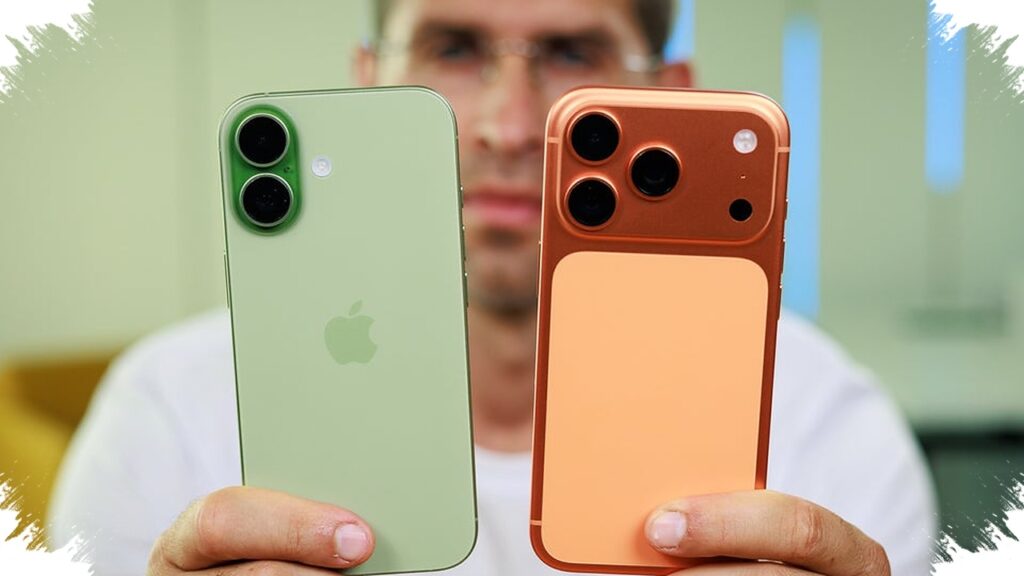
Apple’s latest sales chart has a clear surprise at the top: the standard iPhone 17, not the Pro models, led global smartphone sales in the first quarter of the year. Counterpoint said the device accounted for 6% of all smartphone sales worldwide, underscoring how strongly Apple’s regular model now competes beyond the premium tier.
That result matters because it shows Apple’s volume strength is not limited to its most expensive phones. The iPhone 17 Pro Max and iPhone 17 Pro also placed among the global top three, but the plain iPhone 17 still came out ahead, while the iPhone 16 also made the list in sixth place.
Why the base model pulled ahead
The appeal of the standard iPhone 17 appears to come from a sharper balance between price and capability. Harshit Rastogi, senior analyst at Counterpoint, said the phone continued to outperform its predecessor thanks to a larger base storage option, a higher-resolution camera, and an improved display refresh rate.
Those changes make the device feel closer to the Pro lineup without pushing it into the same pricing bracket. That positioning seems to have helped Apple reach a broader audience while still preserving the premium image of the series.
The sales momentum was also visible in major markets. The iPhone 17 posted double-digit annual growth in both China and the United States, two of Apple’s most important regions. In South Korea, sales reportedly tripled over the quarter, adding another sign that the model has found wide international demand.
Pro models still held their ground
Even with the standard model taking the lead, Apple’s Pro devices remained highly relevant. The iPhone 17 Pro Max and iPhone 17 Pro occupied the next spots in the global ranking, supported by stronger camera systems, better battery performance, and refreshed colors, materials, and finishes.
Their presence near the top shows that Apple’s flagship segment remains healthy. Still, the quarter’s biggest sales volume came from the model designed to reach a wider customer base, not just the top end of the market.
Android’s volume story looks very different
The Android side of the ranking was dominated by much cheaper phones. Samsung’s Galaxy A07 4G was the best-selling Android smartphone of the quarter, with strong demand in the Middle East, Africa, and Latin America.
That performance highlights a simple reality of the global market: many buyers still prioritize affordability and core functionality over the newest connectivity standards. Samsung also placed the Galaxy A17 4G in the top 10, and both LTE models are promised six major operating system upgrades, although their older modems may become a limitation over time.
Interestingly, the 5G version of the Galaxy A17 ranked higher than the 4G version in the same list. Samsung therefore managed to cover two different buyer groups at once, from budget-focused users to those looking for newer network support.
The company’s midrange lineup also remained important. The Galaxy A56 and Galaxy A36 finished seventh and eighth, reinforcing the role of the A50 and A30 series in Samsung’s sales volume.
Premium Android was not absent, but it had less room
One notable detail in the first-quarter ranking was the absence of the Galaxy S26 Ultra. Counterpoint said that should not be read too harshly, since the device was only slightly outside the top 10 and launched later in March 2026, unlike the Galaxy S25 Ultra, which arrived in February 2025.
That timing mattered because the newer model only had the final part of the quarter to generate sales. With a shorter selling window, direct comparison against phones available for the full period would not be fair.
Xiaomi also secured a spot in the top 10 with the Redmi A5, one of its cheapest Android Go phones still relying on 4G. Like the Galaxy A07, it found traction in developing markets, showing that global smartphone volume is still being driven heavily by low-cost devices that cover basic needs.
The broader picture from the quarter is straightforward. Apple led with a standard iPhone that moved closer to the Pro experience, while Android volume depended on affordable 4G phones and midrange models that continue to sell strongly across emerging markets.