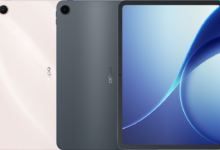
The Poco C Pad is edging closer to a global launch, and the latest sign comes from its appearance in the FCC database. That listing is an important clue for a budget tablet that appears to be part of Xiaomi’s wider push to expand its affordable tablet lineup through the Poco brand.
The device carries the model number 2603APC14G. While the Poco C Pad name is not shown directly in the FCC paperwork, the connection has already surfaced through a code reference in Xiaomi’s HyperOS system.
A familiar tablet under a new name
The tablet does not seem to be an entirely new product from the ground up. It is expected to be a rebranded version of the Redmi Pad 2 9.7, which has already launched in some markets.
That approach would fit Xiaomi’s usual strategy of reusing existing hardware across different brand lines. It also helps explain why the Poco C Pad is shaping up as an affordable option rather than a completely original design.
Display and design lead the appeal
One of the strongest selling points is the display. The Poco C Pad is said to feature a 9.7-inch LCD panel with 2K resolution and a 120Hz refresh rate.
That combination is notable in the budget segment, where smoother scrolling and better multimedia playback are often limited to more expensive devices. The tablet also uses a metal body, which gives it a more premium feel than many low-cost rivals.
At around 401 grams, the device is light enough for long sessions of reading, studying, light work, or casual entertainment. The form factor appears aimed at users who want a practical tablet for everyday use without moving into a higher price range.
Specifications built for daily tasks
Under the hood, the Poco C Pad is expected to run on the Snapdragon 6s Gen 2 4G chipset. That processor is designed for routine activities such as browsing, streaming, and other light apps.
Memory and storage options are modest but usable for the segment, with up to 4GB of RAM and 128GB of internal storage. A microSD slot is also included, giving users a way to expand storage if needed.
The camera setup stays simple, with an 8MP rear camera and a 5MP front camera. That makes the tablet more suitable for video calls, document scanning, and basic snapshots than for serious photography.
Battery, audio, and connectivity
Battery life should be one of the more practical strengths of the device. The Poco C Pad is equipped with a 7,600mAh battery, and Xiaomi claims it can last more than a day under normal use.
Charging support reaches 18W, although there is a possibility that the charger will not be included in the retail box. For audio, the tablet comes with dual speakers for a more immersive experience, while a headphone jack remains available for wired earphones.
Connectivity is another key part of its positioning. The tablet supports 4G, which means it can stay online without depending entirely on Wi-Fi.
Software and early color options
On the software side, the Poco C Pad will run HyperOS 3 based on Android 16. The system is expected to bring cross-device integration within Xiaomi’s ecosystem, along with AI-based features aimed at productivity.
Early certification details also point to color options based on Pantone standards. Cool Gray and red are among the variants mentioned, adding some variety to the tablet’s early identity.
Pricing has not been announced, but the device is expected to remain in the affordable range. For reference, the Redmi Pad 2 9.7 starts at around RM560 in Malaysia, or about 140 dollars.