Sony’s Xperia phones stand out less for chasing the biggest market and more for holding on to features many rivals have already dropped. That approach has helped the lineup keep a distinct identity, even as Sony remains unavailable through official sales in Indonesia.
For buyers in Indonesia, that absence makes Xperia feel both exclusive and difficult to obtain. The phones are usually searched for through overseas channels or personal shoppers, which adds another layer of separation from the mass-market Android scene.
A narrow lineup by design
Sony does not spread itself across many phone categories. The company focuses mainly on two lines: Xperia 1 for the flagship segment and Xperia 10 for the mid-range segment.
That choice leaves consumers with limited options. Sony does not offer entry-level phones, gaming phones, affordable flagships, foldable models, or special-purpose devices aimed at specific use cases.
The price gap also reflects that positioning. Xperia 1 is priced at around Rp30 jutaan, while Xperia 10 sells for around Rp9 jutaan.
Why the phones are not sold officially in Indonesia
Sony’s decision not to sell phones officially in Indonesia is tied to several factors. One issue is that the devices do not meet TKDN requirements, while their high prices and weaker fit with the local market also play a role.
Competition adds further pressure, making Sony’s position even narrower. There is also a view that the Indonesian market is not especially profitable for the company.
As a result, Sony phones are more often seen as a niche choice than a product aimed at broad consumer demand. That status reinforces their image as devices for a specific audience rather than the mainstream.
Old features that still matter
While many modern phones have left older hardware behind, Sony continues to keep some of it. Several recent models still include a 3.5 mm audio jack and a MicroSD slot.
PhoneArena noted that the Xperia 1 VIII still carries both features. The Xperia 1 VII, released in 2025, also still uses a side-mounted fingerprint sensor, even though many flagship phones have moved to in-display fingerprint readers.
For some users, that may seem outdated. For others, especially those who still rely on wired audio, expandable storage, and a side sensor, the setup remains useful.
A screen design that refuses the mainstream formula
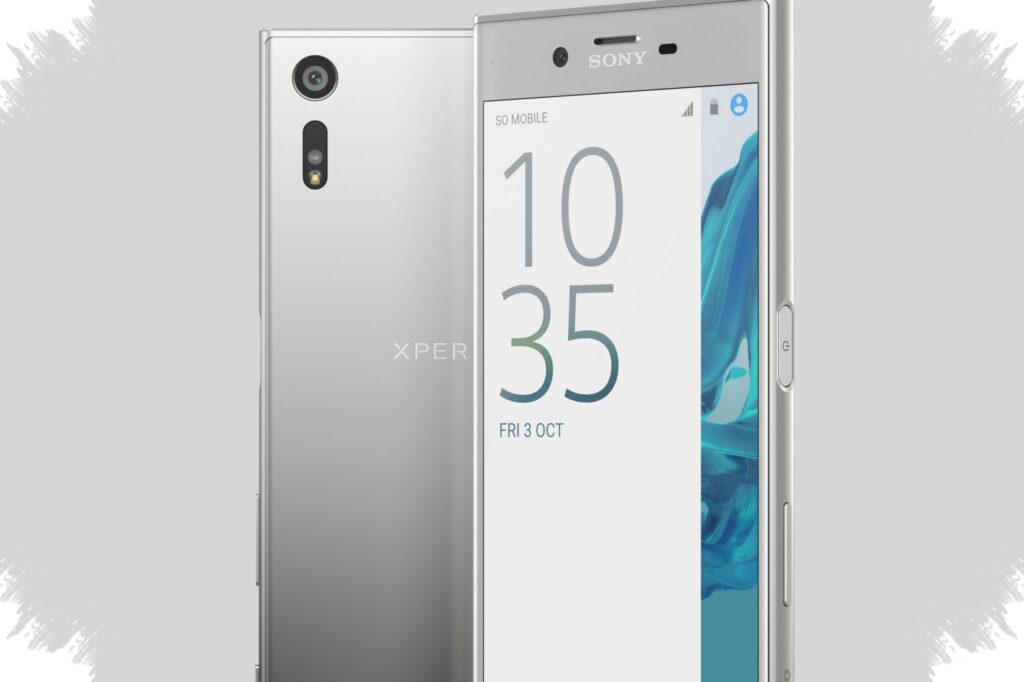
Sony also takes a different path on display design. According to NoteBookCheck and Mashable, the company does not use a notch at the top of the screen like many modern phones.
Instead, Sony keeps a full-screen layout with thick bezels at the top and bottom. The top bezel houses the front camera, speaker, and several sensors.
That choice gives Xperia phones a look that clearly separates them from the rest of the market. At the same time, it can feel unusual for users who have grown used to punch-hole or notched displays.
The long and slim body that defines Xperia
Another characteristic that sets Sony apart is its 21:9 screen ratio. GSMArena reported that the format appears on flagship models such as the Sony Xperia 1 VI and Xperia 1 V.
The result is a body that looks long and slim, and it can feel comfortable to hold with one hand. At the same time, the stretched shape makes it harder for fingers to reach the far edges or upper parts of the display.
That physical identity is part of Sony’s appeal. In a market where many phones increasingly look alike, Xperia continues to keep a design language that fans can recognize immediately.
For that reason, Sony remains attractive to users who value a clear product identity over broader mainstream convenience. At the same time, many buyers still prefer more familiar phones that feel simpler and more practical for everyday use.