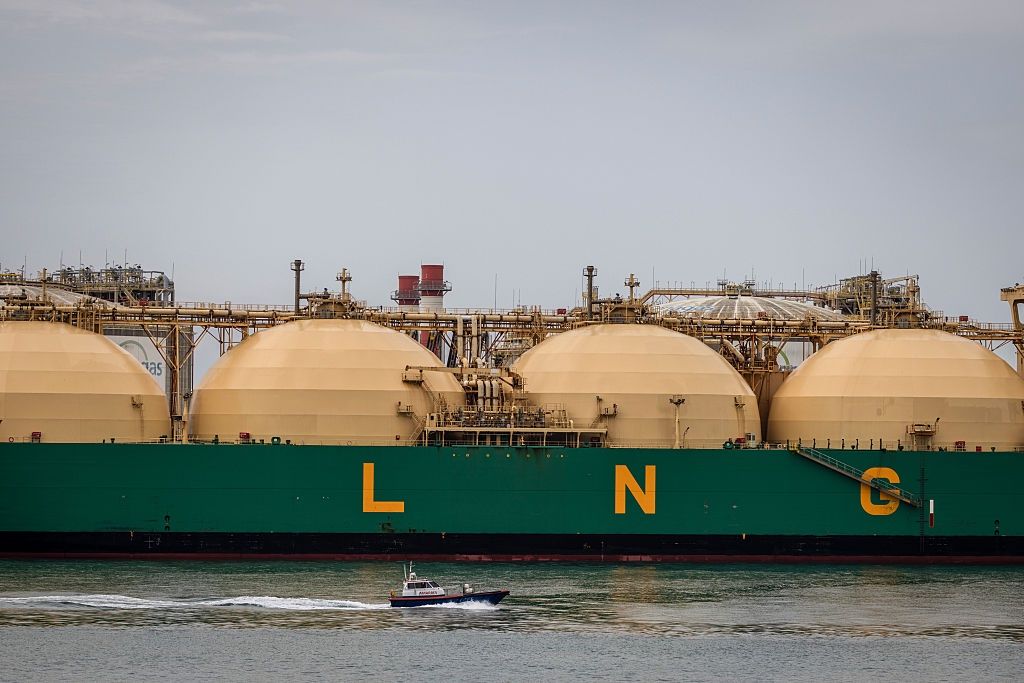
Poland is among the European countries most exposed to disruption in liquefied natural gas supplies from Qatar, according to a May report cited by the Institute for Energy Economics and Financial Analysis. The main reason is the ongoing blockade of the Strait of Hormuz, the route used to ship Qatari LNG.
That warning comes at a time when Europe is already leaning more heavily on a small number of suppliers. The same analysis says Poland spent more than 2 billion euros on American LNG in 2025, while the continent as a whole is deepening its dependence on the United States for gas purchases.
A narrow supply route raises the risk
The Strait of Hormuz matters because it connects Qatari gas exports to global markets. When that passage is blocked, countries that rely on Qatari LNG face a direct threat to supply stability, and Poland is listed among the most vulnerable in Europe.
The concern is not only about one route, but also about how concentrated Europe’s gas buying has become. IEEFA argues that buyers are not spreading demand across many sources, but are instead leaning heavily on one direction.
Europe’s growing dependence on the US
The think tank says this pattern is pushing Europe into a new form of dependency. It warns that by 2028, the United States could account for 80 percent of LNG supplies to Europe.
In the first quarter of the year, the US already held the largest share of LNG imports into EU countries at 59 percent. Russia followed with 18 percent, while Qatar and Nigeria each supplied 6 percent, according to the report.
Russia remains a major supplier despite sanctions pressure
IEEFA also said Russian LNG imports into the European Union reached the highest level since 2022, the year of Russia’s full-scale invasion of Ukraine. Imports of Russian LNG rose 16 percent year on year in the first quarter of 2026, reaching 6.9 billion cubic meters.
France, Spain and Belgium were the biggest importers of Russian LNG in that period. The figures underline how difficult it has been for Europe to fully break away from Russian energy, even as many governments have tried to reduce exposure.
A costly shift in energy strategy
Last year, under a trade agreement with the United States, the European Union committed to buying $750 billion worth of American energy over three years. IEEFA says that scale of purchases could create another single-supplier dependency, similar to the one Europe once had with Russian pipeline gas.
The think tank added that the same amount of money invested in renewable energy could install about 546 GW of wind and solar capacity across Europe. That comparison is central to its warning that long-term security may depend less on expanding LNG imports and more on building a broader domestic energy base.
For Poland, the report places supply security and source concentration in the same frame. The country buys heavily from major external suppliers, while regional risks such as the Strait of Hormuz blockage continue to shape the outlook for gas deliveries to Europe.