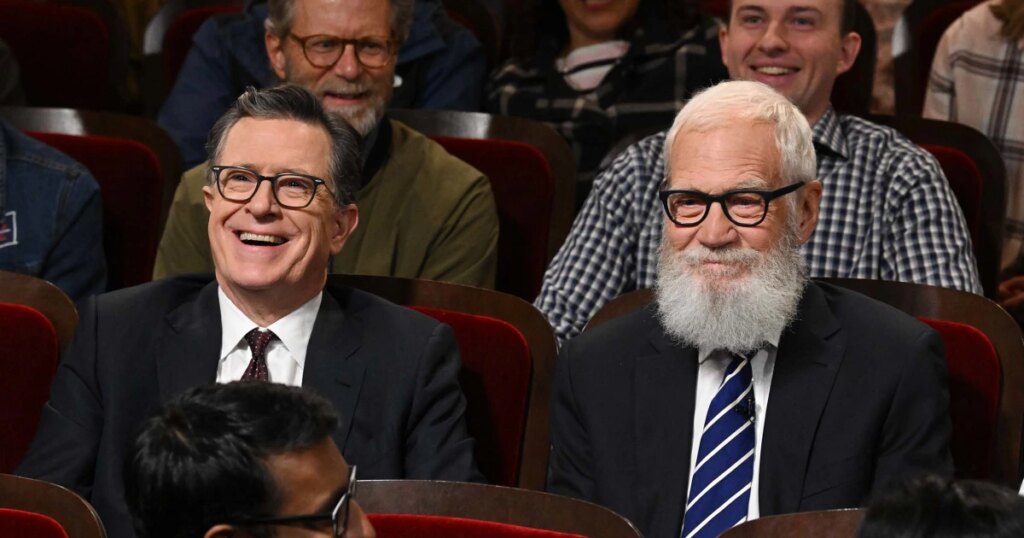
David Letterman has publicly called CBS’s cancellation of The Late Show with Stephen Colbert a “huge mistake,” saying the move removes something meaningful from American culture. Speaking with TODAY’s Craig Melvin, the former host said the end of the long-running late-night franchise leaves him sad and that Colbert’s voice still matters even if the show itself is ending.
Letterman’s comments add another high-profile reaction to the decision, which CBS and Paramount Global described as a purely financial call. The company said the choice was not tied to the show’s performance, its content, or any other matters at Paramount.
Letterman Says Late-Night TV Still Has Public Value
Letterman, 79, hosted The Late Show from its launch in 1993 until 2015 before handing the desk to Colbert. He spoke to Melvin from Indianapolis Motor Speedway in his home state of Indiana, where he tied the conversation to both the show’s legacy and a health campaign close to his heart.
He said late-night television has long offered more than entertainment. “We always relied on, you would read the newspaper in the morning, and at night you would see Johnny Carson,” Letterman said, referring to the former late-night icon.
He added that Carson gave viewers “a perspective whether you agreed with it or not, but it was always funny.” Letterman said losing that kind of platform means losing “a valuable perspective” that has been “very, very important to the American culture.”
Colbert’s Cancellation Followed a Public Clash Over CBS
The cancellation became public in July 2025, shortly after Colbert criticized CBS’s $16 million settlement with the White House over a “60 Minutes” interview with then-Vice President Kamala Harris. On The Late Show, Colbert described the payment as a “big, fat bribe.”
CBS later said the decision to end the program after 33 years was financial, not editorial. The network also said the move was unrelated to the show’s content or to other issues inside Paramount.
The program is slated to be replaced by Comics Unleashed, hosted by Byron Allen. For many viewers, though, the more immediate concern is the loss of Colbert’s version of a franchise that has been part of late-night television for decades.
Letterman Backed Colbert On Air
Letterman also addressed the cancellation when he appeared on The Late Show with Colbert on April 15. During that conversation, he told Colbert, “You can take a man’s show, you can’t take a man’s voice.”
That remark matched the tone of his later comments to TODAY, where he stressed that the end of the program does not erase Colbert’s influence. Letterman’s support matters because he built the show’s identity before Colbert took over in 2015, giving his criticism added weight among longtime fans.
A Conversation Also Focused on Heart Health
Craig Melvin spoke with Letterman at Indianapolis Motor Speedway because of a cause tied closely to the comedian’s personal interests. Letterman is a longtime racing fan and co-owns Rahal Letterman Lanigan Racing with Bobby Rahal and Mike Lanigan.
The racing team has partnered with Edwards Lifesciences on the “Stay In the Race” campaign, which encourages heart valve screening at races around the country. The effort focuses on early detection and timely referral for adults 65 and older.
Letterman, Rahal, and Lanigan have all faced serious heart issues. Letterman had quintuple bypass surgery in 2000, Rahal had quadruple bypass surgery, and Lanigan underwent triple bypass surgery.
Letterman said he feels well and strongly supports the awareness effort. “I feel great,” he said, adding that he loves the topic of “heart maintenance” in particular.
Why the End of the Show Resonates Beyond Television
The reaction from Letterman shows that the end of The Late Show with Stephen Colbert is being viewed as more than a routine programming change. For Letterman, the show has represented a late-night tradition that connected daily news, humor, and commentary in a way he believes still has public value.
As the final episode with Colbert is set to air May 21, Letterman’s criticism underscores the cultural loss he sees in CBS’s decision. He continues to frame the cancellation as a mistake, while also making clear that Colbert’s voice will remain part of the conversation even after the show ends.
Read more at: www.today.com