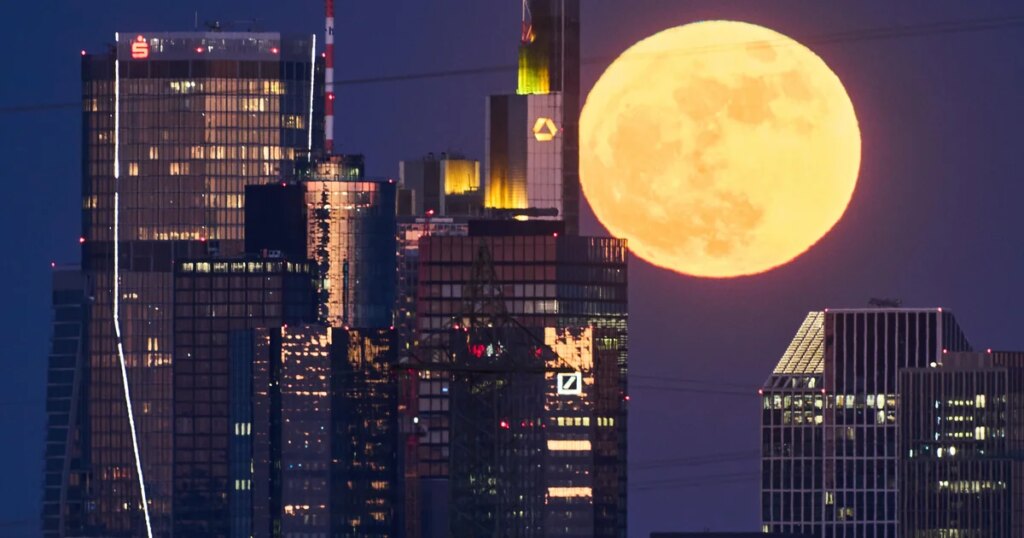
A rare blue micromoon will reach peak visibility this weekend, giving skywatchers a chance to see a full moon that will not return until the end of 2028. The event combines two unusual features: it is a blue moon and, because it is farther from Earth than usual, it will also look smaller and dimmer than a typical full moon.
The moon will not turn blue in color. In astronomy, a blue moon is simply the second full moon in a single month, and this month’s first full moon occurred on May 1.
Why this full moon is called a micromoon
This full moon qualifies as a micromoon because the moon will be near the farthest point in its orbit from Earth. According to the reference data, it will sit about 252,360 miles away, which makes it appear slightly smaller and less bright than usual.
That distance is the opposite of a supermoon, when a full moon comes closer to Earth and looks larger. The most recent supermoon, by comparison, was 225,130 miles away.
The visual difference should be real but subtle. Gianluca Masi of the Virtual Telescope Project told the Associated Press that the micromoon will look about 6% smaller and 10% dimmer than an average full moon.
What observers may see in the sky
In the Northern Hemisphere, the full moon will appear near Antares, one of the brightest stars in the constellation Scorpius. The star is a red supergiant about 550 light-years away and is often described as the “heart of scorpion” in Scorpius.
For many observers, Antares will remain visible beside the moon throughout the event. But the view could be more dramatic in the Southern Hemisphere, especially across parts of the Pacific.
Astronomers said viewers in Argentina, Chile, New Zealand, eastern Australia, parts of Antarctica, and some islands may see the moon pass in front of Antares and briefly block it from view. That occultation will not happen for everyone, but it could create the most striking version of the event for those in the right location.
How rare the event is
Blue moons do not happen often. They usually occur once every two or three years, when a calendar month contains two full moons.
The last blue moon happened in 2023, and the next one is not expected until December 2028, according to EarthSky. That timeline adds to the appeal for skywatchers hoping to catch the weekend display.
Because the effect is modest to the naked eye, many people may not notice the micromoon difference right away. Still, the combination of a blue moon, a farther-than-usual full moon, and the close pairing with Antares makes it a notable sight for anyone watching the night sky.
The Virtual Telescope Project said it will stream live images of the blue micromoon through its robotic telescopes, giving people outside the best viewing zones a chance to follow the event as it unfolds.
Read more at: www.cbsnews.com