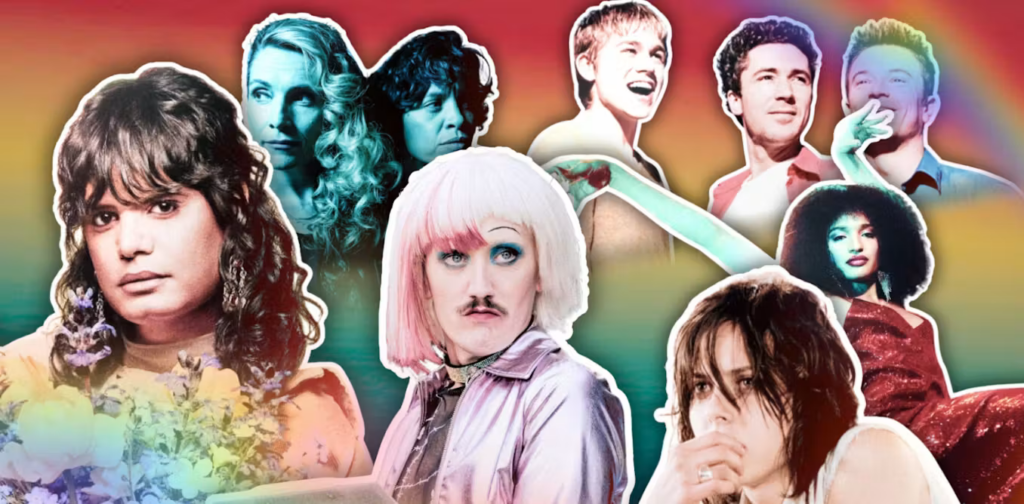
June brings fresh attention to LGBTQIA+ stories, and streaming platforms still offer a wide range of series that show how queer lives, communities and politics have been represented on screen. The best Pride Month viewing does more than feature identity as a label; it shows friendships, chosen families, activism, desire and the places where queer people build community.
That is especially clear in queer “storyworlds,” a television form that grew in the 1990s and uses serial storytelling to follow relationships over time. These series move beyond the isolated queer character and instead focus on bars, homes, cafes, clubs and other spaces where community forms, which makes them especially relevant for viewers looking for Pride Month recommendations.
Why these shows matter now
Research into queer storyworlds shows that television can present LGBTQIA+ lives with more complexity than a single episode or film often allows. The format gives room for conflict, intimacy, humour and political context, while also showing how queer people create liveable lives in societies still shaped by heterocentric norms.
That approach helps explain why these series continue to resonate across decades. Whether the setting is Manchester, New York, Los Angeles, rural Oklahoma or a small North Yorkshire port town, the stories place connection at the centre and treat community as something built, not assumed.
Queer activism and political history on screen
Some of the strongest Pride Month viewing combines personal story with activism. Queer as Folk on Prime Video remains a landmark because it centres gay men and some lesbians in Manchester and connects that nightlife scene to political critique of the UK’s Section 28 laws, which restricted open discussion of homosexuality for under-18s for years.
Another key example is In Our Blood on ABC iview and Stan, which turns to Australia’s AIDS crisis and the activist response around it. The miniseries highlights lesbian-led care and advocacy, while also showing how public protest and private grief often shared the same community spaces, including Oxford Street.
Stories of community, family and identity
Many of the most distinctive queer series focus on the emotional work of building a life. The L Word on Stan and Prime Video remains a major all-lesbian and bisexual woman storyworld, with The Planet functioning as a key site of friendship, conflict and lesbian community-building.
Sort Of on ABC iview and Stan offers a different kind of family and identity story through non-binary Pakistani-Canadian Sabi, whose life moves between queer and non-queer spaces. Over three seasons, the series explores family tensions, bisexual and pansexual attraction, and the everyday work of being understood by others.
Special on Netflix also broadens the frame by following a gay man with cerebral palsy in Los Angeles. The series focuses on friendship, sex and romance, while making disability part of the story rather than a side note.
When sexuality is complicated, that can be the point
Several of these series are strongest when they resist neat labels. Faking It on 10Play examines teenage identity through Amy and Karma, who pretend to be queer for social status before Amy begins to realise her own sexuality may be more complex than expected.
Eastsiders on Netflix takes a different route, starting with a relationship crisis after cheating and expanding into a larger ensemble of LGBTQIA+ characters over time. Its move from YouTube to streaming also reflects the way queer independent storytelling has found new life online.
Comedy, chosen family and everyday survival
Not every Pride Month pick is heavy. Smoggie Queens on Binge uses sharp writing and a low-budget comedy format to show how queer people build chosen family in Middlesbrough, with local identity, pop culture references and affection shaping the tone.
Q-Force on Netflix leans into parody while still centring LGBTQIA+ community. Its team of agents includes a gay leader, a drag queen, a trans hacker and a lesbian mechanic, using the spy-comedy format to explore how difference can still produce belonging.
Iggy & Ace on SBS OnDemand takes a more intimate approach, following two best friends as they deal with addiction within the queer community. The series shows how bars and nightclubs can offer connection while also bringing risk, and it uses an all-queer Alcoholics Anonymous group to underline that support can come from unexpected places.
Rural Oklahoma and Indigenous queer life
Among the most distinctive entries is Reservation Dogs on SBS OnDemand and Disney+, set in rural Oklahoma in the Muscogee Nation. The series follows four Indigenous teenagers and has been praised for inclusive queer and trans Indigenous representation on screen and behind the scenes.
Its approach matters because it treats LGBTIQA+ and Two-Spirit identities as part of ordinary life rather than as separate lesson material. That perspective gives the show a different kind of weight for Pride Month viewing, especially for audiences looking beyond urban queer settings.
The broader pattern across these series is clear: Pride Month streaming is not only about visibility, but also about how television captures activism, desire, family and survival in communities that have often been left out of mainstream stories.
Read more at: theconversation.com