


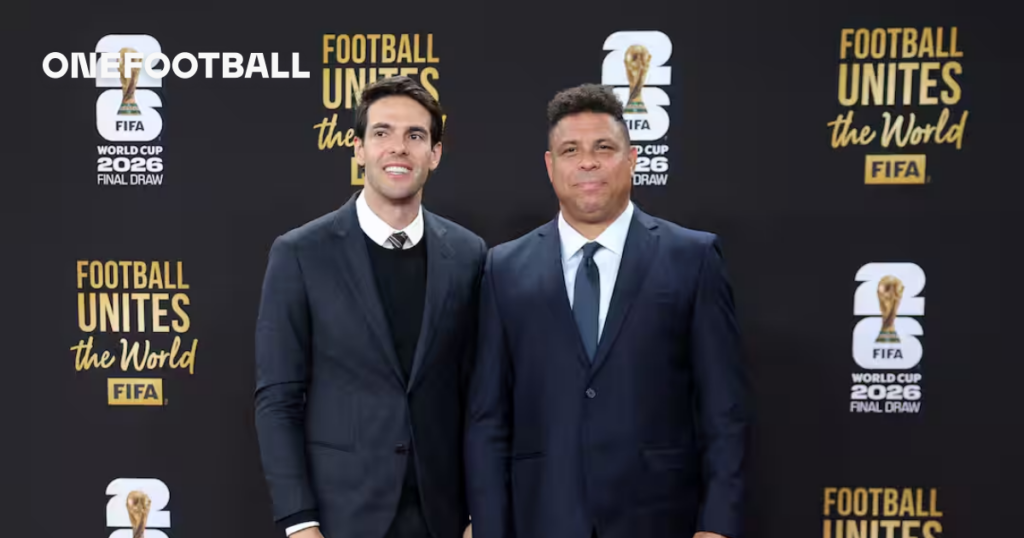
Kaká has ruled out both a return to the dugout and the idea that a SAF is the cure for São Paulo’s problems. In a live conversation with Ronaldo Fenômeno, the former midfielder argued that Brazilian football needs better management, not a single ownership model.
The exchange took place on Thursday (18), when the two 2002 World Cup winners discussed club management, the Football Corporation model, and political tensions in Brazil. Ronaldo used the conversation to float the possibility of Kaká taking an executive role at São Paulo, the club where he began his career.
Kaká shuts down coaching return
Asked about the chance of becoming São Paulo coach, Kaká said he is not willing to take on the role. He pointed to the time demands of coaching and said he is not prepared to give up family time for that path.
“I’m not willing to be a coach. It demands too much time to try to succeed. Right now, I’m not willing to give up time with my family. They’re choices, and today I don’t want to pay that price,” he explained.
Why he doubts SAF is the answer
Ronaldo suggested that Kaká’s profile fits executive leadership and raised the idea of buying São Paulo’s SAF. Kaká was skeptical, saying the process is not simple because it would require bylaws, a board, and several approvals.
He also said he does not see SAF as the only solution for clubs in Brazil. Kaká cited Flamengo and Palmeiras as examples of member-run clubs that have still achieved financial success through strong administration.
Ronaldo on the costs of restructuring clubs
Ronaldo drew on his experience with Real Valladolid and Cruzeiro to describe the pressure of restructuring indebted clubs. He said the member-association model often benefits many people around the club and that fixing it means cutting privileges.
“The member-association model allows a lot of people to benefit from the club, and the only way to solve that is by cutting privileges. I lived through that at Cruzeiro and made a lot of enemies,” Ronaldo said.
He also said he had once considered investing in Corinthians, one of the biggest clubs in Brazil, but backed away after his experience in football politics and his concern about hostility around the game.
“Corinthians is one of the biggest assets in Brazil. I really wanted to do it, I’m passionate about the club, but today I don’t know if I would. After my experience at Cruzeiro, I saw that fans mix things up with on-field performance. Fans do not have the right to attack people or invade the Training Center. The press has normalized this. It’s absurd, and it makes me wary,” he concluded.