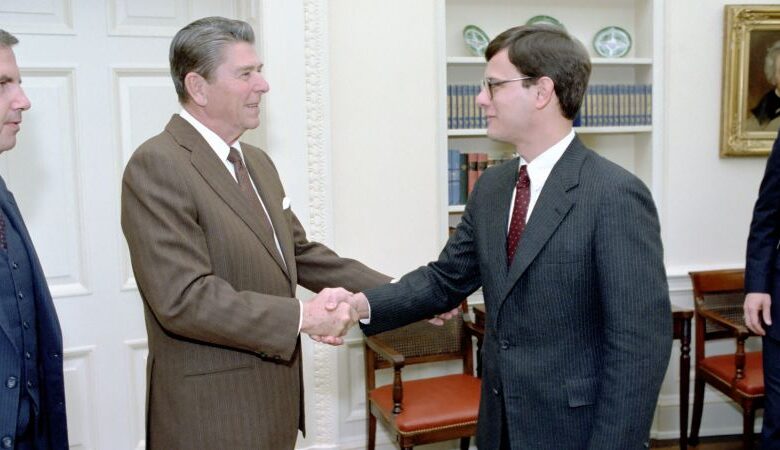
Chief Justice John Roberts spent more than four decades pushing for a stronger presidency, and the Supreme Court has now delivered the result he long sought. On Monday, he led a majority that reversed Humphrey’s Executor v. United States, the 1935 precedent that had protected independent agency leaders from easy removal.
The ruling marks a major shift in the balance between the White House and independent regulators. It also reflects a long legal campaign that began when Roberts was a young Reagan administration lawyer and continued through his years on the bench.
Roberts’ long push for presidential control
In a memo to the White House counsel in 1983, Roberts wrote that “the time is ripe to reconsider the constitutional anomaly of independent agencies.” He later repeated the same basic view as chief justice, arguing that a president cannot be fully accountable without the power to remove agency heads.
“Without such power,” Roberts wrote in a 2010 case, “the President could not be held fully accountable for discharging his own responsibilities; the buck would stop somewhere else.” In his 36-page opinion this week, he again stressed that the Constitution vests executive power in one President.
| Milestone | What Roberts argued | Why it mattered |
|---|---|---|
| 1983 memo | Independent agencies were a constitutional “anomaly” | Showed an early effort to weaken removal limits |
| 2010 case | The President must be accountable for executive duties | Built the constitutional case against insulation |
| Monday ruling | Humphrey’s Executor was reversed | Removed a long-standing barrier to firing agency leaders |
What changed for independent agencies
The decision affects the structure that has governed agencies like the Federal Trade Commission for decades. Congress had set terms for commissioners and allowed removal only for wrongdoing such as “inefficiency, neglect of duty, or malfeasance in office.”
Trump’s second-term effort to remove Democratic-appointed commissioners brought that structure back before the court. One of the clearest examples was Rebecca Slaughter, who was in the middle of a seven-year FTC term when she received an email saying her “continued service on the FTC is inconsistent with my Administration’s priorities.”
Lower court judges sided with Slaughter under the 1935 precedent, but the Trump administration asked the Supreme Court to fully abandon it. Roberts’ majority did just that, while carving out an exception for the Federal Reserve because of the country’s long tradition of an independent central bank.
The dissent warned of broader consequences
Justice Sonia Sotomayor read the liberals’ dissent from the bench and warned that the ruling gives the president a power “unknown even to the English Crown against which the Founders revolted.” She said the court was elevating the president above coequal branches by turning the duty to faithfully execute the laws into a license to defy them.
Sotomayor also argued that Congress had long relied on Humphrey’s Executor to build a workable regulatory system. She said agencies such as the FTC help protect consumers, workplace safety, nuclear energy, and chemical hazards.
The case fits a broader pattern in Roberts’ court, which has also steadily narrowed other major precedents, including voting rights protections. With a 6-3 conservative majority now in place, Roberts has had the votes to carry through a long-term project that began decades ago.
For independent regulators, the ruling means the legal shield that once kept them at arm’s length from the president has been substantially weakened. For Roberts, it is the culmination of a constitutional argument he has been making since the early years of his legal career.