


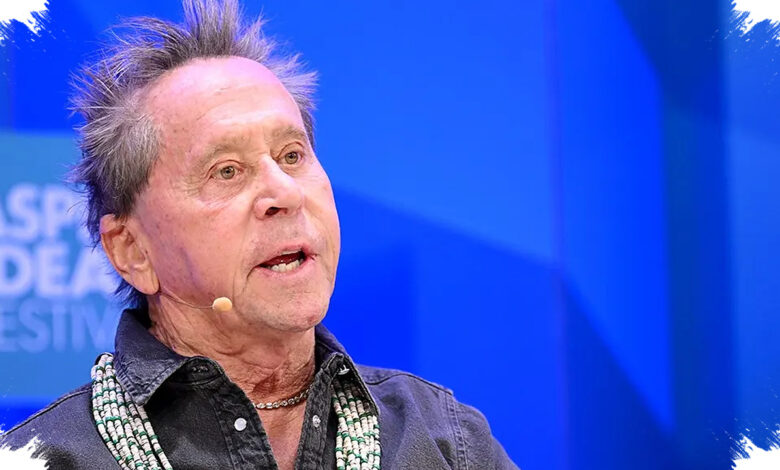
Brian Grazer says the best stories should bring people together, not divide them along political lines. The Academy Award-winning producer made that case during a panel at the Aspen Institute’s Ideas Festival in Aspen, Colorado, where he described his films as rooted in universal themes.
“None of my stories are left or right. I’m not political in any of my movies,” Grazer said, adding, “I’m only about working on universal themes to create unity with other people, so we demystify other people, other people’s problems.”
Grazer’s view on Hollywood’s changing business
Grazer appeared on the “Building Bridges at the Box Office” discussion with “Yellowstone” director and cinematographer Christina Voros and Oscar-winning documentary filmmaker Joshua Seftel. The panel was moderated by Steven Olikara of Bridge Entertainment Labs.
He said Hollywood has changed enough in recent years to make some artists less motivated by the current compensation model. Grazer described the streaming-based structure as one that pays everyone a set price, which he said can reduce the incentive to take risks and push for big outcomes.
| Panelist | Role | Key Point |
|---|---|---|
| Brian Grazer | Producer | Argued for universal themes and unity in storytelling |
| Christina Voros | Director and cinematographer | Spoke about leaving space for audiences to interpret stories |
| Joshua Seftel | Documentary filmmaker | Said he wants people to understand each other |
Grazer, who has nearly 270 producing credits including “Apollo 13,” “A Beautiful Mind,” “Arrested Development,” and “24,” said curiosity begins with basic human courtesy. He said people create a memorable human moment when they stop looking at their phone, start a conversation, and let the other person respond.
Why the American dream should stay out of politics
When the discussion turned to how filmmakers should approach the country’s 250th, Grazer said the “American dream” should not become a political issue. “Be grateful to America, be kind to America,” he said, adding that such an attitude would be “really nice if that lived in the fabric of our culture.”
Voros, who described herself as a Brooklyn liberal before moving to a small town in West Texas for work on shows like “Yellowstone,” said her assumptions were challenged by the people she met there. She warned that cultural filters can quickly create an echo chamber and said storytelling can crack that wall open and let light in.
She also said stories should leave room for the audience to fill in some of the meaning themselves. “If you tell someone exactly how they’re supposed to feel, it’s very easy for them to reject that conversation creatively at all,” Voros said, later adding that audiences should try to leave “a little space to learn something.”
Seftel echoed that message and said he simply wants people to understand each other. “It’s not that hard to tell stories that help us understand each other,” he said, “And I just hope we can keep doing that.”