


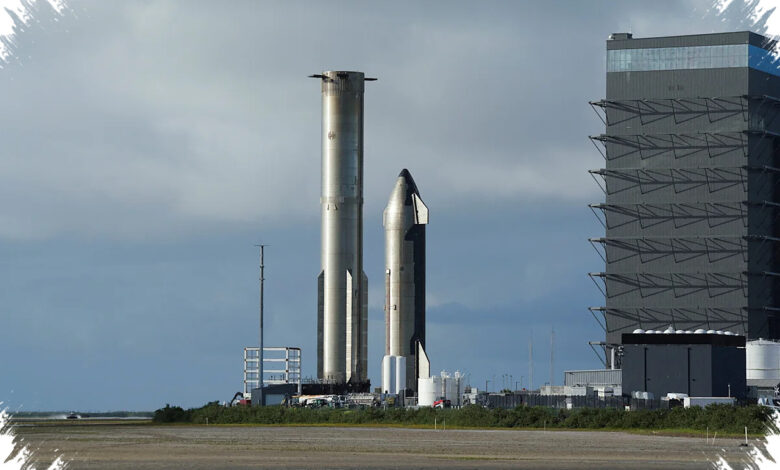
SpaceX is heading into its 13th Starship test flight with a fresh boost from Wall Street, even as the stock has been under pressure since the company went public on June 12. Evercore ISI has initiated coverage with an Outperform rating and a $230 price target, signaling confidence in the company’s long-term case.
The timing matters because the launch is expected no earlier than Thursday from Starbase, Texas, around 6:45 p.m. EDT. Flight 13 is the second launch of Starship’s Version 3, a larger and more powerful design that debuted less than two months ago.
What The Starship Launch Is Testing
SpaceX’s last launch in May exposed the stakes. During separation, the Super Heavy booster suffered heat damage after being pushed into an unexpected position, and the return failed when some engines did not reignite.
| Key Item | Detail | Why It Matters |
|---|---|---|
| Flight 13 | 13th Starship test flight | Marks another step in the vehicle’s development |
| Launch Site | Starbase, Texas | Home base for SpaceX’s Starship program |
| Version | Starship Version 3 | Bigger, more powerful design under early testing |
| Last Flight Issue | Booster lost after separation failure | Shows the program still has major engineering hurdles |
SpaceX has been launching and refining Starship since 2023, and the vehicle remains central to the company’s plans for heavy-lift launch, satellite deployment, and eventually travel to the moon and Mars.
Evercore Sees A Connected Business Machine
On Tuesday, Evercore ISI analyst Kutgun Maral called SpaceX “an extraordinary company on a real path to reshaping the future of humanity,” arguing that its businesses reinforce one another. He described the company as “a single, vertically integrated machine” that turned reusable, low-cost launch into a near-monopoly on access to orbit.
In Maral’s view, that advantage helped build Starlink into a scaled, cash-generative connectivity franchise and is now being extended toward AI infrastructure. He also pointed to SpaceX’s opportunities in launch, Starlink broadband, satellite-to-phone mobile service, terrestrial computing, and orbital data centers.
Evercore’s model is aggressive. The firm expects revenue and EBITDA to compound at 106% and 157%, respectively, through 2028, while operating margins widen from 35% to 69% over the same period.
Why The Stock Still Looks Volatile
Despite that optimism, SpaceX shares have struggled since going public. The stock has fallen nearly 7% over the past five days and remains more than 38% below its peak of $225.64.
Maral said growth can “accelerate rather than fade as the decade wears on,” but he also cautioned that “there is a great deal left to prove out.” That warning is especially relevant because Starship has yet to prove it can scale, and its first operational payload is targeted for the second half of this year.
Other pieces of the strategy are also still early. Starlink’s broadband and mobile offerings need more traction, orbital computing is not expected to be tested until 2029 or later, and SpaceX’s Grok and Cursor AI products still have to compete with entrenched enterprise rivals.