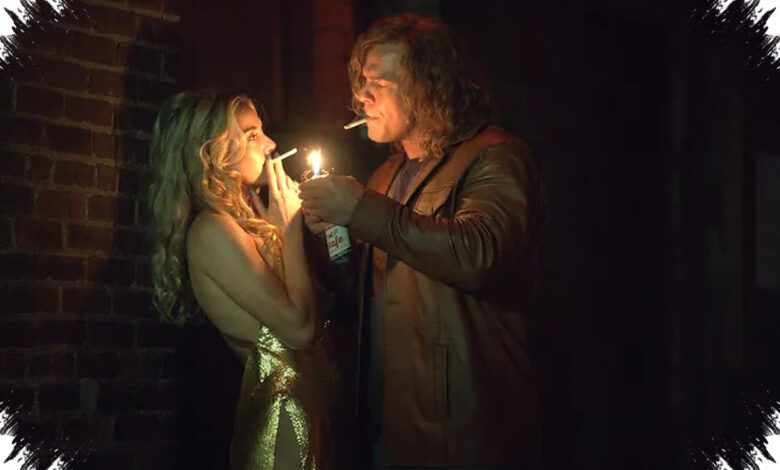
Motor City takes a striking gamble for a crime thriller: its characters barely speak. Set in Detroit in 1977, the film relies on faces, gestures, violence and pop songs to tell a revenge story with the force of an underworld opera.
The approach gives the film an immediate identity, especially during its strongest music-driven sequences. Yet the same bold musical language fades during the final stretch, leaving its climax less distinctive than the film that came before it.
A Framed Man and a Stolen Life
Alan Ritchson plays John Miller, a Vietnam veteran and ex-con trying to stay on the right side of the law after meeting his parole requirement. He is engaged to Sophia, played by Shailene Woodley, when police raid their home and uncover drugs in his vintage green muscle car.
Miller appears to have been set up by Reynolds, a wealthy and powerful drug kingpin played by Ben Foster. Sophia had previously been involved with Reynolds, and Miller’s relationship with her puts him directly in the path of a calculated act of revenge.
A newspaper headline reveals that Miller receives a 25-year sentence for narcotics possession. Reynolds later visits him in prison with a photo of himself and Sophia, now married, carrying the message: “You should have seen the honeymoon.”
Pop Songs Carry the Dialogue
Director Potsy Ponciroli uses recognizable songs not simply as background music but as the film’s emotional voice. In place of extended conversations, the tracks sharpen the dread, jealousy and rage surrounding Miller’s ordeal.
| Song | Sequence | Effect |
|---|---|---|
| “The Chain” by Fleetwood Mac | Police raid Miller and Sophia’s home | Turns a drug-planting arrest into a slow-building scene of fear. |
| “I Feel Love” by Donna Summer | Miller’s prison fantasies | Underscores his jealousy and the story’s escalating cruelty. |
| “Nights in White Satin” by the Moody Blues | Prison escape | Gives an intricate escape sequence an unexpectedly rhapsodic tone. |
David Bowie’s “Cat People (Putting Out Fire)” also helps establish the film’s dread-soaked atmosphere, while Detroit is presented as a decaying, crime-ridden landscape marked by period rock imagery. The setting supports a plot that moves from romance and betrayal to incarceration and retaliation.
According to Variety, the film’s near-silent construction works because viewers can infer much of what is happening from familiar crime-thriller situations. The absence of dialogue shifts attention toward the physical presence and expression of the cast.
Ponciroli’s Stylized Crime World
Ponciroli previously directed the 2021 Western Old Henry, starring Tim Blake Nelson. With Motor City, he applies a similarly tough, stylized sensibility to a grungy revenge drama that recalls the mood of Drive, David Lynch and Dragged Across Concrete.
The film gives Miller a resourceful escape from prison, including a dagger made from smelted candy, before turning him toward revenge. Its cast carries much of the dramatic weight through silent confrontations, watchful glances and physical tension rather than explanatory exchanges.
The major weakness arrives after Miller escapes. The elaborate needle drops largely give way to a more conventional suspense score, a shift that weakens the film’s most singular aesthetic choice just as its violence and revenge plot reach their peak.
An epilogue set many years later also feels less assured than the earlier material. Still, Motor City, which opens July 24, stands out for the audacity of making a mostly wordless crime story feel powered by the songs, expressions and menace that fill its world.