


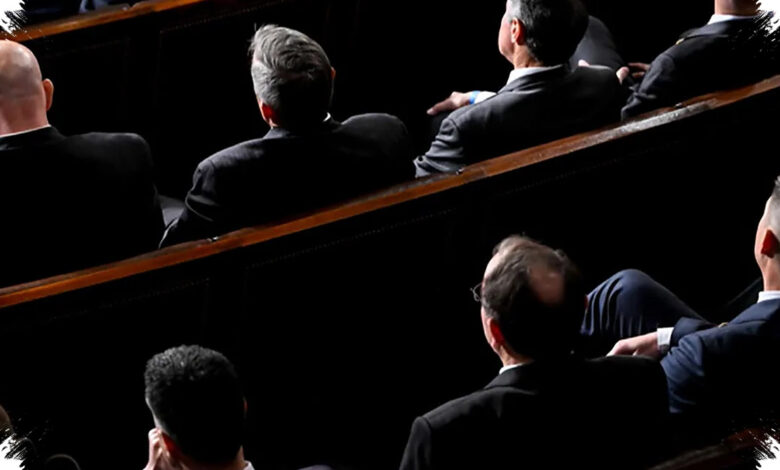
The U.S. Congress holds the constitutional authority to spend public money, declare war, and write laws, yet much of the country sees an institution unable to use that power. Nearly 9 in 10 Americans say they are unhappy with Congress, reflecting frustration with gridlock and a presidency that has increasingly taken center stage.
The central problem is not a lack of authority on paper but a weakening willingness to exercise it. As lawmakers defer to the White House on major matters, critics warn that Congress risks making its diminished role permanent.
Power Congress Has, but Often Does Not Use
Article I of the Constitution gives Congress major responsibilities, including the power of the purse and the authority to declare war. But congressional power has increasingly been ceded to presidents across multiple administrations, according to experts who study the institution.
Carl Hulse, chief Washington correspondent for The New York Times, described that shift as a serious mistake. “Once you give away some power, you never get it back,” Hulse said in comments to www.cbsnews.com, pointing to areas including tariffs and war powers.
The concern extends beyond one president or one party. A future administration from either party is unlikely to voluntarily return authority that Congress has allowed the executive branch to absorb.
| Observer | Assessment of Congress | Core Concern |
|---|---|---|
| Carl Hulse | In decline | Partisan cooperation has become extremely limited |
| Sarah Binder | Broken and diminished | Congress struggles to use or reclaim its constitutional authority |
| Philip Wallach | Marginalized | Members increasingly view the executive branch as where the action is |
Why Congressional Gridlock Persists
Congressional gridlock is fueled by intense polarization, tight majorities, and a political culture that treats compromise with suspicion. Philip Wallach, a senior fellow at the American Enterprise Institute, said members have too often moved away from seeing coalition-building as central to their jobs.
“Compromise has too much become a dirty word in American politics today,” Wallach said. He argued that lawmakers increasingly define their role as supporting an allied White House or fighting an opposing one, rather than solving problems through legislation.
Sarah Binder, a senior fellow at the Brookings Institution, said Congress still has the capacity to make deals, but its practical skills have weakened. “The muscles, they’re there, but they’ve really atrophied,” she said of the institution’s ability to legislate and negotiate.
Hulse also pointed to narrow margins and heavily gerrymandered districts as factors that make governing harder. He said the political climate on Capitol Hill is more severe than when he began covering Congress in the mid-1980s.
Some Laws Still Move Forward
Despite the dysfunction, the 119th Congress has enacted legislation with significant consequences. Its record includes a Republican-backed megabill projected to cut taxes by $4.5 trillion over the next decade and a bipartisan housing bill.
Still, the current Congress has passed fewer bills than many of its predecessors. It also faced a partial government shutdown connected to funding for homeland security, underscoring how basic governing disputes can become prolonged confrontations.
Both parties blame the other side for the stalemate. Democrats have described the House as chaotic, while Republicans have accused Democrats of putting politics ahead of people under the current administration.
Another point of conflict is President Trump’s relationship with Congress. Sen. Chris Coons said Trump, as “the biggest voice in the room,” has been fighting against his own Congress.
An Empowered Executive Branch
President Trump has issued more than 260 executive orders during his current term, adding to a long-running pattern of presidents using executive action to move policy. The two presidents before him also relied heavily on executive orders, leaving many voters asking what Congress is doing instead.
Binder said Congress has repeatedly struggled to use the powers already available to it. That includes authority over federal spending and war, areas where lawmakers are constitutionally positioned to act independently of the president.
Wallach said members increasingly believe that the executive branch and judiciary are where the most consequential decisions are made. That perception can further weaken incentives for lawmakers to build broad legislative coalitions.
Why Public Anger Is Not Going Away
Binder said the public has legitimate reasons to demand more from Congress, citing roughly $30 trillion in public debt, questions surrounding Social Security, and the cost of housing. “People should be mad,” she said.
At the same time, she cautioned that voters can hold unrealistic expectations about how quickly Congress can solve major problems. Large legislation often requires broad bipartisan majorities, which are difficult to build in a polarized country with factions inside both parties.
Wallach said Congress does not need to be popular to function effectively, because legislative bargaining can appear messy and unappealing to the public. But he also said lawmakers must recover a stronger sense that they were sent to Washington to solve the problems facing Americans.
Binder is not highly optimistic that Congress will quickly overcome its deep-rooted problems. Wallach takes a longer view, arguing that Congress has reinvented itself before and retains the power to place itself back at the center of American government.