


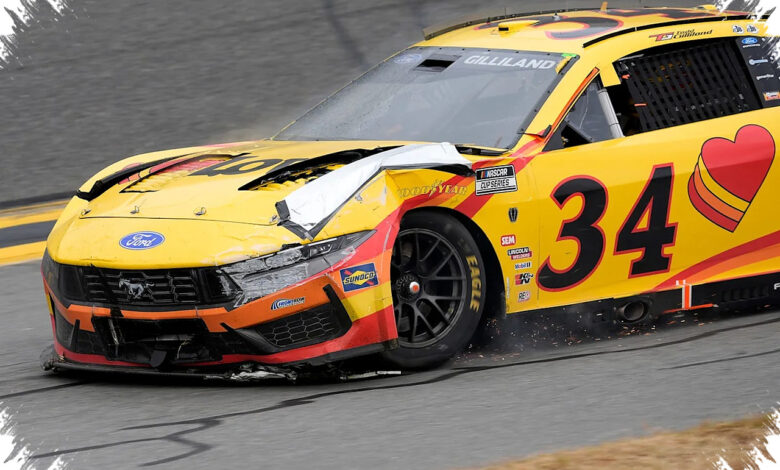
NASCAR Cup drivers could face a new penalty for using the bumper-and-run at North Wilkesboro Speedway: damage to their own cars. A short-track rule change has made the front and rear bumpers less sturdy ahead of the Window World 450.
NASCAR removed the energy-absorbing bumper foam at drivers’ request after concerns about the violent hits they were taking on short tracks. The change creates a larger crush zone, raising the possibility of radiator damage, reduced air intake, and cut tires after contact.
A Different Cost for Contact
The Next Gen car had become tough enough to encourage frequent bumping and pinball-style contact in tight short-track racing. Without the foam, even a relatively minor impact could have consequences, although the severity will depend on how hard the cars hit.
Denny Hamlin said the durability of the revised setup remains an open question. “Is it a 2-mph impact that’s going to crush the front end? Is it a five, a 10? They seem to think it’s going to be pretty fragile,” Hamlin said, according to sports.yahoo.com.
| Driver | View of the Change | Potential Effect |
|---|---|---|
| Denny Hamlin | Questioned how fragile the bumper structure will be. | Damage could restrict air intake and create engine issues. |
| Chris Buescher | Believes drivers must respect their cars more. | Front and rear areas will be significantly less stout over 450 laps. |
| Daniel Suarez | Called the change a positive step. | Drivers may be less aggressive because contact can quickly damage a car. |
Cooling and Downforce Could Be at Stake
Hamlin noted that NASCAR has removed “bits and pieces” from the Next Gen car over time in attempts to address several issues. He said squashing the front end could affect air intake and potentially lead to engine trouble.
Chris Buescher said the adjustment is intended in part to reduce the shock drivers feel in impacts. But he also expects it to force more restraint during restart checkups and hard racing, especially if teams need their cars to last all 450 laps.
“We’ve joked about it being bumper cars at times because it’s just a little bit of pinballing around,” Buescher said. He added that the weakened front and rear structures should make drivers “respect” their race cars more.
Why the Bumper-and-Run May Change
In earlier eras of NASCAR, drivers sometimes used stiff rear bumpers and brake checks entering turns to crush a rival’s front end. The resulting damage could cause overheating and remove a competitor from contention.
Daniel Suarez believes the new setup could discourage that kind of impatience at North Wilkesboro Speedway. “You hit somebody and that thing goes into the radiator,” Suarez said. “I actually think it’s a good thing.”
Suarez compared the situation with the NASCAR Craftsman Truck and O’Reilly Auto Parts Series, where drivers are less aggressive because vehicle damage can be more costly. He said the previous car also demanded more caution because damage could mean lost downforce, cooling problems, or other performance setbacks.
For the NASCAR Cup Series, the revised bumper construction could make each intentional nudge a more calculated decision. The change does not eliminate contact, but it may ensure that a driver who delivers a hit has more to lose from it.