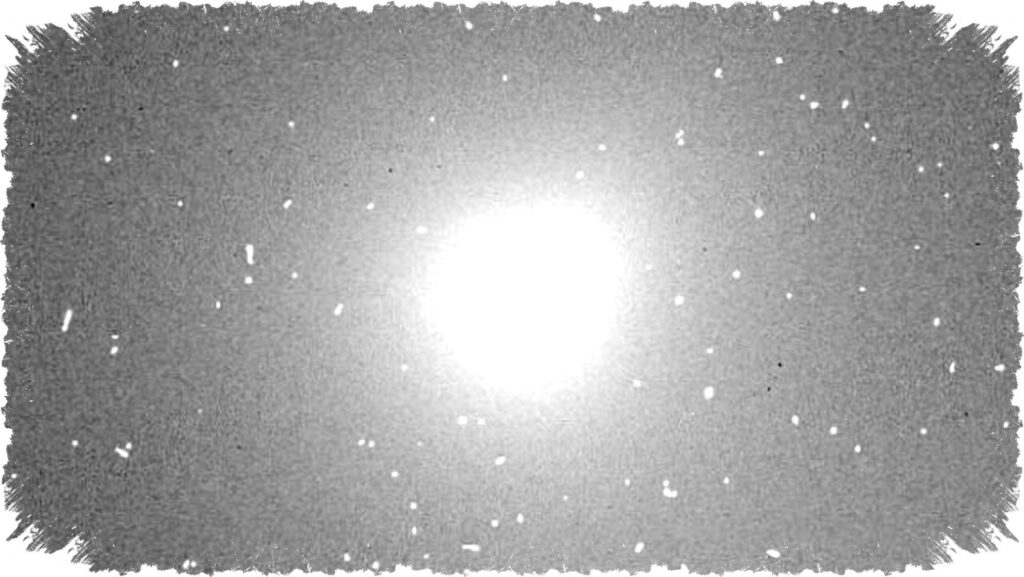
The NASA/ESA Hubble Space Telescope captured a rare cosmic event on January 22, 2026, observing the interstellar comet 3I/ATLAS almost perfectly aligned with the Sun-Earth axis. This lineup provided an unprecedented view of the comet’s jet structures and a distinctive anti-tail, phenomena rarely seen with such clarity.
This unique alignment occurred when Earth passed nearly directly between the Sun and 3I/ATLAS, placing the comet at just 0.69 degrees from the Sun-Earth line. The observation enabled scientists to detect a surge in brightness determined by the particle composition in the comet’s jets, giving new insights into its physical properties.
Significance of the Observation
Interstellar objects like 3I/ATLAS are valuable because they carry materials from beyond our solar system. Harvard University’s Professor Abraham Loeb highlighted the importance of these observations, noting that prior interstellar visitors, such as 1I/Oumuamua and 2I/Borisov, were limited in the data they provided. Unlike 3I/ATLAS, earlier objects did not exhibit significant gas or dust, or were observed at less favorable angles.
Dr. Mauro Barbieri from INAF-Padova Observatory emphasized the rarity of witnessing an object so precisely positioned in line with Earth and the Sun. Such occurrences enable detailed analysis of cometary jets and dust, which can enhance understanding of the formation and composition of bodies from other stellar systems.
Detailed Imaging and Analysis
The images were taken by Hubble’s Wide Field Camera 3 (WFC3) instrument and processed by astronomers including Man-To Hui from the Shanghai Astronomical Observatory and Toni Scarmato. Their analysis revealed a complex jet system on 3I/ATLAS consisting of four distinct jets, including a prominent anti-tail oriented almost directly towards the Sun and Earth.
Key features identified include:
- A main anti-tail pointing sunward and earthward, rare for comet observations.
- Three mini-jets spaced evenly at 120-degree intervals.
- One mini-jet appearing fainter due to its orientation relative to Earth, suggesting complex jet dynamics.
Professor Loeb explained that the anti-tail and jets provide clues about the dust and gas particles ejected by the comet, influenced by solar radiation and the comet’s rotation.
Implications for Future Research
The opportunity to observe 3I/ATLAS under such favorable conditions might not occur again for decades, making this event particularly significant. The detailed data from this alignment allows astronomers to study the comet’s composition and activity in a way that was previously impossible for interstellar objects.
This observation can improve models of comet behavior and contribute to the broader understanding of matter originating from other star systems. By studying the jets and dust particles, researchers aim to uncover the processes shaping these distant visitors and refine knowledge of the cosmic environment surrounding Earth.
Hubble’s observations of 3I/ATLAS mark a milestone in interstellar research, enhancing the scientific community’s ability to analyze rare celestial bodies. Continued monitoring and study of interstellar objects will be crucial as new ones are discovered, helping to expand humanity’s grasp of our galaxy’s diverse materials and origins.
Read more at: www.sci.news