


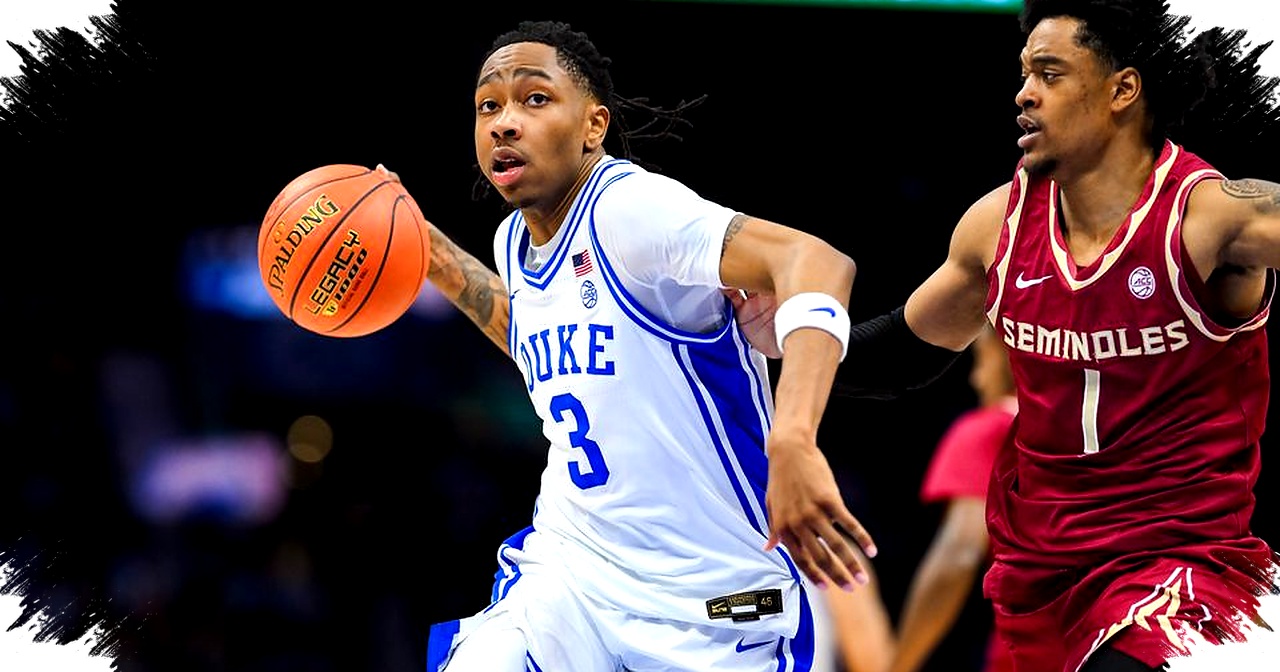
Duke guard Isaiah Evans recently spoke out about the intense pressure and harassment that college athletes face from bettors, describing the situation as “definitely getting out of hand.” After Duke’s win that advanced the team to the ACC championship game, Evans revealed he received threatening messages, including one wishing him a career-ending injury. This followed a sharp contrast in his performance, from scoring 32 points with seven 3-pointers against Florida State to scoring only six points and missing all seven three-point attempts against Clemson.
Evans emphasized that players are focused on winning games, not on satisfying bettors’ prop bets, which have become increasingly common since North Carolina legalized online sports betting two years ago. Bettors have wagered more than $13 billion through eight state-approved operators, with many placing bets on individual player statistics, such as points, rebounds, or assists. Evans and other players view these prop bets as harmful, leading to harassment that affects their mental well-being.
Growing Concerns Over Player Harassment
Isaiah Evans is not an isolated case. Former UNC star Armando Bacot also disclosed receiving hundreds of negative messages related to his performance shortly after the legalization of sports betting in the state. Likewise, Duke senior Maliq Brown stated he regularly hears bettors’ criticisms in arenas and on social media, reinforcing the pervasive nature of this issue.
The NCAA president, Charlie Baker, has called on states to prohibit prop bets on college games to curb harassment and potential game manipulation. Some states, including Ohio and Louisiana, have already banned such bets, while others never allowed them. ACC Commissioner Jim Phillips publicly supports eliminating prop bets due to the dangers they pose to athletes and the integrity of college sports.
Calls for Regulatory Action on Prop Bets
Phillips described prop bets as “dangerous” and urged for zero tolerance, highlighting the significant challenges student-athletes face balancing academics, normal social life, and the pressures forced by betting markets. He warned that the temptation for game manipulation exists, referencing suspensions and bans in professional leagues like the NBA and MLB linked to players manipulating performance to exploit prop bets.
The popularity of prop bets stems from fans’ personal interest in individual athletes. Joe Maloney, president of the Sports Betting Alliance, explained that prop bets reflect fandom but acknowledged their problematic impact. In basketball, popular wager types include number of points scored, rebounds, and 3-pointers, while football bets often focus on specific scoring plays or player achievements during games.
Legislative Efforts and Opposition
North Carolina state Representative Marcia Morey, a former Olympic swimmer and NCAA investigator, has tried multiple times to ban prop betting on college sports through legislation but has yet to succeed. She noted a notable surge in social media threats to athletes since betting expanded in the state.
Conversely, former Representative Jason Saine, who supported legal sports betting, argued that athletes face public scrutiny regardless of betting’s existence. Saine pointed out that criticism online and in person stems from the high visibility of college sports and social media’s influence, factors predating legalized sports wagering.
Industry and Media Response
WRAL is addressing this issue through a new investigative documentary titled The Gamble: Sports Betting in North Carolina, which explores the rapid growth of legalized betting and its consequences for athletes, fans, and the community. The documentary provides deeper insight into how the booming betting market is reshaping college sports and the associated ethical and safety concerns for players at the heart of the controversy.