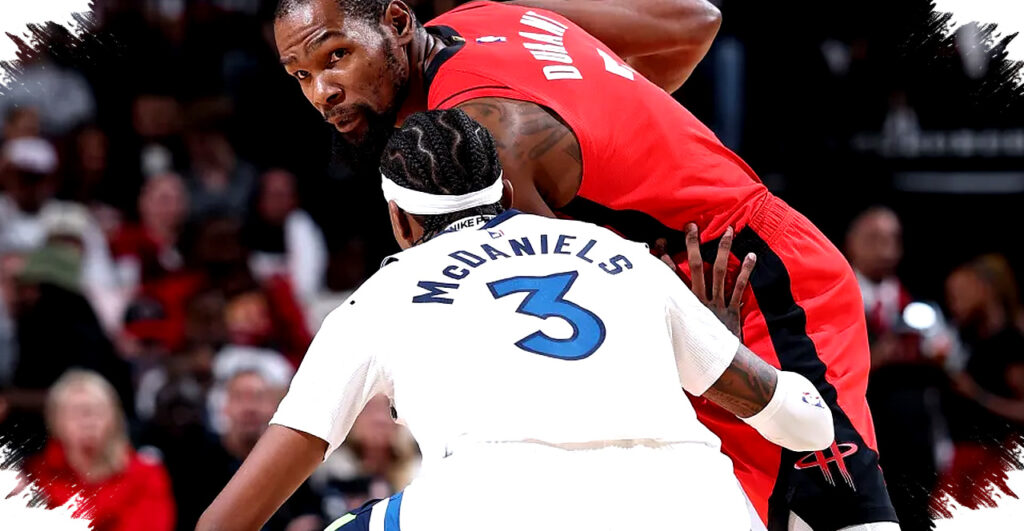
The Minnesota Timberwolves are set to face the Houston Rockets at Target Center in a crucial late-season game. This matchup has significant playoff implications as both teams are currently tied in the standings. The Timberwolves will once again have to compete without their star player, Anthony Edwards, making team cohesion and strategic execution vital.
Minnesota’s recent victory over Boston demonstrated their resilience and ability to overcome early deficits despite missing Edwards. The Timberwolves endured a shaky start, falling behind by 15 points, but tightened their defense and improved ball movement to take control. A buzzer-beater by Bones Hyland sent them into halftime leading, and despite a tough start to the second half, they outperformed the Celtics on the road.
Key Player Contributions Amid Adversity
With Edwards sidelined, the Timberwolves relied heavily on the backcourt pair of Ayo Dosunmu and Bones Hyland. Dosunmu’s poise and efficient shooting provided offensive stability, while Hyland delivered crucial scoring bursts. Their combined efforts have helped Minnesota maintain competitiveness in Edwards’ absence. This duo’s production is pivotal to the team maintaining momentum during this stretch of the season.
However, the Timberwolves’ record against direct playoff competitors reveals inconsistencies. Minnesota holds a 2–9 mark against top contenders such as the Lakers, Nuggets, Suns, and Rockets. This pattern highlights the challenge of performing consistently in high-stakes games, an area the team must improve to secure a playoff spot.
Matchup Breakdown: Timberwolves vs. Rockets
Wednesday’s game presents the Timberwolves with a season-altering opportunity. The teams are tied, but Minnesota still possesses a chance to claim the tiebreaker. Victory would push the Wolves closer to a top-four positioning in the standings. Conversely, a loss would deepen the gap they are striving to close.
Key tactical elements must be emphasized for Minnesota to come away with a win:
Connected, Disciplined Defense: The defensive structure that stifled Boston’s secondary options must be replicated against Houston’s high-powered offense. Containing Kevin Durant will require cohesive team defense and strategic rotations rather than relying on individual matchups.
Rebounding and Paint Control: Houston’s physical style, particularly their emphasis on second-chance points, demands aggressive rebounding. Rudy Gobert and Jarred Vanderbilt must dominate the boards to prevent extra possessions and maintain defensive solidity.
Sustained Backcourt Production: Dosunmu and Hyland need to continue bridging the offensive gap left by Edwards. Their scoring and playmaking are critical to navigating the Rockets’ tough defensive schemes.
Increased Offensive Initiation by Randle and McDaniels: Julius Randle must serve as both scoring and facilitating presence, while Jalen McDaniels will have to aggressively exploit mismatches. Lack of assertiveness from these players risks stalling the offense.
- Composure in Clutch Moments: Minnesota’s difficulties in close, high-pressure situations have been a recurring problem this season. Maintaining focus, minimizing turnovers, and trusting the successful systems used against Boston will be essential.
Context of a Defining Game
Minnesota’s recent performances reflect a team capable of defeating elite competition despite obstacles. The win over Boston was a testament to their potential resilience. Nevertheless, beating Houston carries more substantial weight in reshaping the season’s trajectory.
This contest encapsulates the Timberwolves’ season narrative—missed opportunities and crucial crossroads. A victory would signify progress towards playoff positioning and prove the team’s ability to seize pivotal moments. The Wolves must translate their potential into tangible results to avoid falling further behind in this competitive landscape.