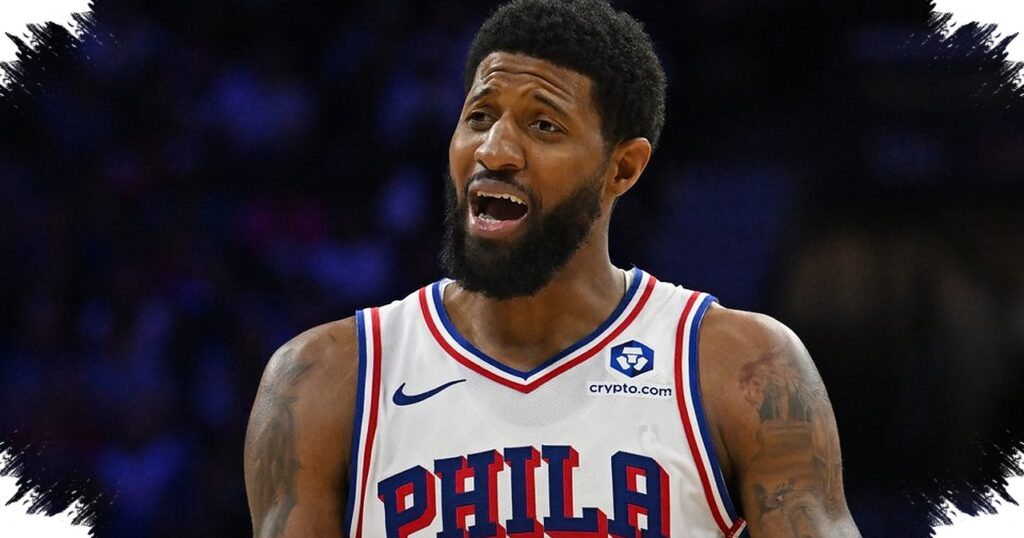
Paul George’s recent surge has made him look more useful again, but it has not changed the hardest question around his future: can the 76ers turn him into a real trade asset this offseason? His play after a 25-game suspension has looked sharper and healthier than at almost any point since he arrived in Philadelphia, yet his contract, age, and availability history still make the market far less forgiving than his recent form suggests.
The Sixers can point to the obvious positives. George has shown more burst, more lift, and more willingness to impact winning since returning, which matters for a player whose value had been sliding because of injuries and missed time. But NBA decision-makers rarely grade a star on two weeks of strong play alone, especially when the next stretch of his deal carries more than $54.1 million and then a player option worth more than $56.5 million.
Why the contract still drives the trade conversation
Any possible offseason move will start with the numbers, because George’s salary sits near the top tier of the league. He is expected to be one of the NBA’s 11 highest-paid players next season, and that price tag creates a high bar even if his production remains strong for the rest of the season.
A simple table shows why front offices will hesitate:
| Factor | Why it matters |
|---|---|
| Age | He will turn 36 soon, which raises the risk of decline |
| Salary | More than $54.1 million next season is hard to match with production alone |
| Player option | The following season carries a deal worth more than $56.5 million |
| Availability | He has played 78 of a possible 164 regular-season games in Philadelphia, assuming he reaches the final games on the schedule |
That combination makes him more complicated than a typical “buy low” or “sell high” case. A team can admire the talent and still decide the contract is too expensive for the injury risk that comes with it.
The availability issue may matter more than the production
George’s recent run has helped, but front offices usually care as much about bankable availability as they do about peak performance. Even if he looks closer to vintage form, many teams will ask whether he can realistically be counted on for 70 games, and that question may be enough to stop a trade from gaining traction.
The Sixers also know that his value is tied to how many seasons remain on the deal. Last summer, moving him would have taken a team willing to absorb a large long-term commitment right away, which is a much harder sell for a player with durability concerns. This offseason looks different because the contract will be closer to expiring, and expiring money always carries more flexibility in trade talks.
What makes him more movable now than before
The key change is not that George suddenly became a simple trade chip. The real shift is that his deal is shrinking in length, and that can matter more than a short-term scoring surge.
- His contract becomes easier to use as salary filler.
- His deal can help a team pursue a future star.
- It can also be combined in a larger trade for multiple rotation players.
- It may appeal to teams trying to reset their books rather than pay for long-term payroll certainty.
That does not mean the Sixers are shopping him aggressively. The more likely outcome is still that he stays in Philadelphia, especially if the organization believes his current play can carry into the postseason and beyond.
What the Sixers would likely get in return
Even with improved form, a George trade would probably focus more on financial structure than on a clean talent swap. If the Sixers ever decided to move him, the most realistic path could involve taking back another undesirable contract or using his salary as the main piece in a larger summer deal.
That is where the value becomes situational. A contender might see him as a deluxe matching salary in a bigger star trade. Another team might view him as a veteran name with real upside if surrounded by a younger core. In both cases, the return would depend less on one hot stretch and more on whether a front office believes the deal gives it future flexibility.
How the Sixers’ other offseason decisions connect
George’s future also sits alongside several other major roster questions. The Sixers are projected to be over the salary cap, which limits their ability to chase premium free agents and puts more pressure on internal decisions involving Quentin Grimes and Kelly Oubre Jr.
Both players are unrestricted free agents, and both can be re-signed because they are Full-Bird free agents, meaning Philadelphia can pay them any amount unless the team gets hard-capped at an apron. That makes the George situation even more relevant, because any trade or salary move could affect how the front office handles the rest of the summer.
What the market will likely decide
The most realistic reading is that George’s burst helps his image more than it changes his market. Rival teams will respect the improvement, but they will still weigh the age, injury history, and massive contract before making a serious move.
That is why the safest expectation remains that the Sixers keep him, at least entering next season. His recent play may not make him a straightforward trade asset, but it could make him a more usable piece if Philadelphia later decides that his contract is the kind of large expiring deal that can unlock a bigger summer move.
Read more at: www.phillyvoice.com