


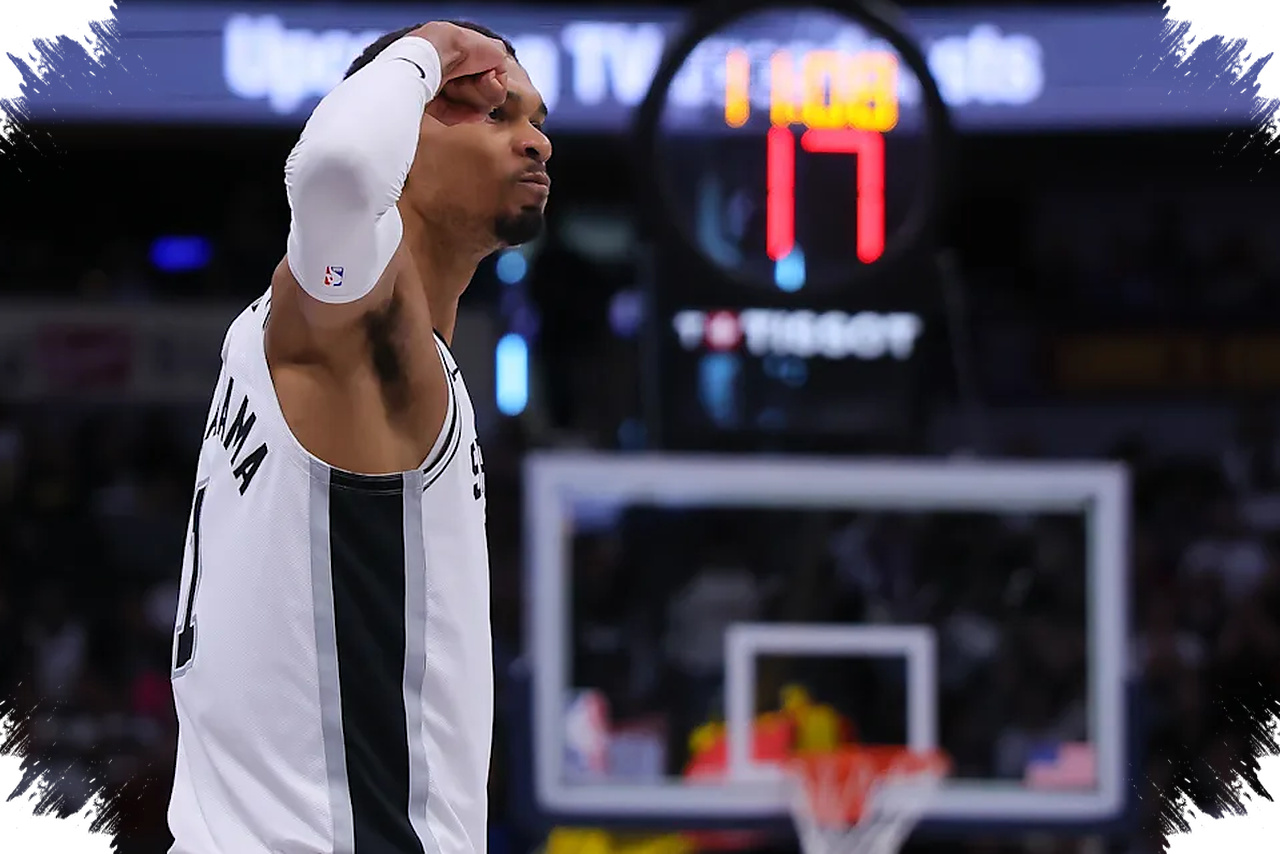
Victor Wembanyama’s end-of-season award position could become one of the clearest signs yet that a historic career is unfolding in San Antonio. If he plays at least one more regular-season game and meets the NBA’s 65-game threshold, the Spurs star is widely projected to finish top-five in MVP voting and win Defensive Player of the Year, a rare combination that has often pointed to championship-level impact.
That possibility is drawing heavy attention because it would place Wembanyama in elite company at an unusually young age. His case is not just about individual trophies, but about how award ballots have historically aligned with players who later shaped title runs, deep playoff pushes, and in some cases entire eras of the league.
Why the award race matters
End-of-season voting has long acted as a useful benchmark for a player’s two-way value. In the past 43 seasons since the NBA introduced the Defensive Player of the Year award, there have been 30 instances in which a player finished top-five in both MVP and DPOY voting while playing for a team that won at least 70% of its games.
Those seasons often matched playoff success at the highest level. Half of those players went on to win the championship, 25 reached the conference finals, and 18 made the NBA Finals, while none lost in the first round. That track record makes a top-five finish in both races more than a personal honor; it often signals a team that can contend seriously.
Where Wembanyama fits historically
Wembanyama’s season stands out because the Spurs have played at a contender’s level. San Antonio entered the final stretch at 61-19, won 29 of its last 32 games, and ranked among the league’s best on both offense and defense with a +8.5 net rating.
A table of historical comparisons shows how unusual this position is. Players such as Michael Jordan, Tim Duncan, LeBron James, Hakeem Olajuwon and Giannis Antetokounmpo all appeared near the top of both ballots during seasons that ended with championships, and most were established all-time greats by then.
- Michael Jordan finished top-five in both MVP and DPOY voting seven times.
- Tim Duncan did it five times.
- LeBron James and Hakeem Olajuwon each did it twice.
- Giannis Antetokounmpo did it once and won a title in that same championship season.
- Players like Kawhi Leonard, Dwight Howard, Gary Payton, David Robinson, Patrick Ewing and Kevin McHale also reached that ballot combination in strong seasons, though not all ended with a title.
The 65-game rule adds another layer
The NBA’s 65-game rule matters because it affects award eligibility. If Wembanyama returns before the regular season ends, he would likely satisfy the minimum requirement and remain on track for both major individual honors.
That detail has made his status a central storyline, especially since the reigning standard for dual-ballot dominance has become harder to maintain in the modern game. The league’s pace, perimeter-oriented offenses, and heavier two-way demand have made it rare for a player to rank near the top in both MVP and DPOY voting.
How rare elite two-way seasons have become
The list of players who have managed top-five finishes in both categories is short and heavily skewed toward legends. Jordan is the rare guard who did it repeatedly, while Bryant, Gary Payton and Dwyane Wade also made the cut in select seasons.
Among big men, the challenge once came more naturally. Robinson and Duncan each reached top-five status in both voting categories five times, but the three-point era changed the geometry of value and made that level of dominance harder to sustain for traditional interior players.
Wembanyama is different from earlier centers because his game stretches the same logic. At roughly 7-foot-5, he can protect the rim like classic bigs while covering space in a way that fits modern defensive demands, which is why his ceiling has drawn comparisons to players who could alter playoff series on both ends.
What history says about title odds
The betting market has already reflected that logic. According to BetMGM, the Spurs are listed at +450 to win the championship, a number that would normally imply an underdog, but one that looks significant in context given their record and Wembanyama’s expected award profile.
That is where the historical pattern becomes especially important. Players who combined top-five MVP and DPOY recognition with 57-win-or-better teams almost always belonged to championship contenders, and many were the main reason those teams reached the conference finals or beyond.
The profile of past winners suggests the following pattern:
| Player profile | Historical outcome |
|---|---|
| Top-five in MVP and DPOY on 70% win team | Often reached conference finals or Finals |
| Same profile with elite team record | About half won the title |
| Same profile and championship | Usually linked to all-time great status |
The next benchmark for Wembanyama
Wembanyama is only beginning to build this resume, but the structure of his season already resembles the kind of platform that has supported historic legacies. If he becomes the first player since Antetokounmpo to finish top-five in both MVP and DPOY voting in the same season and does it while San Antonio wins at this level, the comparison set will move beyond promise and into rarified company.
That is why the discussion around his rib contusion and late-season availability matters so much. His return would not only affect the Spurs’ playoff path, but also determine whether one of the league’s most unusual two-way seasons becomes a statistical marker for a career that could ultimately redefine what a modern superstar center can achieve.