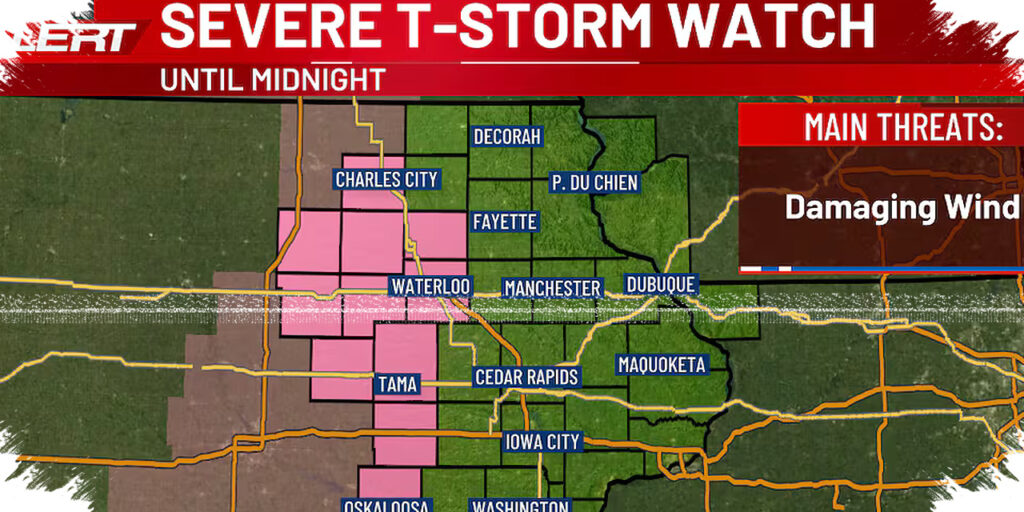
A line of storms is moving in ahead of a cold front, and eastern Iowa is under a First Alert Day because of the risk for damaging winds. Hail and an isolated tornado cannot be ruled out, but both are secondary threats at this time.
The storms are moving east at about 30 to 45 mph, and the strongest activity is expected to focus first over the western communities. As the line shifts east, the severe weather risk should gradually ease later in the evening.
Timing and main threats
The main line of storms is expected to reach the middle of the TV9 viewing area from north to south around 8 to 9 p.m., including Cedar Rapids and Iowa City. Farther east, arrival time is closer to 10 to 11 p.m. for the primary round of storms.
Damaging winds remain the biggest concern as the line approaches. The risk of severe weather should be highest in the west and then drop off later in the evening, with a lower threat near the Mississippi River.
What to do if storms move into your area
If a storm approaches, the safest move is to go indoors right away. If a warning is issued, people should get to the lowest floor, stay away from windows, and put as many walls as possible between themselves and the outside.
For a tornado warning, a basement offers the best protection. If there is no basement, an interior closet or bathroom is the next best option, and a pillow, blanket, or bike helmet can help protect the head and neck.
People in mobile homes should leave for sturdier shelter if time allows. Anyone caught outdoors should try to reach an indoor shelter, and a ditch is only a last resort if nothing else is available; bridges and overpasses are not safe places to shelter.
How to get warnings overnight
Staying alert matters because severe weather can develop after dark. A NOAA Weather Radio should be plugged in and turned on before bedtime so warnings can be received quickly.
The KCRG-TV9 First Alert Weather App can also send customized alerts for a specific location. Updates will also be available on KCRG.com and KCRG-TV9 as conditions warrant.
Overnight, a few isolated showers or storms could linger, but most areas should turn dry and fairly clear by daybreak. Low temperatures are expected to fall into the 40s northwest and the low to mid 50s in the southeast.
Friday should bring more sunshine and a fairly nice day behind the cold front. Northwest winds should be lighter than the stronger gusts seen Thursday, and highs should cool by about 5 to 15 degrees into the mid to upper 60s.
The more comfortable pattern is expected to continue into the weekend, with highs mainly in the 60s to 70s and overnight lows in the 40s. Saturday may turn a bit cloudier, while Sunday looks mostly cloudy with a bit more wind as the next storm system gets closer.
That next system could bring another good chance for rain and storms starting Sunday night. Activity should hold off until after dark, then continue into the start of Monday, when another round of shower and storm activity may develop later in the day.
Because of that possibility, Monday is also a First Alert Day. The Storm Prediction Center has placed the entire TV9 viewing area in a slight risk for severe storms, with a higher enhanced risk positioned to the southeast.
That Monday threat will depend on the timing and track of the system, along with whether the region gets a break between early-day activity and later storms. Those details remain uncertain several days out, but the potential for strong to severe storms in the afternoon and evening is in place for now.
After the system passes, the region should get another break from wet weather. Tuesday and Wednesday are expected to be cooler with lows in the 40s, highs in the low to mid 60s, and a mix of sun and clouds.
Another storm system could move near the area Thursday and Friday next week, bringing a chance for additional showers. That setup could also keep temperatures cooler than normal for the last few days of April.