


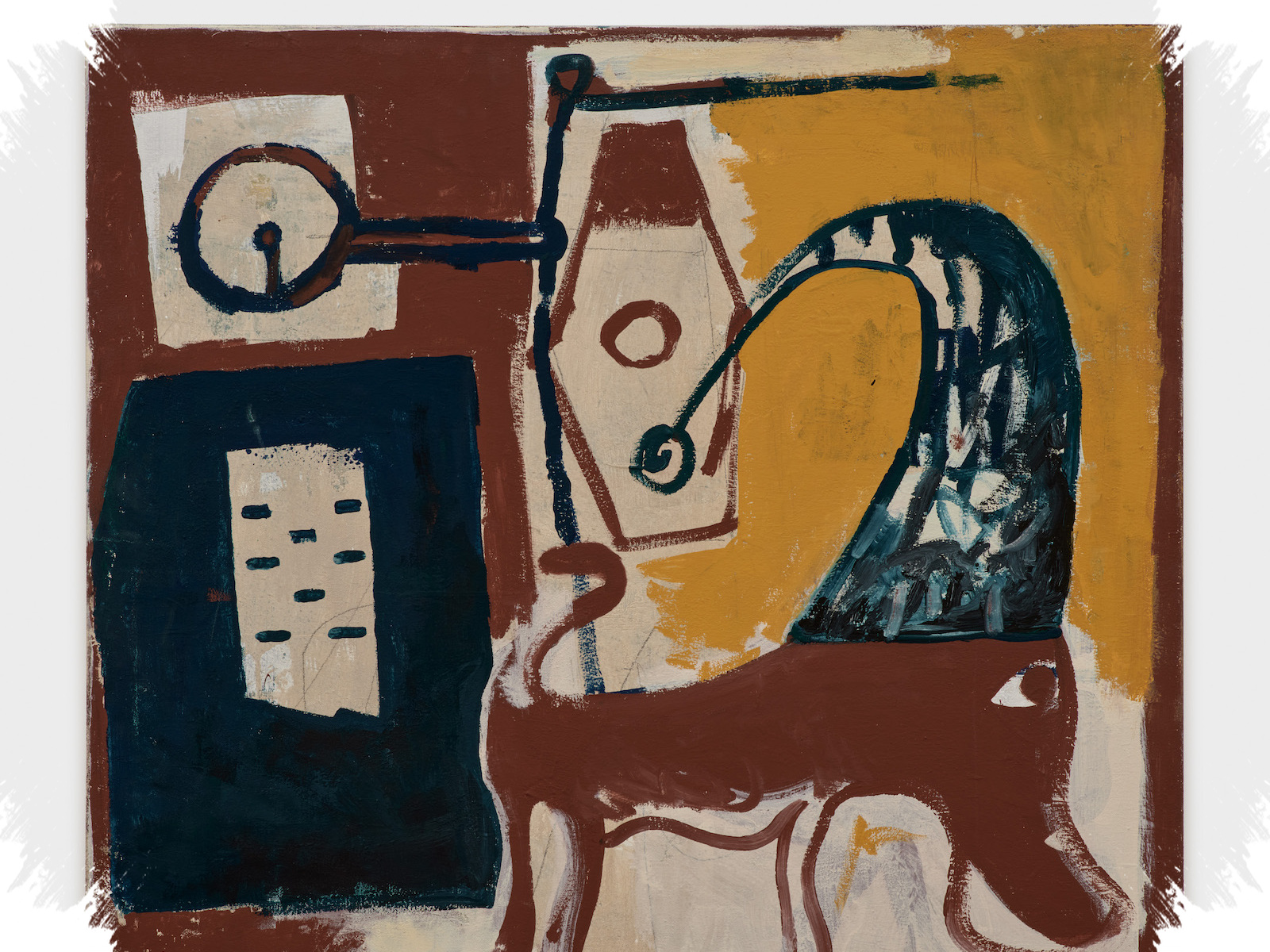
Matt Dillon’s new paintings follow a route through West Africa that began with a film role in Senegal and continued into Benin. The works now appear in his first solo exhibition at The Journal Gallery in New York, where they gather imagery shaped by travel, memory, and observation.
The show, titled “Porto Novo to Abomey,” opens April 24 and centers on paintings that are loose, textured, and built from quick gestures. Dillon uses acrylic on paper, notebooks, and other found supports, then layers in symbols, words, and figures that feel partly seen and partly remembered.
From doodles to a studio practice
Dillon’s path into painting began more than a decade ago with an informal moment at a friend’s apartment. He started sketching with crayons left out for children, and the habit soon expanded into a regular studio practice.
By 2016, he was renting a studio, even though he had little formal training. His background, however, was deeply visual, since he grew up in a family of artists and inherited an interest in picture-making.
How West Africa shaped the new work
The paintings in this exhibition were developed after Dillon worked in Senegal on Claire Denis’s film The Fence. In that project, he played Horn, an American overseeing a controversial construction project in an unnamed West African country.
After filming, he traveled through Benin and encountered textiles, architecture, landscapes, and people that became key material for the exhibition. The title points to the inland route from Porto Novo, Benin’s modern-day capital, to Abomey, the center of the Kingdom of Dahomey.
Images, symbols, and uneasy histories
The paintings do not read as straightforward travel scenes. Instead, they present flattened impressions: a cat in motion outlined in black, a cluster of orange cinderblocks, green sea against a faded pink surface, and layered references to voodoo, which partly developed in the Kingdom of Dahomey.
One pair of works titled Coastal Landscape suggests a shoreline that feels both physical and historical. In one, black blocks stand in for sea and sand beneath branches that hang like teeth, while another features a strained figure that invites reflection on the region’s history, including the forced departure of enslaved people from the coast.
Gallery co-founder Michael Nevin said the title was chosen to reflect the feeling behind the work rather than a literal description of each piece. That approach fits Dillon’s style, which often depends on fragments that remain open to interpretation.
A practice built from what is at hand
Dillon’s way of working extends beyond the studio. While on set or traveling, he often improvises with materials that are available, using loose paper, repurposed notebooks, found textbooks, and old newspapers as drawing surfaces or sketchbooks.
Julia Dippelhofer, the gallery’s other co-founder, said Dillon is “always drawing, collaging, collecting, writing on the road.” She described him as “like a sponge and a great storyteller,” a quality that helps explain why his paintings absorb so many kinds of references without becoming literal documents.
Music, travel, and the road to Benin
Before this exhibition, Dillon’s connection to the region had largely come through music. He studied rumba and guaguancó, built a large collection of Afro-Cuban records, and directed El Gran Fellove in 2020, a documentary about Francisco Fellove, who blended Afro-Cuban rhythms with jazz.
That musical background helped shape the Benin journey as well, giving the paintings another layer of influence beyond cinema and travel. At The Journal Gallery, the exhibition brings those threads together in a body of work that translates movement across West Africa into paint, texture, and symbols.