


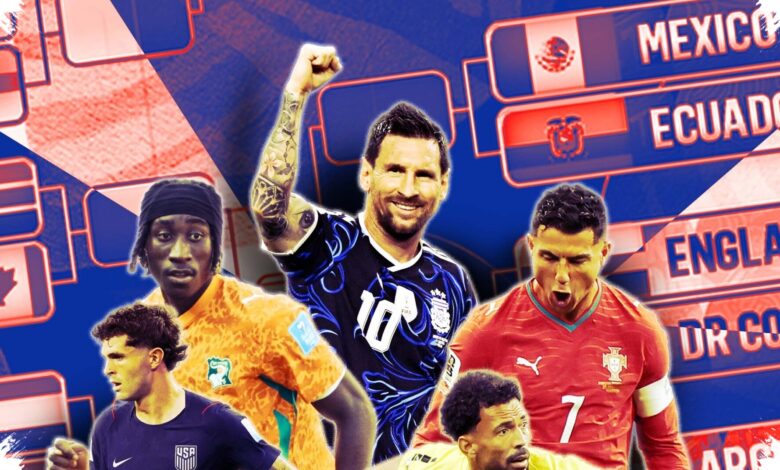
The expanded World Cup has made the knockout stage easier to understand and harder to predict. The bracket is set, and the paths now tell a very different story for the teams still alive.
Some contenders landed favorable roads, while others were handed matchups that could end their run early. That contrast is the clearest theme in the round of 32, which began with Canada’s 1-0 win over South Africa and left 31 teams chasing the trophy.
Argentina’s path looks the cleanest
Among the top powers, Argentina stands out as the team with the most manageable route. www.theringer.com’s updated projections put the reigning champions ahead of Spain and France because Argentina can face Cape Verde, then either Australia or Egypt, before reaching the quarterfinals.
That matters because the rest of the elite tier faces far tougher early tests. England may have to go through Mexico in Mexico City and then possibly Brazil, while France could see Germany in the round of 16 and Spain may run into Portugal in the second round.
Lionel Messi remains the tournament’s defining star
Messi has already done enough at a World Cup to cement his place in the sport’s history, but he is still driving Argentina’s latest surge. He scored a hat trick in the opener, added two more goals against Austria, and then came off the bench against Jordan to score a free kick.
Those six group-stage goals have him in position for the Golden Boot and reinforce his status as the apex superstar of international soccer. At 39, he is also pushing toward what looks like his last major run with Argentina.
Colombia got the friendliest route, Germany got the harshest
Colombia’s draw improved after its goalless result with Portugal, which left Portugal as the only one of the 12 tournament favorites not to win its group. Colombia should be favored over Ghana in the round of 32, and a round-of-16 meeting with Switzerland or Algeria would be more manageable than the roads facing several other contenders.
Germany, by contrast, earned little reward for handling its group cleanly. A likely round-of-16 matchup with France could be followed by meetings with the Netherlands or Morocco and then Spain just to reach the final.
| Team | Knockout Path | Key Concern |
|---|---|---|
| Argentina | Cape Verde, then Australia or Egypt | Managing Messi’s minutes for the late rounds |
| Colombia | Ghana, then Switzerland or Algeria | Potential quarterfinal against Argentina |
| Germany | France, then likely Netherlands or Morocco, then Spain | A defense that may be stressed by elite attacks |
Spain still has a case, even if the eye test is mixed
Spain has not looked dominant in every match, with laboring performances against Cape Verde and Uruguay raising doubts about its attack. Nico Williams is also injured again, which clouds an already uneven offensive picture.
Still, the numbers back Spain up. It conceded just 0.5 total expected goals across three matches, controlled territory, and kept pressure on opponents by winning the ball in dangerous areas.
Several individual storylines could swing the round of 32
One of the biggest breakout names is Yan Diomandé, who reportedly agreed to a five-year deal with Paris Saint-Germain and has been one of Ivory Coast’s best players in the tournament. His dribbling and ball progression give Ivory Coast a real transition threat against Norway and anyone else it meets.
There are also other compelling bracket notes, including England’s difficult road, Portugal’s tougher side of the draw after failing to win its group, and the possibility that Argentina’s clear path could matter more than any single matchup. In a field this tight, rest, health, and schedule may end up deciding as much as talent.
The knockout stage has turned the World Cup into a race between quality and survival. Argentina may have the softest road on paper, but the tournament’s biggest tests are still waiting deeper in the bracket.