


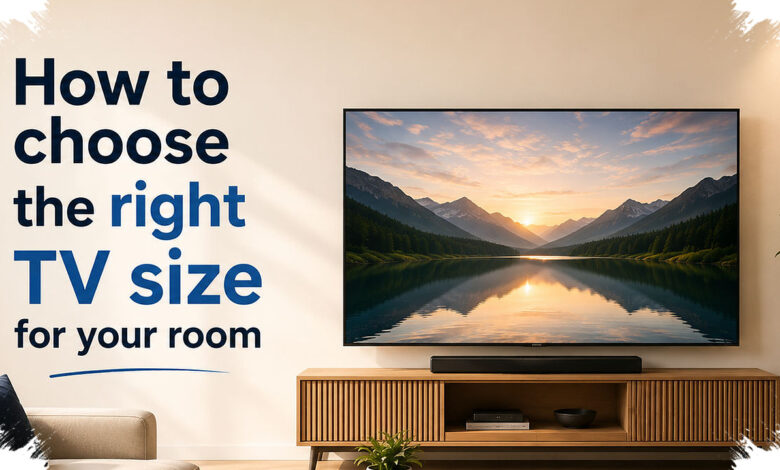
Choosing the right TV size can make a major difference when watching the 2026 World Cup, especially during high-stakes matches such as the Round of 32. In a living room that is too small, a screen that is overly large can strain the eyes, while a screen that is too small in a spacious room can reduce the excitement of a decisive goal.
The most important factor is viewing distance, because the screen size must match the room rather than simply look impressive on the wall. For modern televisions with 4K or 8K resolution, viewers can sit closer without losing picture clarity, which makes larger screens more practical than many buyers assume.
Viewing distance should come first
A commonly used guideline places the ideal viewing distance at around 1.5 to 2.5 times the TV’s diagonal size. That range helps keep the image comfortable to watch while preserving the sense of immersion during fast-moving sports.
For a 43-inch TV, the suitable distance is about 1.6 to 2.7 meters. A 55-inch model works well at 2.1 to 3.5 meters, while a 65-inch set is best viewed from 2.5 to 4 meters.
For larger living spaces, a 75-inch TV is ideal at roughly 3 to 4.6 meters. At that distance, sports coverage feels fuller and more cinematic, particularly when the pace of the match is high.
| TV Size | Ideal Viewing Distance | Best Use Case |
|---|---|---|
| 43 inches | 1.6–2.7 meters | Compact rooms |
| 55 inches | 2.1–3.5 meters | Standard family rooms |
| 65 inches | 2.5–4 meters | Wider living rooms |
| 75 inches | 3–4.6 meters | Large entertainment areas |
Resolution changes how close viewers can sit
Screen size cannot be separated from resolution, because sharper panels reduce the visibility of pixels at closer distances. Full HD 1080p remains suitable for standard use, while 4K Ultra HD is the better choice for most modern households.
For a more premium experience, 8K is considered future-proof. The higher the resolution, the closer viewers can sit without noticing image structure, which is especially useful for football and other sports with constant motion.
On the right display, player movements, the texture of the pitch, and VAR replays appear more clearly. That difference becomes more noticeable during matches that are decided by small details.
Room function also affects the ideal size
A family room usually serves as the main entertainment space, so 55- to 85-inch TVs are often the most suitable there. The larger screen supports group viewing, whether for family gatherings or watch parties with friends.
Bedrooms, by contrast, are better matched with 32- to 50-inch televisions because the viewing distance is shorter. A screen that is too large in a bedroom can cause eye fatigue, especially when used while lying down.
Dining areas need less visual impact, so 32- to 43-inch TVs are generally enough. In that setting, the television functions more as background entertainment than as the focal point of the room.
Gaming rooms and children’s rooms need extra care
Entertainment rooms and gaming rooms are often best served by 55- to 75-inch TVs. That size range supports game consoles, streaming films, and sports viewing with a more immersive feel.
Children’s rooms should prioritize safety and comfort above all else. A 24- to 43-inch set is more appropriate there, especially when mounted with a sturdy bracket or placed on a stable table.
Installation, layout, and budget still matter
Room layout can affect how enjoyable the picture feels, so the screen should be visible from multiple seating positions. It should also avoid direct sunlight, which can create glare and weaken visibility during daytime viewing.
If the TV will be mounted on a wall, the bracket strength, wall size, and TV weight need attention. Larger screens require stronger support to keep the setup safe and stable over time.
Budget remains part of the decision from the start. TV sizes from 32 to 43 inches are generally more economical, 50 to 65 inches fall into the mid-range, and 75 inches and above move into the premium category.
For the 2026 World Cup, the most important lesson is that screen size should follow the room, the seating distance, and the display’s resolution. A 43-inch TV fits a small room, a 55-inch set suits a standard family area, and a 65-inch or larger screen delivers a more cinematic viewing experience.