


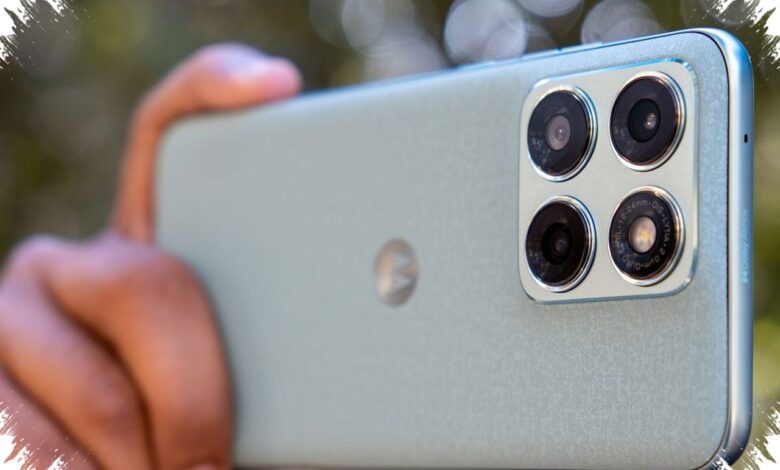
Motorola Edge 70 Fusion enters the midrange race with a clear advantage on paper. Across display quality, performance, cameras, audio, and connectivity, it pushes ahead of the Samsung Galaxy M47 in ways that are hard to ignore.
Samsung, however, is not without leverage. The Galaxy M47 counters with longer Android support, a lower starting price, and practical extras that may matter more than raw specifications for some buyers.
Motorola builds the stronger hardware package
The biggest divide appears in durability and everyday hardware. The Galaxy M47 uses Gorilla Glass Victus+ on the front and back, carries an IP64 rating, and is claimed to survive drops from up to 2 meters.
Edge 70 Fusion answers with Gorilla Glass 7i, IP68/IP69 protection, MIL-STD-810H certification, and eSIM support. That makes Motorola look better prepared for tougher conditions and more flexible for users who want a more premium-feeling device.
| Category | Samsung Galaxy M47 | Motorola Edge 70 Fusion |
|---|---|---|
| Display | 6.7-inch Super AMOLED, 120Hz, FHD+, 1,400 nits HBM | 6.78-inch AMOLED, 144Hz, HDR10+, higher resolution, up to 5,200 nits peak brightness |
| Chipset | Snapdragon 6 Gen 3, Adreno 710 | Snapdragon 7s Gen 4 in India or Snapdragon 7s Gen 3 globally, Adreno 810 |
| Memory | Up to 8GB RAM and 256GB storage, microSD support | Up to 12GB RAM and 512GB storage, no microSD slot |
Display is another area where Motorola stretches its lead. The Edge 70 Fusion offers a larger 6.78-inch AMOLED panel with 144Hz refresh rate, HDR10+ support, and a peak brightness rating as high as 5,200 nits.
Samsung’s 6.7-inch Super AMOLED screen still looks competitive with 120Hz refresh rate, FHD+ resolution, and 1,400 nits of HBM brightness. Even so, the Motorola panel clearly aims at a brighter and smoother experience.
Performance and storage favor Motorola
Under the hood, Samsung uses the Snapdragon 6 Gen 3 paired with the Adreno 710 GPU and UFS 3.1 storage. Motorola steps up to Snapdragon 7s Gen 4 for India or Snapdragon 7s Gen 3 for global markets, along with the Adreno 810 GPU.
Memory options widen the gap further. The Galaxy M47 tops out at 8GB RAM and 256GB storage, while the Edge 70 Fusion reaches 12GB RAM and 512GB storage.
Samsung does keep one practical advantage here, since it still includes a microSD slot. Motorola does not, so users who prefer expandable storage may still see value on the Samsung side.
Cameras and video tilt strongly toward Motorola
The camera setup shows one of the clearest differences between the two phones. Galaxy M47 carries a 50MP main camera with OIS, a 5MP ultrawide camera, and a 2MP macro camera.
Edge 70 Fusion uses a 50MP main camera with OIS plus a 13MP ultrawide camera with autofocus. That gives Motorola more flexibility for wider scenes and closer subjects without relying on a weak macro lens.
On the front, Samsung offers a 12MP autofocus selfie camera that records 1080p video. Motorola answers with a 32MP selfie camera capable of 4K video recording.
| Camera | Samsung Galaxy M47 | Motorola Edge 70 Fusion |
|---|---|---|
| Main rear camera | 50MP with OIS | 50MP with OIS |
| Ultrawide camera | 5MP | 13MP with autofocus |
| Selfie camera | 12MP AF, 1080p video | 32MP, 4K video |
| Video | 4K at 30fps rear | 4K at 30fps rear, 1080p at 120fps rear, 4K front video |
Video performance also favors Motorola. Both phones support 4K recording on the rear camera at 30fps, but Edge 70 Fusion adds 1080p at 120fps on the rear camera and 4K recording on the front camera.
Samsung’s advantage comes from software support and price
Where Samsung pushes back most effectively is in long-term use. The Galaxy M47 runs Android 16 and is promised up to six major Android upgrades.
Motorola Edge 70 Fusion also ships with Android 16, but it is limited to three major updates. For buyers planning to keep a phone for many years, that difference may carry more weight than a spec sheet advantage.
Price narrows the gap further in Samsung’s favor. Galaxy M47 is listed at around $250 or ₹25,000, while Motorola Edge 70 Fusion sits at around $250 or ₹27,000.
Battery, audio, and daily extras complete the picture
Battery strategy is another clear contrast. Galaxy M47 packs a 6,000mAh battery with 45W charging and bypass charging, a feature that can help reduce heat and battery stress during gaming.
Motorola Edge 70 Fusion comes with either a 5,200mAh or 7,000mAh battery depending on the variant, plus 68W charging. That gives Motorola the quicker top-up, while Samsung keeps the edge in charging-related gaming convenience.
Audio and connectivity also separate the two phones. Galaxy M47 uses a mono speaker, Wi‑Fi 5, Bluetooth 5.3, and NFC.
Edge 70 Fusion steps up with stereo speakers, Dolby Atmos, Wi‑Fi 6E, Bluetooth 6.0, and NFC availability depending on the region. It also uses an in-display optical fingerprint sensor, while Samsung places its fingerprint reader on the side.
Motorola’s Ready For feature adds another layer of usefulness for light productivity and entertainment, while Samsung relies on its expandable storage and bypass charging to stay practical. That leaves the Edge 70 Fusion as the more complete all-rounder, but the Galaxy M47 remains a strong value pick for buyers who care most about software longevity and lower cost.
The result is a split verdict rather than a clean sweep. Motorola Edge 70 Fusion leads in most hardware categories, while Samsung Galaxy M47 still offers two meaningful strengths that can matter more than premium specs in everyday use.