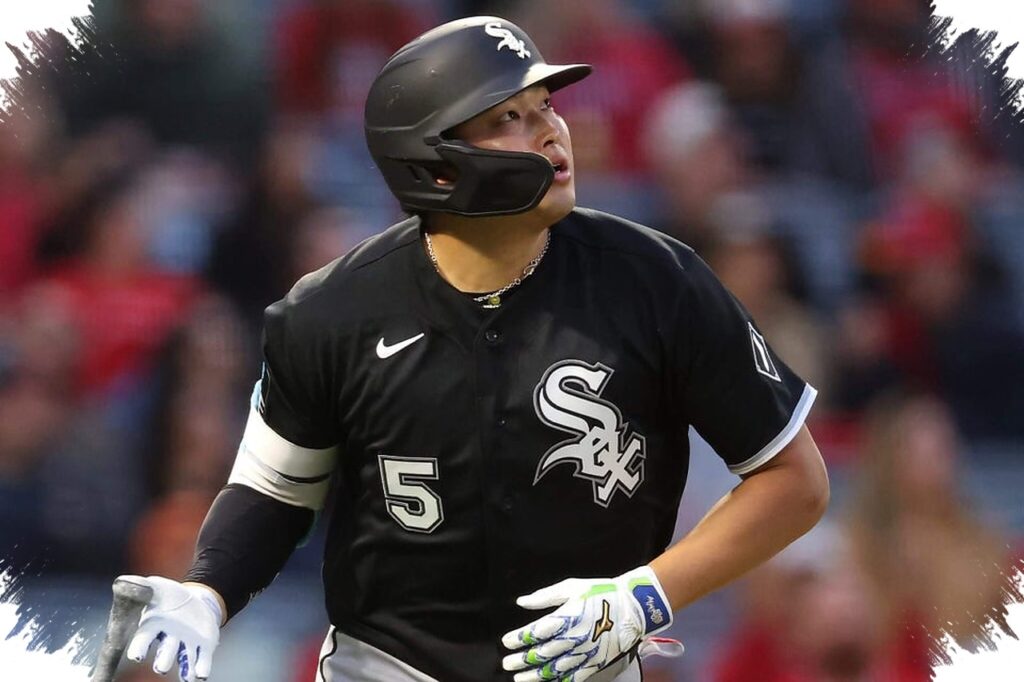
The latest round of MLB oddities has a little of everything: managerial chaos, a historic power start from Munetaka Murakami, and a minor-league game that pushed absurdity to the edge. It also included rare feats from established stars and strange one-off moments that made the week feel unusually dense with baseball trivia.
Two playoff managers out before May
Alex Cora and Rob Thomson were both out of jobs after guiding their teams in the previous postseason, which made their early exits stand out immediately. Baseball Reference researcher Kenny Jackelen found that no two managers had ever been fired in April after managing in the previous year’s playoffs, and only one other manager in history had been let go in April under that same circumstance.
That lone previous case was Bob Lemon, who took the Yankees to the World Series in 1981 and was gone by April 26 the next season. The timing gave the Red Sox and Phillies a strange shared footnote, especially because both managers had recently looked secure in their roles.
Cora’s last game as Boston’s manager turned into a final inning for the record books. The Red Sox scored 10 runs in that inning in Baltimore, making him the only manager in the data search whose team scored 10 runs in his final inning on the job.
Boston’s outburst did not save Cora, and it did not even become the week’s strangest managerial stat. The Red Sox also joined a small and bizarre club by winning 17-1 and still seeing their manager removed afterward.
Philadelphia’s unusual post-firing surge
The Phillies again made the case that a midseason managerial change can trigger an immediate burst of energy. Their first eight games after their latest firing produced a 7-1 start, which followed an 8-0 stretch after a previous change, giving the team a combined 15-1 record in those two spans.
That kind of post-firing production is not common across baseball. Jackelen’s research showed that only one other team in history had matched that kind of combined success over the first eight games after two separate midseason managerial changes.
That earlier example came from the Indians and Tigers, with names like Jeff Torborg, Dave Garcia, Bill Norman and Jimmy Dykes in the mix. The pattern did not prove that firing a manager always works, but it did suggest Philadelphia has handled that specific move better than most clubs.
Murakami opens with power and very little else
Munetaka Murakami also delivered a start that drew attention for its shape as much as its volume. He had already hit 14 home runs this season, but he had not yet recorded a double or a triple before finally breaking that streak with his first career double.
That start placed him on a pace that looked almost comical on paper: 62 home runs, 4 doubles, 0 triples, 241 strikeouts and 123 walks. The profile fit a rare power-heavy pattern, since only a few sluggers in history have paired at least 40 home runs with very few doubles.
The reference point list included Harmon Killebrew with 49 homers and 11 doubles, Henry Aaron with 40 homers and 12 doubles, and Babe Ruth with 41 homers and 13 doubles. Murakami was not being compared lightly; the start suggested a season built around huge power output and limited extra-base variety.
A minor-league game that broke the strike zone
The Arizona Complex League supplied one of the week’s most chaotic box scores. In an ACL Mariners win over the ACL Dodgers, the teams combined for 24 runs on only 14 hits, while the Dodgers’ bullpen allowed 17 runs on eight hits, with 18 walks and eight wild pitches.
Seven relievers shared that line, and four of them walked more batters than they retired. The Dodgers’ bullpen also threw 191 pitches, but only 88 were strikes, a lopsided ratio that made the score look even stranger after the fact.
The game included a 10-run inning built on just three hits, plus seven walks, two wild pitches, a hit batter and a passed ball. It was the kind of rookie-league game that made hits seem optional and command seem almost nonexistent.
Nolan Schanuel’s glove flip and other oddities
The Angels produced another memorable sequence when Nolan Schanuel’s first-base mitt trapped a baseball hit by Juan Soto. Instead of trying to pry the ball free, Schanuel flipped the entire glove, ball included, to pitcher Jack Kochanowicz for an unusual out.
It was the sort of play that looks improvised because it is. The moment also fit the week’s larger theme, since baseball kept finding new ways to look unfamiliar without breaking any actual rules.
Walks, hit-by-pitches and streaks
The week also brought a string of unusual on-base and streak-related notes. A’s first baseman Nick Kurtz put together a 20-game walk streak, which tied Barry Bonds’ longest walk streak and surpassed the walk streaks of Babe Ruth and Ted Williams.
Matt Olson’s long consecutive-games streak reached 820, and his walk-off homer during that run placed him in extremely rare company. The last player with that many consecutive games who had hit a walk-off homer before Olson was Lou Gehrig, who did it during his famous streak in 1937.
Shohei Ohtani also appeared in a pitcher-specific stat line that looked strange only because it fit his two-way reputation so well. He now has as many Pitcher of the Month awards as Tarik Skubal, which is to say one.
The week even included a game with three bases-loaded hit-by-pitches, as the White Sox and Angels turned a basic scoring sequence into a painful rarity. Reliable HBP data goes back 70 years, and the reference material noted no previous game with three run-scoring hit-batter events.
Small trivia, big baseball weirdness
The story lines stretched from major league quirks to nickname trivia and calendar oddities. Ty France homered twice in Mexico City, making him the answer to a very specific name-and-country question, while Dustin May pitched on May 3 while wearing No. 3 for the Cardinals.
That kind of date-number coincidence had never happened before for any name, month or number in the research cited. Baseball kept providing the kind of strange details that never look important in the moment, then become the facts people remember later.
The week’s final note came back to the same larger idea that tied the whole set of stories together. Baseball’s weirdness does not always come from one dramatic moment, because sometimes it shows up in firings, streaks, improbable starts, and minor-league box scores that read like mistakes until the official record confirms them.
Read more at: www.nytimes.com