


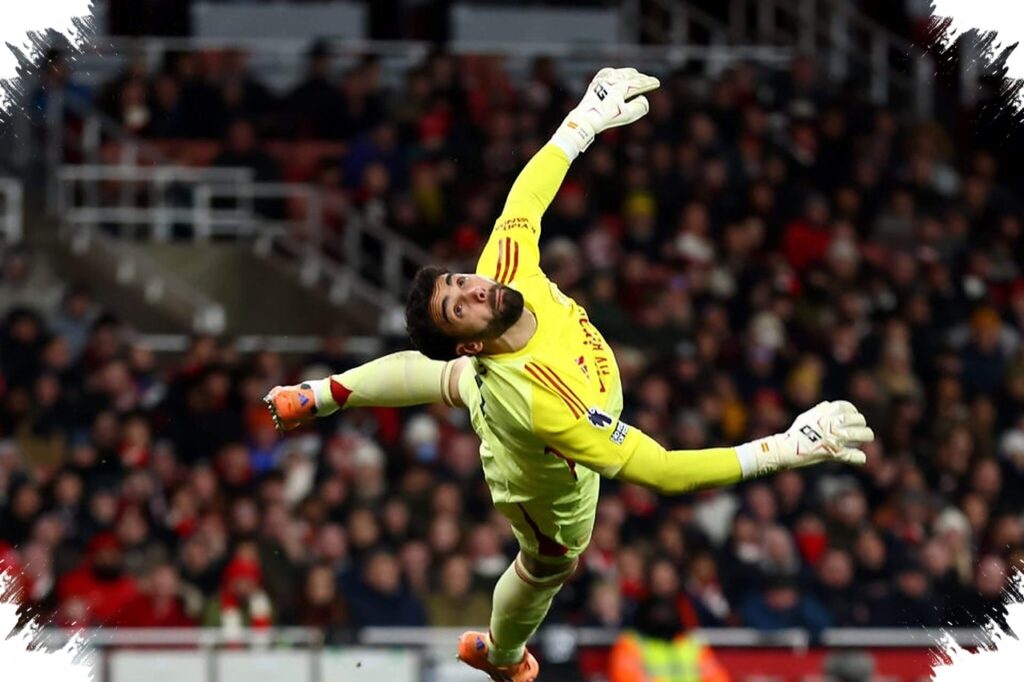
David Raya’s case for another Premier League Golden Glove has been built on more than clean sheets. He has combined calm positioning, fast reactions and sharp decision-making to deliver saves that changed matches for Arsenal.
The Arsenal goalkeeper has already reached 17 clean sheets in 35 league appearances, which leaves him in line for a third straight share of the division’s Golden Glove award. Manchester City’s Gianluigi Donnarumma remains the only player close enough to catch him on the numbers, but Raya’s consistency has made the outcome look increasingly likely in Arsenal’s favour.
A season defined by control and timing
Raya’s numbers stand out for Arsenal as much as for the league. His 17 clean sheets are already his best return since arriving from Brentford in summer 2023, and he has now kept shutouts in 46 of his 105 Premier League games for the club.
Mikel Arteta’s view has been direct. “He’s been exceptional,” the Arsenal manager said before the trip to West Ham United. He added that Raya’s consistency has reached a level that “nobody expected,” while noting how often his saves are treated as routine when they are not.
That consistency has mattered because many of Raya’s strongest moments came at key points in tight games. He often delivered when Arsenal were level or leading by a single goal, which helped the team hold control in the title race.
1. Brighton at home: a top-corner stop under pressure
One of Raya’s standout saves came in the 2-1 win over Brighton, when Arsenal had just reclaimed the top of the table. The stop arrived in the 76th minute, with the score at 2-1 and Brighton pushing for an equaliser.
Yankuba Minteh looked set to score after Brighton worked the ball into a shooting lane, but Raya read the situation early and set himself in time. He used a split-step, stayed balanced and exploded toward the strike with the correct hand choice to tip the ball over the bar.
The detail mattered because the shot rose away from him and toward the top corner. That made the bottom hand the best option, and Raya used it cleanly to divert the ball over the crossbar while Minteh reacted in disbelief.
2. Nottingham Forest at home: reactions inside the box
Raya’s save against Nottingham Forest showed a different side of his game. Arsenal were already 2-0 up, but a loose effort from Chris Wood still needed to be stopped to protect the control they had built.
The sequence began with smart positioning, as Raya stayed a few yards off his line to deal with both the cross and any shot on target. As the ball changed direction inside the area, he shuffled and dropped in time to stay connected to the play.
The key detail was his use of the top hand. The ball climbed over him rather than across him, so he stretched with the hand that offered the longer reach and managed to get the smallest touch needed to push it onto the bar. It looked instinctive, but the footwork and body rotation made the stop possible.
3. Newcastle United at home: staying balanced against the knuckle-ball
Against Newcastle United, Raya produced a save that highlighted his body control more than raw reach. Sandro Tonali struck from more than 30 yards, and the ball moved one way before swerving sharply back across goal.
Raya reacted first to his right, but he avoided committing too much weight in that direction. That left him able to push back across the goalmouth and adjust in real time when the ball changed flight.
He tucked his left leg underneath his body, dropped sharply to his left and extended his left hand to make the stop. It was a difficult adjustment, but one that reflected how much his balance and footwork support his reaction saves.
4. Chelsea at home: a late save that kept Arsenal alive
The late stop against Chelsea came under heavy pressure and with Arsenal deep into added time. Alejandro Garnacho’s delivery looked dangerous from the moment it left his foot, and Arteta later joked: “My heart almost stopped. But David’s hand was there to bring it back to life.”
Raya’s reading of the action started before the cross even arrived. Jurrien Timber blocked a potential shot, and that forced the goalkeeper to reset deeper on his line because he could not claim the ball cleanly through the traffic.
What stood out most was that he stayed active throughout. He did not become flat-footed while the ball travelled through bodies, and once it continued toward the far post untouched, he drove off his left foot and used his trailing right leg for extra power as he moved across to save it.
That movement kept him alive to the danger when many goalkeepers would have been trapped on the line.
5. Everton at home: winning the decisive duel
The save against Everton was another example of Raya handling multiple phases in one sequence. He first came through traffic to win the initial duel in the six-yard box, but the danger did not end there when the clearance dropped back toward the edge of the area.
As the ball bounced around the box, Raya kept adjusting his position to stay tied to the play. His view became partially blocked by Martin Zubimendi’s outstretched leg when Beto struck, which meant he was still moving as the shot came through.
Even then, he had already set himself up well enough to react. He threw out his left leg at the last moment and made a crucial stop that preserved Arsenal’s clean sheet in a game they later went on to win 2-0.
Why Raya’s season stands out
Raya’s work has not come from being constantly busy. He ranks 17th in the Premier League for total saves and 34th per 90 minutes at 1.34, which reflects Arsenal’s strong defensive structure more than any drop in his own level.
That also raises the standard for his concentration. With fewer saves to make than many other goalkeepers, every read, shuffle and recovery movement matters more, and Raya has handled that demand across the campaign.
His best five saves show the range behind the numbers. He has tipped efforts over the bar, adjusted to deflections, recovered from moving the wrong way and produced late interventions through traffic, all while keeping Arsenal’s title push on track.
Read more at: www.nytimes.com